- BPM
- 81
- Key
- D♭ Major
- Camelot
- 3B
Rachmaninov: Rhapsody on a Theme of Paganini, Op. 43: Variation XVIII. Andante cantabile by Sergei Rachmaninoff, John Ogdon, Sir John Pritchard, Philharmonia Orchestra Song Details
"Rachmaninov: Rhapsody on a Theme of Paganini, Op. 43: Variation XVIII. Andante cantabile" by Sergei Rachmaninoff, John Ogdon, Sir John Pritchard, Philharmonia Orchestra had its release date on July 2, 2007. The duration of This song is about two minutes long, specifically at 2:57. This song does not appear to have any foul language. Rachmaninov: Rhapsody on a Theme of Paganini, Op. 43: Variation XVIII. Andante cantabile's duration is considered a little bit shorter than the average duration of a typical track. The track order of this song in John Ogdon's "John Ogdon - 70th Anniversary Edition" album is number 23 out of 88. On top of that, United Kingdom appears to be the country where this track was created. Rachmaninov: Rhapsody on a Theme of Paganini, Op. 43: Variation XVIII. Andante cantabile is not that popular right now. In our opinion, the overall tone is not very danceable and projects negative sounds, such as being sad, depressed, or angry.
BPM and Tempo
We consider the tempo marking of Rachmaninov: Rhapsody on a Theme of Paganini, Op. 43: Variation XVIII. Andante cantabile by Sergei Rachmaninoff, John Ogdon, Sir John Pritchard, Philharmonia Orchestra to be Andante (at a walking pace) because the track has a tempo of 81 BPM, a half-time of 40BPM, and a double-time of 162 BPM. Based on that, the speed of the song's tempo is slow. The time signature for this track is 5/4.
Music Key
This song has a musical key of D♭ Major. This also means that this song has a camelot key of 3B. So, the perfect camelot match for 3B would be either 3B or 4A. While, 4B can give you a low energy boost. For moderate energy boost, you would use 12B and a high energy boost can either be 5B or 10B. Though, if you want a low energy drop, you should looking for songs with either a camelot key of 3A or 2B will give you a low energy drop, 6B would be a moderate one, and 1B or 8B would be a high energy drop. Lastly, 12A allows you to change the mood.
Want to find the BPM and music key for other songs? Check out our BPM and Key Finder page!
- Popularity
- 1%
- Loudness
- -17.84 dB
- Acousticness
- 99%
- Danceability
- 18%
- Energy
- 7%
- Instrumentalness
- 95%
- Liveness
- 10%
- Loudness
- 70%
- Speechiness
- 4%
- Valence
- 6%
Recommendations
| Track | Artist | Key | Energy | Camelot | BPM | ||
|---|---|---|---|---|---|---|---|
 | Morceaux de fantaisie, Op. 3: No. 2. Prelude in C-Sharp Minor | Sergei Rachmaninoff, Nikolai Lugansky | G Minor | 0 | 6A | 112 BPM | |
 | The Firebird (L'oiseau De Feu) - Suite (1919): Finale | Igor Stravinsky, Orchestre de l'Opéra National de Paris, Myung-Whun Chung | E Major | 2 | 12B | 78 BPM | |
 | Symphony No. 7 in A Major, Op. 92: II. Allegretto | Ludwig van Beethoven, Berliner Philharmoniker, Herbert von Karajan | E Minor | 0 | 9A | 77 BPM | |
 | Three Romances for Violin and Piano, Op. 22: I. Andante molto | Clara Schumann, Esther Abrami, Iyad Sughayer | D♭ Major | 2 | 3B | 81 BPM | |
 | Kinderszenen | Robert Schumann, Ivan Moravec | F Major | 0 | 7B | 131 BPM | |
 | Paradis: Sicilienne 파라디스 시실리안느 | 김준영 | E♭ Major | 0 | 5B | 137 BPM | |
 | Piano Concerto No. 2 in F Major, Op. 102: II. Andante | Dmitri Shostakovich, I Musici de Montréal, Maxim Shostakovich | C Minor | 0 | 5A | 177 BPM | |
 | Piano Concerto No. 2 in F Major, Op. 102: II. Andante | Dmitri Shostakovich, Boris Giltburg, Royal Liverpool Philharmonic Orchestra, Vasily Petrenko | C Minor | 0 | 5A | 80 BPM | |
 | Lieder ohne Worte, Op. 19b: Lieder ohne Worte (Song without Words) No. 6 in G Minor, Op. 19, No. 6, "Venezianisches Gondellied" [Venetian Gondola Song] | Felix Mendelssohn, Péter Nagy | G Major | 0 | 9B | 101 BPM | |
 | Violin Concerto in D Minor, Op. 47: III. Allegro, ma non tanto | Jean Sibelius, Anne-Sophie Mutter, Staatskapelle Dresden, André Previn | D Major | 2 | 10B | 112 BPM | |
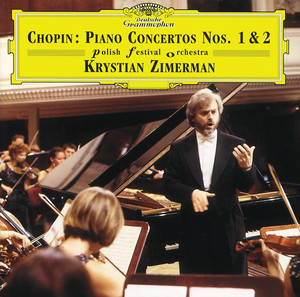 | Piano Concerto No.1 in E minor, Op.11: 2. Romance (Larghetto) | Frédéric Chopin, Krystian Zimerman, Polish Festival Orchestra | E Major | 0 | 12B | 65 BPM | |
 | Prelude in E Minor, Op. 28, No. 4 | Frédéric Chopin, Arthur Rubinstein | A Minor | 0 | 8A | 110 BPM | |
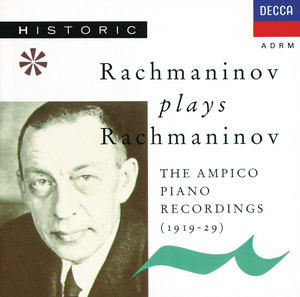 | Liebesleid | Fritz Kreisler, Sergei Rachmaninoff | A Minor | 0 | 8A | 77 BPM | |
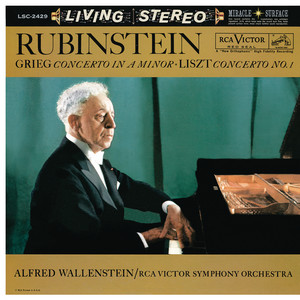 | Piano Concerto in A Minor, Op. 16: I. Allegro molto moderato - Remastered | Edvard Grieg, Arthur Rubinstein, RCA Victor Symphony Orchestra, Alfred Wallenstein | A Minor | 1 | 8A | 82 BPM | |
 | 2 Arabesques, L. 66: I. Andantino con moto | Claude Debussy, Nikolai Lugansky | F♯ Minor | 0 | 11A | 67 BPM | |
 | Sarasate: Zigeunerweisen, Op. 20 | Pablo de Sarasate, Itzhak Perlman, Abbey Road Ensemble | C Minor | 1 | 5A | 83 BPM | |
 | 13 Preludes, Op. 32: No. 5 in G Major. Moderato | Sergei Rachmaninoff, Idil Biret | G Major | 0 | 9B | 74 BPM | |
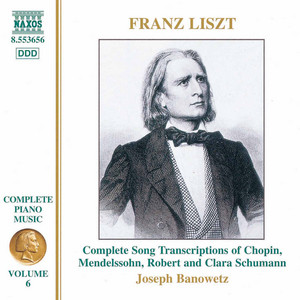 | Chopin - 6 Chants Polonais, S480/R145: No. 2. Fruhling(Wiosna, Spring) | Joseph Banowetz, Franz Liszt | G Major | 1 | 9B | 108 BPM | |
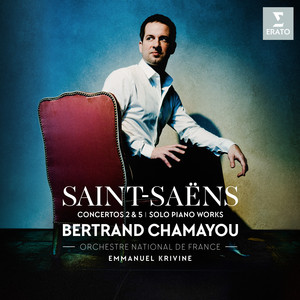 | Saint-Saëns: Piano Concerto No. 2 in G Minor, Op. 22: I. Andante sostenuto | Camille Saint-Saëns, Bertrand Chamayou, Emmanuel Krivine, Orchestre National De France | G Minor | 2 | 6A | 94 BPM | |
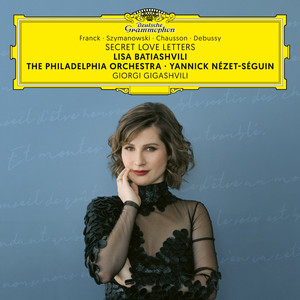 | Beau soir, L. 6 (L. 84) (Arr. Heifetz for Violin and Piano) | Claude Debussy, Lisa Batiashvili, Yannick Nézet-Séguin | F Minor | 1 | 4A | 79 BPM | |
 | Symphony No. 2 In C Minor - "Resurrection" / 1st Movement - Allegro maestoso (Totenfeier): Im Tempo nachgeben | Gustav Mahler, Wiener Philharmoniker, Gilbert Kaplan | B Major | 1 | 1B | 152 BPM | |
 | XIII. Le cygne (Transcr. L. Godowsky for Piano) | Camille Saint-Saëns, Leopold Godowsky, Konstantin Scherbakov | F♯ Major | 0 | 2B | 72 BPM | |
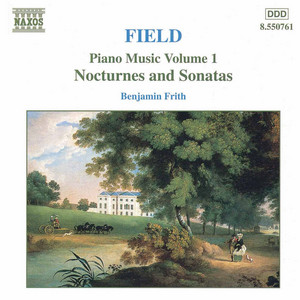 | Nocturne No. 2 in C Minor, H. 25 | John Field, Benjamin Frith | C Minor | 0 | 5A | 98 BPM | |
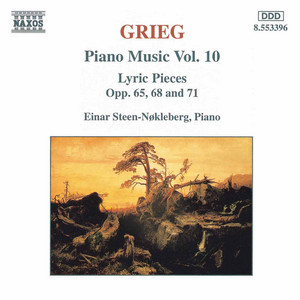 | Lyric Pieces, Book 9, Op. 68: Badnlat (Cradle Song) | Edvard Grieg, Einar Steen-Nøkleberg | B♭ Major | 0 | 6B | 72 BPM | |
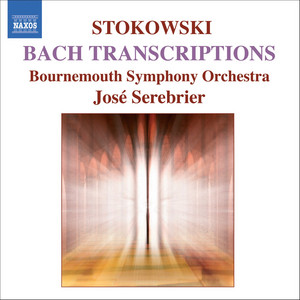 | Komm, süsser Tod, BWV 478 (Arr. L. Stokowski for orchestra) | Johann Sebastian Bach, Bournemouth Symphony Orchestra, José Serebrier | E Major | 0 | 12B | 67 BPM |
- ISRC
- GBAYC0701397
- Label
- L-M Records/RCA Records