- BPM
- 72
- Key
- A Minor
- Camelot
- 8A
Omolu - Nation Ketou (Vassi) by Traditionnel Song Details
On 2003, the song "Omolu - Nation Ketou (Vassi)" was released by Traditionnel. The duration of This song is about two minutes long, specifically at 2:38. This song does not appear to have any foul language. Omolu - Nation Ketou (Vassi)'s duration is considered a little bit shorter than the average duration of a typical track. There are a total of 22 in the song's album "Oriki - Chants & danses du Candomble". In this album, this song's track order is #9. Furthermore, we believe that the track originated from France. Omolu - Nation Ketou (Vassi) is below average in popularity right now. The overall mood can be danceable to some, especially with it's high amount of postive energy.
BPM and Tempo
With Omolu - Nation Ketou (Vassi) by Traditionnel having a BPM of 72 with a half-time of 36 BPM and a double-time of 144 BPM, we would consider this track to have a Adagio (slowly with great expression) tempo marking. Because of this, we believe that the song has an overall slow tempo. The time signature for this track is 4/4.
Music Key
This song has a musical key of A Minor. Which also means that the camelot key for this song is 8A. So, the perfect camelot match for 8A would be either 8A or 7B. While, a low energy boost can consist of either 8B or 9A. For moderate energy boost, you would use 5A and a high energy boost can either be 10A or 3A. However, if you are looking for a low energy drop, finding a song with a camelot key of 7A would be a great choice. Where 11A would give you a moderate drop, and 6A or 1A would be a high energy drop. Lastly, 11B allows you to change the mood.
Want to find the BPM and music key for other songs? Check out our BPM and Key Finder page!
- Popularity
- 33%
- Loudness
- -8.826 dB
- Acousticness
- 69%
- Danceability
- 55%
- Energy
- 59%
- Instrumentalness
- 0%
- Liveness
- 6%
- Loudness
- 85%
- Speechiness
- 11%
- Valence
- 94%
Recommendations
| Track | Artist | Key | Energy | Camelot | BPM | ||
|---|---|---|---|---|---|---|---|
 | Eu Ando Triste Zé | Fomo D Jagun | C Minor | 2 | 5A | 179 BPM | |
 | Saudação Às Crianças (feat. Gêise, Mãe Gertrudes) | Tenda de Umbanda Caboclo Caramã e Pai Cesário, Gêise, Mãe Gertrudes | E Major | 6 | 12B | 74 BPM | |
 | Cantiga para Exu No. 2 | Xirê Àlágbé | G Major | 7 | 9B | 127 BPM | |
 | Opanijé | Ilé Wòpò Olójúkàn | F♯ Major | 7 | 2B | 121 BPM | |
 | Dono do Meu Caminho | Tião Casemiro, Marcelo Varanda | F♯ Major | 6 | 2B | 160 BPM | |
 | Ponto Baianos - É da Bahia | Batuqueiro de Oxóssi | G Major | 4 | 9B | 99 BPM | |
 | Vassi for Exu | Jorge Alabe | B Minor | 2 | 10A | 113 BPM | |
 | Saudação a Yemanjá | Pai Cido de Oxum | G Major | 6 | 9B | 154 BPM | |
 | Quem tem medo é o Diabo / Ponto Sete Saias | Ọmọdé-iṣẹ́wèrẹ́ | G Major | 9 | 9B | 87 BPM | |
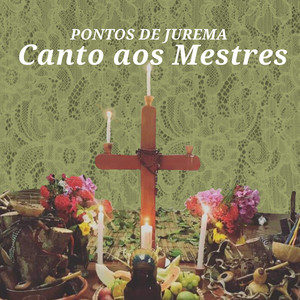 | Rei Malunguinho | Ponto de jurema | F♯ Major | 5 | 2B | 109 BPM | |
 | Alamba Ô Alamba Lelé | Alabê Arian, Alabê Hernán | F♯ Major | 4 | 2B | 104 BPM | |
 | Pombagira Menina | Alabês de Bará | B♭ Major | 7 | 6B | 77 BPM | |
| Oxalá | Ilé Wòpò Olójúkàn | F♯ Major | 4 | 2B | 88 BPM | |
 | Ae Ae Calunga Eu Já Abri Meu Cazuá / Qua Qua Qua a Primeira Gargalhada Exu do Lodo É Quem Da | Gabriel Aganju | D Major | 9 | 10B | 81 BPM | |
 | Quando Deu Meia-Noite | Curimbeiros | F Minor | 6 | 4A | 94 BPM | |
 | Ponto De Exú | Zé Maurício Machline | D♭ Minor | 6 | 12A | 90 BPM | |
 | Brilhou no Mar | Mestre Marne | F♯ Major | 8 | 2B | 139 BPM | |
 | Olha Pombo-Girê, Olha Pombo-Girá | Pontos De Macumba Oficial | B♭ Minor | 8 | 3A | 84 BPM | |
 | Preto na Senzala | Nelson Mateus e Filhas de Iemanjá | G Major | 7 | 9B | 100 BPM | |
 | Dizem Que Ele Matou | Tião Casemiro | A♭ Major | 6 | 4B | 111 BPM | |
 | Suncê Vai Ganhá | Os Caboclos | E Major | 4 | 12B | 94 BPM | |
 | Eu Não Seria Nada Se Não Fosse Ogum | Zé Carlos d' oxóssi | A Minor | 5 | 8A | 160 BPM | |
 | Tranca Rua | J.B. De Carvalho | D♭ Major | 7 | 3B | 200 BPM | |
 | Oiá, Oia Oia ê | Redandá | A♭ Major | 8 | 4B | 109 BPM | |
| Vovó Joaquina | Os Caboclos | A Minor | 4 | 8A | 99 BPM |
- ISRC
- FRZ170210770
- Label
- L-M Records/RCA Records