- BPM
- 67
- Key
- G Major
- Camelot
- 9B
Goldberg Variations, BWV 988 (Arr. D. Sitkovetsky for String Trio): Var. 28 - Var. 29 - Var. 30, Quodlibet by Johann Sebastian Bach, Dmitry Sitkovetsky, Gérard Caussé, Mischa Maisky Song Details
Johann Sebastian Bach, Dmitry Sitkovetsky, Gérard Caussé, Mischa Maisky's ' "Goldberg Variations, BWV 988 (Arr. D. Sitkovetsky for String Trio): Var. 28 - Var. 29 - Var. 30, Quodlibet" was released on its scheduled release date, January 1, 2016. With this song being about 5 minutes long, at This song is fairly a long song compared to the average song length. This song does not have an "Explicit" tag, making it safe for all ages. The song is number 11 out of 12 in Bach: Goldberg Variations, BWV 988 by Johann Sebastian Bach, Gérard Caussé, Mischa Maisky, Dmitry Sitkovetsky. Going off of the ISRC code of this track, we detected that the origin of this track is from Germany. Goldberg Variations, BWV 988 (Arr. D. Sitkovetsky for String Trio): Var. 28 - Var. 29 - Var. 30, Quodlibet is not that popular right now. Based on the vibe, this track doesn't seem to be that danceable, however its valence properties can make this some somewhat danceable.
BPM and Tempo
The tempo marking of Goldberg Variations, BWV 988 (Arr. D. Sitkovetsky for String Trio): Var. 28 - Var. 29 - Var. 30, Quodlibet by Johann Sebastian Bach, Dmitry Sitkovetsky, Gérard Caussé, Mischa Maisky is Adagio (slowly with great expression), since this song has a tempo of 67 BPM. With that information, we can conclude that the song has a slow tempo. The time signature for this track is 4/4.
Music Key
This song is in the music key of G Major. This also means that this song has a camelot key of 9B. So, the perfect camelot match for 9B would be either 9B or 10A. While, 10B can give you a low energy boost. For moderate energy boost, you would use 6B and a high energy boost can either be 11B or 4B. Though, if you want a low energy drop, you should looking for songs with either a camelot key of 9A or 8B will give you a low energy drop, 12B would be a moderate one, and 7B or 2B would be a high energy drop. Lastly, 6A allows you to change the mood.
Want to find the BPM and music key for other songs? Check out our BPM and Key Finder page!
- Popularity
- 11%
- Loudness
- -16.209 dB
- Acousticness
- 98%
- Danceability
- 24%
- Energy
- 13%
- Instrumentalness
- 34%
- Liveness
- 41%
- Loudness
- 73%
- Speechiness
- 4%
- Valence
- 52%
Recommendations
| Track | Artist | Key | Energy | Camelot | BPM | ||
|---|---|---|---|---|---|---|---|
 | Cello Suite in G Major, Op. 131c, No. 1: II. Adagio | Max Reger, Guido Schiefen | F Major | 1 | 7B | 90 BPM | |
 | Bach, JS: Trio Sonata in G Major, BWV 1039: IV. Presto | Johann Sebastian Bach, Marc Hantaï, Ageet Zweistra, Jerome Hantai, Pierre Hantaï | G Major | 3 | 9B | 92 BPM | |
 | Cello Suite No. 1 in G Major, BWV 1007: II. Allemande | Johann Sebastian Bach, Alisa Weilerstein | E Major | 0 | 12B | 119 BPM | |
 | The Well-Tempered Clavier, Book 1, BWV 846-869: Fugue No. 3 in C sharp major, BWV 848 | Luc Beauséjour | C Major | 5 | 8B | 87 BPM | |
 | Brandenburg Concerto No. 6 In B Flat Major, BWV 1051: I. Allegro | Cologne Chamber Orchestra, Johann Sebastian Bach | B♭ Major | 2 | 6B | 90 BPM | |
 | Concerto for Flute, Violin and Harpsichord in A Minor, BWV 1044: I. Allegro | Johann Sebastian Bach, Brecon Baroque, Rachel Podger, Katy Bircher, Marcin Świątkiewicz | A♭ Minor | 3 | 1A | 107 BPM | |
 | Gabrielli : Canon for 2 Violoncellos | Domenico Gabrielli, Anner Bylsma | B♭ Minor | 1 | 3A | 93 BPM | |
 | Bach / Busoni: Toccatas and Fugues, BV B29: No. 2, Toccata and Fugue in D Minor: Toccata (After Bach's BWV 565) | Ferruccio Busoni, Johann Sebastian Bach, Maria Tipo | D Minor | 1 | 7A | 65 BPM | |
 | Mendelssohn: Songs Without Words, Book 4, Op. 53: No. 5 in A Minor, MWV U153 "Folk Song" (Arr. de Hartmann for Cello and Piano) | Felix Mendelssohn, Paul Tortelier, Maria De La Pau | B♭ Major | 1 | 6B | 99 BPM | |
 | 8 Pieces, Op. 39: No. 3, Berceuse | Reinhold Glière, Friedemann Eichhorn, Martin Rummel, Alexander Hülshoff | E Minor | 2 | 9A | 82 BPM | |
| Bach, JS: Trio Sonata in G Major, BWV 1039: I. Adagio | Johann Sebastian Bach, Marc Hantai/Ageet Zweistra/Jerome Hantai/Pierre Hantaï | G Major | 3 | 9B | 92 BPM | |
 | Towards the Light | Bryce Dessner, Gautier Capuçon, Jerome Ducros | G Major | 2 | 9B | 178 BPM | |
 | Stabat Mater: Stabat mater dolorosa (arr. J. Lloyd Webber for 2 cellos and harp) | Giovanni Battista Pergolesi, Julian Lloyd Webber, Jiaxin Lloyd Webber, Catrin Finch | D Minor | 0 | 7A | 60 BPM | |
 | Mother's Lullaby | Michelle Beauchesne | D Major | 1 | 10B | 141 BPM | |
 | Purcell: Harpsichord Suite No. 2 in G Minor, Z. 661: II. Allemande | Henry Purcell, Shani Diluka | D Minor | 0 | 7A | 134 BPM | |
 | Wind Concerto: II. (Arr. Solo Piano by Del Corral) | George Frideric Handel, Manuel del Corral | B♭ Major | 1 | 6B | 99 BPM | |
 | Brandenburg Concerto No.4b in G - Remastered | Johann Sebastian Bach, Producer 9-0 | D♭ Minor | 4 | 12A | 117 BPM | |
 | The Art of Fugue, BWV 1080 - Edition prepared by Sir Neville Marriner & Andrew Davis: Contrapunctus 1 | Johann Sebastian Bach, Carmel Kaine, Malcolm Latchem, Stephen Shingles, Kenneth Heath, John Gray, Academy of St Martin in the Fields, Members, Sir Neville Marriner | D Minor | 1 | 7A | 91 BPM | |
 | Matthäus-Passion: Erster Teil, 4a. Evangelista Da versammleten sich die Hohenpriester 4b. Chorus I & II Ja nicht auf das Fest 4c. Evangelista Da nun Jesus war zu Bethanien 4d. Chorus I Wozu dienet dieser Unrat 4e. Evangelista, Jesus Da das Jesus merkete | Johann Sebastian Bach, Werner Güra, Johannes Weisser, Akademie für Alte Musik Berlin, René Jacobs | D♭ Minor | 2 | 12A | 205 BPM | |
 | Sonata in F Minor, K.466 | Domenico Scarlatti, Martin Stadtfeld | D♭ Major | 0 | 3B | 69 BPM | |
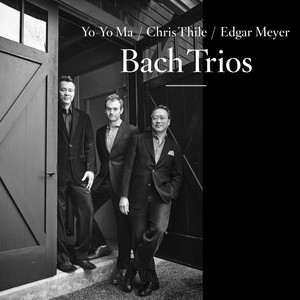 | Erbarm dich mein, O Herre Gott, BWV 721 | Johann Sebastian Bach, Yo-Yo Ma, Chris Thile, Edgar Meyer | B Minor | 0 | 10A | 91 BPM | |
 | Bach Orchestral Suite No.2 in B Minor, BWV 1076: II. Rondeau | London Conchord Ensemble, Florian Uhlig | B Minor | 1 | 10A | 143 BPM | |
 | Cello Suite No. 3, Op. 87: V. Dialogo. Allegretto – | Benjamin Britten, Steven Isserlis | C Major | 1 | 8B | 110 BPM | |
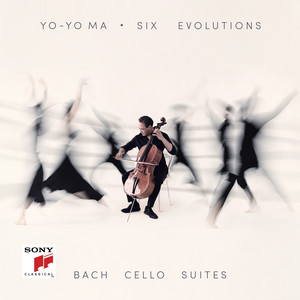 | Unaccompanied Cello Suite No. 6 in D Major, BWV 1012: I. Prélude | Johann Sebastian Bach, Yo-Yo Ma | D Major | 1 | 10B | 50 BPM | |
 | King William's Rambles | The Royal Wind Music | D♭ Major | 2 | 3B | 140 BPM |
- ISRC
- DEB958513811
- Label
- L-M Records/RCA Records