- BPM
- 76
- Key
- E Minor
- Camelot
- 9A
7 Partsongs, Op. 44: When First We Met by Gustav Holst, The Purcell Singers, English Chamber Orchestra, Imogen Holst Song Details
Gustav Holst, The Purcell Singers, English Chamber Orchestra, Imogen Holst's '7 Partsongs, Op. 44: When First We Met' had a release date set for January 1, 2011. The duration of This song is about two minutes long, specifically at 2:01. This song does not appear to have any foul language. 7 Partsongs, Op. 44: When First We Met's duration is considered a little bit shorter than the average duration of a typical track. The track order of this song in Gustav Holst, Janet Baker, Robert Tear, Thomas Hemsley, The Purcell Singers, English Chamber Orchestra, Imogen Holst's "Holst: Choral Hymns From The Rig Veda; Savitri; Seven Part-Songs; The Evening Watch" album is number 13 out of 17. On top of that, United Kingdom appears to be the country where this track was created. 7 Partsongs, Op. 44: When First We Met is unknown right now. In our opinion, the overall tone is not very danceable and projects negative sounds, such as being sad, depressed, or angry.
BPM and Tempo
We consider the tempo marking of 7 Partsongs, Op. 44: When First We Met by Gustav Holst, The Purcell Singers, English Chamber Orchestra, Imogen Holst to be Adagio (slowly with great expression) because the track has a tempo of 76 BPM, a half-time of 38BPM, and a double-time of 152 BPM. Based on that, the speed of the song's tempo is slow. The time signature for this track is 1/4.
Music Key
This song is in the music key of E Minor. Because this track belongs in the E Minor key, the camelot key is 9A. So, the perfect camelot match for 9A would be either 9A or 8B. While, a low energy boost can consist of either 9B or 10A. For moderate energy boost, you would use 6A and a high energy boost can either be 11A or 4A. However, if you are looking for a low energy drop, finding a song with a camelot key of 8A would be a great choice. Where 12A would give you a moderate drop, and 7A or 2A would be a high energy drop. Lastly, 12B allows you to change the mood.
Want to find the BPM and music key for other songs? Check out our BPM and Key Finder page!
- Popularity
- 0%
- Loudness
- -25.246 dB
- Acousticness
- 99%
- Danceability
- 24%
- Energy
- 8%
- Instrumentalness
- 0%
- Liveness
- 19%
- Loudness
- 58%
- Speechiness
- 6%
- Valence
- 21%
Recommendations
| Track | Artist | Key | Energy | Camelot | BPM | ||
|---|---|---|---|---|---|---|---|
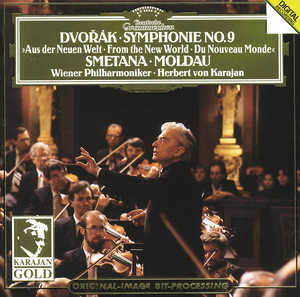 | Má vlast, JB 1:112: II. Vltava "The Moldau" | Bedřich Smetana, Wiener Philharmoniker, Herbert von Karajan | E Minor | 1 | 9A | 78 BPM | |
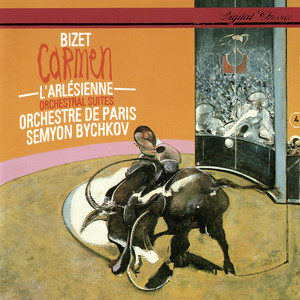 | Carmen Suite No. 1: 2. Aragonaise | Georges Bizet, Orchestre de Paris, Semyon Bychkov | D Minor | 0 | 7A | 120 BPM | |
 | 2 Pieces for Small Orchestra: No. 1, On Hearing the First Cuckoo in Spring | Frederick Delius, Royal Scottish National Orchestra, David Lloyd-Jones | E Minor | 0 | 9A | 79 BPM | |
 | Souvenir de Florence, Op. 70: III. Allegretto moderato | Pyotr Ilyich Tchaikovsky, Vienna Chamber Orchestra, Philippe Entremont | D♭ Major | 1 | 3B | 82 BPM | |
 | The Planets Suite, Op. 32: III. Mercury | Gustav Holst, Vladimir Jurowski, London Philharmonic Orchestra, London Philharmonic Choir, Neville Creed | D Minor | 1 | 7A | 125 BPM | |
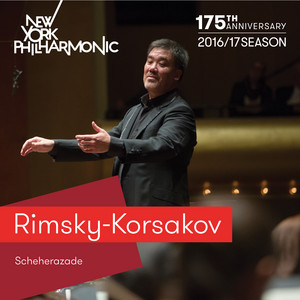 | Scheherazade, Op. 35: I. Largo e maestoso - Allegro non troppo "The Sea and Sinbad's Ship" | Nikolai Rimsky-Korsakov, New York Philharmonic, Alan Gilbert, Lawrence Rock | E Major | 1 | 12B | 79 BPM | |
 | First Choral Symphony, Op. 41, H. 155, I, Song and Bacchanal: Ib. And as I sat, over the light blue hills (Soprano) | Gustav Holst, Andrew Davis, BBC Symphony Orchestra, Susan Gritton, Sir Andrew Davis | F♯ Minor | 0 | 11A | 79 BPM | |
 | The Seasons, Op. 67: XIV. Petit Adagio | Alexander Glazunov, Neeme Järvi, Royal Scottish National Orchestra | A Major | 1 | 11B | 87 BPM | |
 | Prelude in C Sharp Minor, Op. 3, No. 2 (Arr. Orchestra) - Live | Sergei Rachmaninoff, Czech Philharmonic, Leopold Stokowski | E♭ Major | 4 | 5B | 124 BPM | |
 | Prelude | Gerald Finzi, Royal Ballet Sinfonia, David Lloyd-Jones | F Minor | 1 | 4A | 109 BPM | |
 | Symphony No. 7 in A Major, Op. 92: II. Allegretto | Ludwig van Beethoven, Berliner Philharmoniker, Kirill Petrenko | E Minor | 0 | 9A | 68 BPM | |
 | Japanese Suite, Op. 33, H. 126: VI. Finale. Dance of the Wolves | Gustav Holst, Ulster Orchestra, Joann Falletta | C Minor | 3 | 5A | 103 BPM | |
 | Die Meistersinger von Nürnberg, WWV 96: Prelude | Richard Wagner, Wiener Philharmoniker, Sir Georg Solti | C Major | 4 | 8B | 99 BPM | |
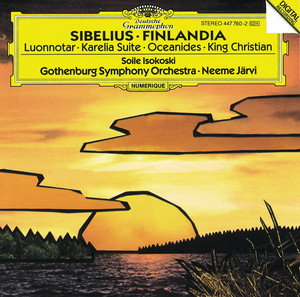 | Karelia Suite, Op.11: 1. Intermezzo (Moderato) | Jean Sibelius, Gothenburg Symphony Orchestra, Neeme Järvi | E♭ Major | 1 | 5B | 182 BPM | |
 | Symphonie fantastique, Op. 14, H 48: II. Un Bal | Hector Berlioz, London Symphony Orchestra, Sir Colin Davis | A Major | 1 | 11B | 113 BPM | |
 | Salut d'amour, Op. 12 (version for orchestra) | Edward Elgar, Slovak Radio Symphony Orchestra, Adrian Leaper | B♭ Major | 1 | 6B | 82 BPM | |
 | A Night On The Bare Mountain | Modest Mussorgsky, Orchestre Symphonique de Montréal, Kent Nagano | D Major | 1 | 10B | 102 BPM | |
 | L'Arlésienne Suite No.2: Pastorale | Georges Bizet, Daniel Deffayet, Berliner Philharmoniker, Herbert von Karajan | A Major | 1 | 11B | 80 BPM | |
 | Bruch : Violin Concerto No.1 in G minor Op.26 : III Finale - Allegro energico | Max Bruch, Maxim Vengerov, Kurt Masur, Gewandhausorchester Leipzig | G Major | 2 | 9B | 90 BPM | |
 | Peer Gynt Suite No. 1, Op. 46: III. Anitra's Dance | Edvard Grieg, Berliner Philharmoniker, Herbert von Karajan | D Minor | 0 | 7A | 84 BPM | |
 | Symphonie fantastique, Op. 14, H 48: 2. Un bal (Valse: Allegro non troppo) | Hector Berlioz, Chicago Symphony Orchestra, Claudio Abbado | A Major | 1 | 11B | 84 BPM | |
 | Crown Imperial | William Walton, English Northern Philharmonia, Paul Daniel | C Major | 3 | 8B | 116 BPM | |
 | Mahler: Symphony No. 5 in C-Sharp Minor: IV. Adagietto. Sehr langsam | Gustav Mahler, Daniel Barenboim, Chicago Symphony Orchestra | F Major | 1 | 7B | 82 BPM | |
 | Pictures At An Exhibition: Promenade | Modest Mussorgsky, Chicago Symphony Orchestra, Carlo Maria Giulini | A♭ Major | 0 | 4B | 87 BPM | |
 | Ein Sommernachtstraum, Op. 61, MWV M13: Act II: Entr'acte: Scherzo | Felix Mendelssohn, Slovak Philharmonic, Anthony Bramall | F Major | 1 | 7B | 60 BPM |
- ISRC
- GBF076510684
- Label
- L-M Records/RCA Records