- BPM
- 88
- Key
- G Minor
- Camelot
- 6A
Concerto For Oboe And Strings: 2. Minuet & Musette by Ralph Vaughan Williams, Neil Black, English Chamber Orchestra, Daniel Barenboim Song Details
Ralph Vaughan Williams, Neil Black, English Chamber Orchestra, Daniel Barenboim's 'Concerto For Oboe And Strings: 2. Minuet & Musette' had a release date set for June 6, 2020. The duration of This song is about two minutes long, specifically at 2:47. This song does not appear to have any foul language. Concerto For Oboe And Strings: 2. Minuet & Musette's duration is considered a little bit shorter than the average duration of a typical track. The song is number 25 out of 49 in British Composers by Ralph Vaughan Williams, Gustav Holst, Edward Elgar. Going off of the ISRC code of this track, we detected that the origin of this track is from Germany. Concerto For Oboe And Strings: 2. Minuet & Musette is not that popular right now. In our opinion, the overall tone is not very danceable and projects negative sounds, such as being sad, depressed, or angry.
BPM and Tempo
The tempo marking of Concerto For Oboe And Strings: 2. Minuet & Musette by Ralph Vaughan Williams, Neil Black, English Chamber Orchestra, Daniel Barenboim is Andante (at a walking pace), since this song has a tempo of 88 BPM. With that information, we can conclude that the song has a slow tempo. This song can go great with yoga or pilates. The time signature for this track is 4/4.
Music Key
This song has a musical key of G Minor. Because this track belongs in the G Minor key, the camelot key is 6A. So, the perfect camelot match for 6A would be either 6A or 5B. While, a low energy boost can consist of either 6B or 7A. For moderate energy boost, you would use 3A and a high energy boost can either be 8A or 1A. However, if you are looking for a low energy drop, finding a song with a camelot key of 5A would be a great choice. Where 9A would give you a moderate drop, and 4A or 11A would be a high energy drop. Lastly, 9B allows you to change the mood.
Want to find the BPM and music key for other songs? Check out our BPM and Key Finder page!
- Popularity
- 3%
- Loudness
- -18.764 dB
- Acousticness
- 85%
- Danceability
- 34%
- Energy
- 21%
- Instrumentalness
- 93%
- Liveness
- 9%
- Loudness
- 69%
- Speechiness
- 4%
- Valence
- 39%
Recommendations
| Track | Artist | Key | Energy | Camelot | BPM | ||
|---|---|---|---|---|---|---|---|
 | Bernstein: Divertimento for Orchestra: II. Waltz | Leonard Bernstein, Paavo Järvi, City Of Birmingham Symphony Orchestra | G Major | 0 | 9B | 72 BPM | |
 | Fauré: Pavane, Op. 50 (Instrumental Version) | Gabriel Fauré, Sir Neville Marriner, Academy of St. Martin in the Fields | F♯ Minor | 1 | 11A | 70 BPM | |
 | Prince Igor: Polovtsian Dances (Version for Chorus) | Alexander Borodin, Kiev Chamber Choir, Ukraine National Radio Symphony Orchestra, Theodore Kuchar | A Major | 2 | 11B | 110 BPM | |
 | VII. Finale | Igor Stravinsky, Brussels Philharmonic, Alexander Rahbari | D♭ Minor | 3 | 12A | 81 BPM | |
 | Short Suite: Aria | David Lyon, Royal Ballet Sinfonia, David Lloyd-Jones | G Major | 0 | 9B | 75 BPM | |
 | Symphony No. 3 in C Minor, Op. 78 "Organ Symphony": Ib. Poco adagio | Camille Saint-Saëns, Peter Hurford, Orchestre Symphonique de Montréal, Charles Dutoit | D♭ Major | 0 | 3B | 81 BPM | |
 | Requiem, Op. 48: VII. In paradisum | Gabriel Fauré, Academy of St Martin in the Fields Chorus, Academy of St. Martin in the Fields, John Birch, Sir Neville Marriner | D Major | 0 | 10B | 175 BPM | |
 | Prelude: Allegro - Meno mosso - Alla breve (Allegro) - Adagio - | Ottorino Respighi, Seattle Symphony Orchestra, Gerard Schwarz | D Major | 1 | 10B | 74 BPM | |
 | The Tender Land Suite: I. Introduction and Love Music | Aaron Copland, Elgin Symphony Orchestra, Robert Hanson | D Major | 3 | 10B | 73 BPM | |
 | Come, Sweet Death, BWV 478 (Arr. for 5 Cellos) | Sheku Kanneh-Mason, Hannah Roberts, Ben Davies, Desmond Neysmith, Max Ruisi | C Major | 0 | 8B | 122 BPM | |
 | Dona nobis pacem: Beat! Beat! Drums! | Ralph Vaughan Williams, Christina Pier, Matthew Brook, The Bach Choir, Bournemouth Symphony Orchestra, David Hill | C Major | 2 | 8B | 83 BPM | |
 | Kol Nidrei - Adagio For Cello, Opus 47 | Max Bruch, Alisa Weilerstein, Staatskapelle Berlin, Daniel Barenboim | D Major | 1 | 10B | 81 BPM | |
 | Notturno for Strings and Harp | Arnold Schoenberg, Daniel Hope, Zürcher Kammerorchester, Jane Berthe | A♭ Major | 1 | 4B | 75 BPM | |
 | Warsaw Concerto | Richard Addinsell, Jean-Yves Thibaudet, BBC Symphony Orchestra, Hugh Wolff | B Major | 1 | 1B | 76 BPM | |
 | Albinoni: Oboe Concerto in D Minor, Op. 9 No. 2: II. Adagio | Tomaso Albinoni, Pierre Pierlot, Claudio Scimone, I Solisti Veneti | B♭ Major | 2 | 6B | 72 BPM | |
 | Tu mancavi a tormentarmi, crudelissima speranza (Arr. L. Stokowski) | Antonio Cesti, Brussels Philharmonic, Richard Egarr | E Major | 1 | 12B | 87 BPM | |
 | Holberg Suite, Op. 40: IV. Air (Andante religioso) | Edvard Grieg, Gothenburg Symphony Orchestra, Neeme Järvi | B♭ Major | 0 | 6B | 86 BPM | |
 | Le carnaval des animaux, R. 125: Le cygne | Camille Saint-Saëns, Mischa Maisky, Orpheus Chamber Orchestra | C Major | 0 | 8B | 83 BPM | |
 | The Banks of Green Willow | George Butterworth, Royal Liverpool Philharmonic Orchestra, Grant Llewellyn | A Minor | 0 | 8A | 71 BPM | |
 | Gaîté parisienne: Barcarolle | Jacques Offenbach, Berliner Philharmoniker, Herbert von Karajan | D Major | 0 | 10B | 82 BPM | |
 | Petite suite de concert, Op. 77: II. Demande et reponse | Samuel Coleridge-Taylor, Chicago Sinfonietta, Paul Freeman | G Major | 0 | 9B | 90 BPM | |
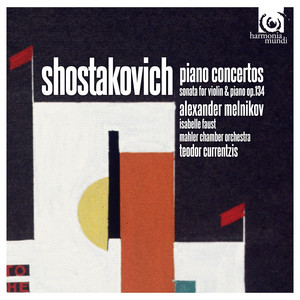 | Piano Concerto No. 2 Op. 102 in F Major: II. Andante | Dmitri Shostakovich, Alexander Melnikov, Mahler Chamber Orchestra, Teodor Currentzis | C Minor | 0 | 5A | 78 BPM | |
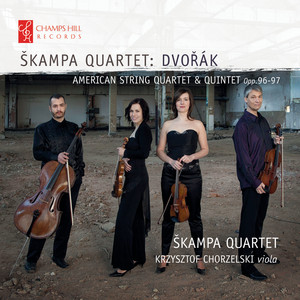 | String Quartet No. 12 in F Major, Op. 96 'The American': II. Lento | Antonín Dvořák, Škampa Quartet | D Minor | 0 | 7A | 87 BPM | |
 | Ancient Airs & Dances, Suite III, P. 172: I. Italiana (Anonymous) | Ottorino Respighi, Filarmonica della Scala, Riccardo Chailly | B♭ Major | 1 | 6B | 172 BPM | |
 | Love Sleeping Alone | Ria Mbanefo | G Minor | 1 | 6A | 134 BPM |
- ISRC
- DEF057500152
- Label
- L-M Records/RCA Records