- BPM
- 132
- Key
- G Major
- Camelot
- 9B
Pagliacci / Prologue: "Si può? Signore! Signori!" by Ruggero Leoncavallo, Giuseppe Taddei, Orchestra Del Teatro Alla Scala, Milano, Herbert von Karajan Song Details
Ruggero Leoncavallo, Giuseppe Taddei, Orchestra Del Teatro Alla Scala, Milano, Herbert von Karajan's 'Pagliacci / Prologue: "Si può? Signore! Signori!"' had a release date set for January 1, 1966. With this song being about 5 minutes long, at This song is fairly a long song compared to the average song length. This song does not have an "Explicit" tag, making it safe for all ages. The track order of this song in Ruggero Leoncavallo, Carlo Bergonzi, Joan Carlyle, Giuseppe Taddei, Ugo Benelli, Rolando Panerai, Giuseppe Morresi, Franco Ricciardi, Orchestra Del Teatro Alla Scala, Milano, Herbert von Karajan, Coro Del Teatro Alla Scala Di Milano, Roberto Benaglio's "Leoncavallo: I Pagliacci" album is number 2 out of 24. On top of that, Germany appears to be the country where this track was created. Based on our statistics, Pagliacci / Prologue: "Si può? Signore! Signori!"'s popularity is not that popular right now. Although the tone can be danceable to some, this track does projects more of a negative sound rather than a postive one.
BPM and Tempo
We consider the tempo marking of Pagliacci / Prologue: "Si può? Signore! Signori!" by Ruggero Leoncavallo, Giuseppe Taddei, Orchestra Del Teatro Alla Scala, Milano, Herbert von Karajan to be Allegro (fast, quick, and bright) because the track has a tempo of 132 BPM, a half-time of 66BPM, and a double-time of 264 BPM. Based on that, the speed of the song's tempo is fast. Activities such as, walking, can go well with this song. The time signature for this track is 4/4.
Music Key
This song has a musical key of G Major. This also means that this song has a camelot key of 9B. So, the perfect camelot match for 9B would be either 9B or 10A. While, 10B can give you a low energy boost. For moderate energy boost, you would use 6B and a high energy boost can either be 11B or 4B. Though, if you want a low energy drop, you should looking for songs with either a camelot key of 9A or 8B will give you a low energy drop, 12B would be a moderate one, and 7B or 2B would be a high energy drop. Lastly, 6A allows you to change the mood.
Want to find the BPM and music key for other songs? Check out our BPM and Key Finder page!
- Popularity
- 2%
- Loudness
- -17.046 dB
- Acousticness
- 94%
- Danceability
- 50%
- Energy
- 19%
- Instrumentalness
- 0%
- Liveness
- 16%
- Loudness
- 72%
- Speechiness
- 6%
- Valence
- 24%
Recommendations
| Track | Artist | Key | Energy | Camelot | BPM | ||
|---|---|---|---|---|---|---|---|
 | Als die alte Mutter | Victoria de los Ángeles | D Major | 2 | 10B | 81 BPM | |
 | Torna A Surriento | Giuseppe Di Stefano | E Major | 3 | 12B | 86 BPM | |
 | Roméo et Juliette: Je veux vivre dans le rêve | Charles Gounod, Anna Moffo, Peter Maag | F Major | 1 | 7B | 74 BPM | |
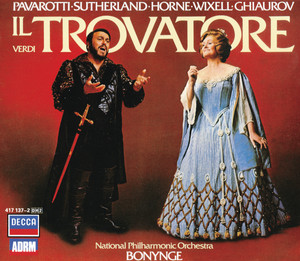 | Il Trovatore / Act 2: "Vedi! le fosche notturne spoglie" (Anvil Chorus) | Giuseppe Verdi, The London Opera Chorus, National Philharmonic Orchestra, Richard Bonynge | G Major | 3 | 9B | 130 BPM | |
 | Carmina Burana / 3. Cour d'amours: "In trutina" | Carl Orff, Barbara Bonney, Wiener Philharmoniker, André Previn | B♭ Major | 2 | 6B | 137 BPM | |
 | Mozart: Le nozze di Figaro, K. 492, Act 2: "Voi che sapete" (Cherubino) | Wolfgang Amadeus Mozart, Joyce DiDonato, Kazushi Ono, Orchestre De L'Opéra National De Lyon | E Major | 2 | 12B | 91 BPM | |
 | Soli soli nella notte | Leo Nucci, Salotto Ottocento Ensemble | F Major | 3 | 7B | 64 BPM | |
 | Il trovatore, Act III: Di quella pira | Giuseppe Verdi, Luciano Pavarotti, Wiener Opernorchester, Nicola Rescigno | C Major | 4 | 8B | 82 BPM | |
 | Nina | Giovanni Battista Pergolesi, Visti Hald, Ulrich Staerk | F Major | 4 | 7B | 140 BPM | |
 | Donizetti: L'elisir d'amore, Act 2: "Una furtiva lagrima" (Nemorino) | Gaetano Donizetti, Pene Pati, Emmanuel Villaume, Orchestre National Bordeaux Aquitaine | F Major | 0 | 7B | 69 BPM | |
 | E Lucevan Le Stelle (From "Tosca - Act III") - Live | Plácido Domingo | B Minor | 2 | 10A | 71 BPM | |
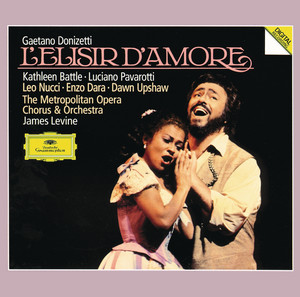 | L'elisir d'amore: Overture (Preludio) | Gaetano Donizetti, Metropolitan Opera Orchestra, James Levine | D Major | 0 | 10B | 139 BPM | |
 | Silenzio cantatore | Gaetana Lama, Luciano Pavarotti, Orchestra del Teatro Comunale di Bologna, Giancarlo Chiaramello | E Minor | 2 | 9A | 83 BPM | |
 | Pagliacci / Act 1: Intermezzo | Ruggero Leoncavallo, Orchestra Del Teatro Alla Scala, Milano, Georges Prêtre | E Major | 0 | 12B | 89 BPM | |
 | Don Pasquale / Act 3: "Com'è gentil...tornami a dir" | Gaetano Donizetti, Juan Diego Flórez, Andrea Menafra, Rossella Perrone, Giulio Patara, Coro Sinfonico di Milano Giuseppe Verdi, Orchestra Sinfonica di Milano Giuseppe Verdi, Riccardo Frizza | A Major | 1 | 11B | 67 BPM | |
 | O cessate di piagarmi | Alessandro Scarlatti, Ramón Vargas | A Minor | 2 | 8A | 84 BPM | |
 | La bohème, Act II: Quando men vo – Fuori il danaro! | Giacomo Puccini, Elizabeth Harwood, Michel Sénéchal, Mirella Freni, Luciano Pavarotti, Nicolai Ghiaurov, Rolando Panerai, Gianni Maffeo, Schöneberger Sängerknaben, Chor der Deutschen Oper Berlin, Berliner Philharmoniker, Herbert von Karajan | A♭ Major | 3 | 4B | 182 BPM | |
 | Giordano : Andrea Chénier : Act 4 "Come un bel dì di maggio" [Andrea Chénier] | Umberto Giordano, José Cura, Philharmonia Orchestra | D♭ Minor | 2 | 12A | 84 BPM | |
 | Die Meistersinger von Nürnberg, WWV 96 / Act 3: "Selig, wie die Sonne" | Richard Wagner, Norman Bailey, Hannelore Bode, René Kollo, Adolf Dallapozza, Julia Hamari, Wiener Philharmoniker, Sir Georg Solti | F♯ Major | 2 | 2B | 82 BPM | |
 | Lakmé / Act 1: Viens, Mallika, ... Dôme épais (Flower Duet) | Léo Delibes, Dame Joan Sutherland, Jane Berbié, Monte-Carlo Philharmonic Orchestra, Richard Bonynge | B Major | 1 | 1B | 85 BPM | |
 | Werther: "Pourquoi me réveiller, ô souffle du printemps?" | Jules Massenet, Luciano Pavarotti, National Philharmonic Orchestra, Oliviero de Fabritiis | F♯ Minor | 2 | 11A | 156 BPM | |
| L'elisir d'amore / Act II: "Una furtiva lagrima" | Gaetano Donizetti, Luciano Pavarotti, Metropolitan Opera Orchestra, James Levine | B♭ Minor | 1 | 3A | 87 BPM | |
 | Rinaldo / Act 2: Lascia ch'io pianga | George Frideric Handel, Cecilia Bartoli, Academy of Ancient Music, Christopher Hogwood | E Major | 1 | 12B | 176 BPM | |
 | Tristan und Isolde, Act III: Liebestod (Concert Version) | Richard Wagner, Berliner Philharmoniker, Herbert von Karajan | B Major | 2 | 1B | 94 BPM | |
 | Puccini: Tosca / Act 2 - "Vissi d'arte, vissi d'amore" | Kiri Te Kanawa, National Philharmonic Orchestra, Sir Georg Solti | E♭ Major | 2 | 5B | 92 BPM |
- ISRC
- DEF056531201
- Label
- L-M Records/RCA Records