- BPM
- 71
- Key
- E Minor
- Camelot
- 9A
Shaker Loops: Shaking and Trembling (Version for string orchestra) by John Adams, Bournemouth Symphony Orchestra, Marin Alsop Song Details
"Shaker Loops: Shaking and Trembling (Version for string orchestra)" by John Adams, Bournemouth Symphony Orchestra, Marin Alsop had its release date on October 17, 2004. Since This song is still less than 10 minute long, it is still considered a pretty long duration song compared to the average song length. This song does not appear to be explicit due to the lack of the "E" tag. The song is number 4 out of 7 in Adams: Shaker Loops / Wound Dresser / Short Ride in A Fast Machine by John Adams, Nathan Gunn, Bournemouth Symphony Orchestra, Marin Alsop. Going off of the ISRC code of this track, we detected that the origin of this track is from Hong Kong. Shaker Loops: Shaking and Trembling (Version for string orchestra) is unknown right now. In our opinion, the overall tone is not very danceable and projects negative sounds, such as being sad, depressed, or angry.
BPM and Tempo
The tempo marking of Shaker Loops: Shaking and Trembling (Version for string orchestra) by John Adams, Bournemouth Symphony Orchestra, Marin Alsop is Adagio (slowly with great expression), since this song has a tempo of 71 BPM. With that information, we can conclude that the song has a slow tempo. The time signature for this track is 4/4.
Music Key
This song is in the music key of E Minor. Because this track belongs in the E Minor key, the camelot key is 9A. So, the perfect camelot match for 9A would be either 9A or 8B. While, a low energy boost can consist of either 9B or 10A. For moderate energy boost, you would use 6A and a high energy boost can either be 11A or 4A. However, if you are looking for a low energy drop, finding a song with a camelot key of 8A would be a great choice. Where 12A would give you a moderate drop, and 7A or 2A would be a high energy drop. Lastly, 12B allows you to change the mood.
Want to find the BPM and music key for other songs? Check out our BPM and Key Finder page!
- Popularity
- 0%
- Loudness
- -36.259 dB
- Acousticness
- 88%
- Danceability
- 6%
- Energy
- 1%
- Instrumentalness
- 19%
- Liveness
- 13%
- Loudness
- 40%
- Speechiness
- 5%
- Valence
- 3%
Recommendations
| Track | Artist | Key | Energy | Camelot | BPM | ||
|---|---|---|---|---|---|---|---|
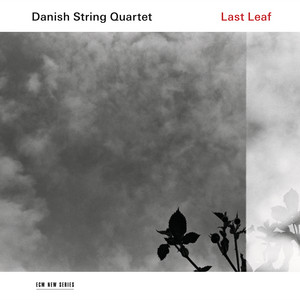 | Now Found Is The Fairest Of Roses (Arr. For String Quartet) | Traditional, Danish String Quartet | G Major | 0 | 9B | 96 BPM | |
 | String Quartet No. 1 "At the Octoroon Balls": IV. Many Gone | Wynton Marsalis, Calidore String Quartet | D Minor | 1 | 7A | 138 BPM | |
 | Sinfonia (for Orbiting Spheres) | Missy Mazzoli, Arctic Philharmonic, Tim Weiss | C Minor | 1 | 5A | 68 BPM | |
 | Symphony No. 3, "Pastoral Symphony": II. Lento moderato | Ralph Vaughan Williams, Brendan O'Brien, Patricia Rozario, Bournemouth Symphony Orchestra, Kees Bakels | G Minor | 0 | 6A | 88 BPM | |
 | Nebenstück | Gérard Pesson, Ensemble Recherche | C Major | 0 | 8B | 100 BPM | |
 | Adash | Hilary Hahn, Hauschka | F Major | 3 | 7B | 106 BPM | |
 | Tabula Rasa: I. Ludus | Arvo Pärt, Jan Söderblom, Tero Latvala, Jouko Laivuori, Tapiola Sinfonietta, Jean-Jacques Kantorow | F Major | 3 | 7B | 92 BPM | |
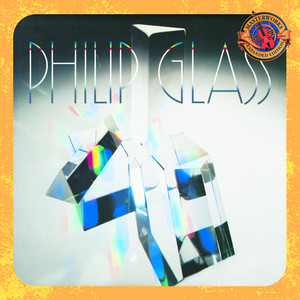 | Glassworks: IV. Rubric | Philip Glass, Philip Glass Ensemble, Michael Riesman | E♭ Major | 6 | 5B | 95 BPM | |
 | Piano & Violoncello 6 | Irena And Vojtech Havlovi | G Minor | 1 | 6A | 65 BPM | |
 | Adams: Harmonielehre: III. Meister Eckhardt and Quackie | John Adams, San Francisco Symphony, Michael Tilson Thomas | C Major | 3 | 8B | 161 BPM | |
 | Swedish Rhapsody No. 1, Op. 19 'Midsummer Vigil' | Hugo Alfvén, Bournemouth Symphony Orchestra, Paavo Berglund | D Major | 2 | 10B | 101 BPM | |
 | Sonata For Solo Cello: I. Dialogo: Adagio, rubato, cantabile | György Ligeti, Miklós Perényi | G Major | 0 | 9B | 69 BPM | |
 | Dream | John Cage, Alexei Lubimov | C Minor | 0 | 5A | 67 BPM | |
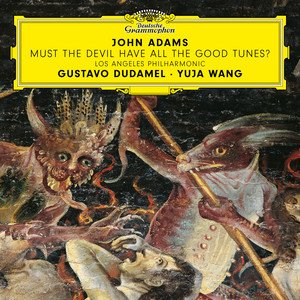 | Must the Devil Have All the Good Tunes?: I. Gritty, Funky, But in strict Tempo; Twitchy, Bot-Like | John Adams, Yuja Wang, Los Angeles Philharmonic, Gustavo Dudamel | G Minor | 4 | 6A | 147 BPM | |
 | Slow Twitchy Organs | Nico Muhly, James McVinnie | D Minor | 1 | 7A | 138 BPM | |
 | Breathe Easy | Rylandiaa | F Minor | 7 | 4A | 147 BPM | |
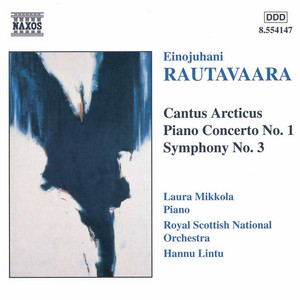 | Piano Concerto No. 1, Op. 45: II. Andante (ma rubato) | Einojuhani Rautavaara, Laura Mikkola, Royal Scottish National Orchestra, Hannu Lintu | D♭ Major | 0 | 3B | 104 BPM | |
 | Summer Music, Op. 31: IV. Tempo Primo, Joyous and Flowing | Samuel Barber, Ensemble Ouranos | D Minor | 1 | 7A | 138 BPM | |
 | Études, CD 143, Livre 1: IV Pour les sixtes (Arr. for Ensemble by Thibault Bertin-Maghit) | Claude Debussy, collectif9 | F♯ Minor | 0 | 11A | 58 BPM | |
 | Thalia, Muse of Comedy | Ken Lafave | E Major | 6 | 12B | 77 BPM | |
 | Something Wild in the City: Mary Ann's Theme (1960) for horn, celesta, and string Quartet | Morton Feldman, Ensemble Recherche | A Major | 0 | 11B | 94 BPM | |
 | 4 Pieces for Violin and Piano, Op. 7: No. 1, Sehr Langsam | Anton Webern, Diamanda La Berge Dramm, Helena Basilova | F♯ Minor | 0 | 11A | 133 BPM | |
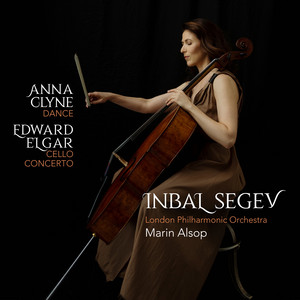 | DANCE: III. in the middle of the fighting | Anna Clyne, Inbal Segev, London Philharmonic Orchestra, Marin Alsop | A Minor | 1 | 8A | 82 BPM | |
 | Quatuor pour la fin du Temps: IV. Intermède | Olivier Messiaen, Martin Fröst | F♯ Major | 2 | 2B | 96 BPM | |
 | Tríptico R(ojo) | Renato Pedro Di Prinzio, Renato Di Prinzio | E♭ Major | 2 | 5B | 134 BPM |
- ISRC
- HKI190415504
- Label
- L-M Records/RCA Records