- BPM
- 139
- Key
- A♭ Major
- Camelot
- 4B
Eight Concert Etudes Op. 40 Reverie by Nikolai Kapustin Song Details
Nikolai Kapustin's ' "Eight Concert Etudes Op. 40 Reverie" was released on its scheduled release date, 1985. The duration of This song is about two minutes long, specifically at 2:59. This song does not appear to have any foul language. Eight Concert Etudes Op. 40 Reverie's duration is considered a little bit shorter than the average duration of a typical track. The track order of this song in Nikolai Kapustin's "Kapustin:Eight Concert Etudes" album is number 2 out of 14. On top of that, Japan appears to be the country where this track was created. Based on our statistics, Eight Concert Etudes Op. 40 Reverie's popularity is below average in popularity right now. The mood doesn't appear to be that danceable, but it still produces a high amount of positive energy.
BPM and Tempo
We consider the tempo marking of Eight Concert Etudes Op. 40 Reverie by Nikolai Kapustin to be Allegro (fast, quick, and bright) because the track has a tempo of 139 BPM, a half-time of 70BPM, and a double-time of 278 BPM. Based on that, the speed of the song's tempo is fast. Activities such as, walking, can go well with this song. The time signature for this track is 3/4.
Music Key
This song has a musical key of A♭ Major. This also means that this song has a camelot key of 4B. So, the perfect camelot match for 4B would be either 4B or 5A. While, 5B can give you a low energy boost. For moderate energy boost, you would use 1B and a high energy boost can either be 6B or 11B. Though, if you want a low energy drop, you should looking for songs with either a camelot key of 4A or 3B will give you a low energy drop, 7B would be a moderate one, and 2B or 9B would be a high energy drop. Lastly, 1A allows you to change the mood.
Want to find the BPM and music key for other songs? Check out our BPM and Key Finder page!
- Popularity
- 24%
- Loudness
- -13.057 dB
- Acousticness
- 97%
- Danceability
- 30%
- Energy
- 49%
- Instrumentalness
- 95%
- Liveness
- 11%
- Loudness
- 78%
- Speechiness
- 3%
- Valence
- 69%
Recommendations
| Track | Artist | Key | Energy | Camelot | BPM | ||
|---|---|---|---|---|---|---|---|
 | Piano Sonata in G Minor: I. Allegro molto agitato | Fanny Mendelssohn, Heather Schmidt | B Minor | 3 | 10A | 87 BPM | |
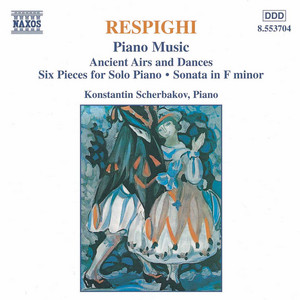 | 6 Pezzi, P. 44: No. 4. Minuetto | Ottorino Respighi, Konstantin Scherbakov | G Major | 0 | 9B | 132 BPM | |
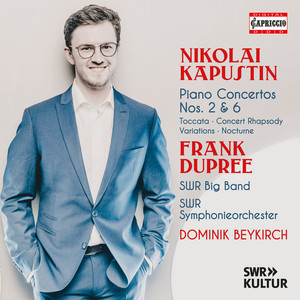 | Piano Concerto No. 6, Op. 74: II. Larghetto | Nikolai Kapustin, Frank Dupree, The SWR Big Band, Jakob Krupp, Meinhard Jenne, Dominik Beykirch | B♭ Major | 1 | 6B | 118 BPM | |
 | Mr. C.C. | Hiromi | A♭ Major | 2 | 4B | 80 BPM | |
 | Concerto for 2 Pianos, FP 61: II. Larghetto | Francis Poulenc, Leonard Bernstein, Arthur Gold, Robert Fizdale, New York Philharmonic | D♭ Major | 0 | 3B | 117 BPM | |
 | ジュ・トゥ・ヴ(サティ) | Erik Satie, Shinya Kiyozuka | C Major | 0 | 8B | 70 BPM | |
 | 8 Easy Pieces, Op. 43: No. 1, Prélude | Reinhold Glière, Alton Chung Ming Chan | D♭ Major | 0 | 3B | 66 BPM | |
 | Sancan: Sonatine for Flute and Piano: I. Moderato | Pierre Sancan, Eric Le Sage | E Minor | 1 | 9A | 60 BPM | |
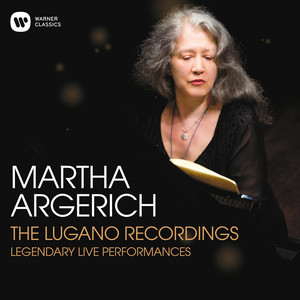 | Debussy: Petite suite, CD 71, L. 65: I. En bateau (Live) | Martha Argerich, Cristina Marton | G Major | 0 | 9B | 72 BPM | |
 | Piano Concerto No. 3 in C Major, Op. 26: I. Andante - Allegro | Sergei Prokofiev, Martha Argerich, Berliner Philharmoniker, Claudio Abbado | C Major | 2 | 8B | 116 BPM | |
 | Level Up!: II. Moonlit Village | Chris Evan Hass, Assembly Quartet | F Major | 1 | 7B | 87 BPM | |
 | Fantasia in Do Magg, Op. 17: Langsam getragen. Durchweg leise zu halten - etwas bewegter | Robert Schumann, Martha Argerich | C Major | 2 | 8B | 95 BPM | |
 | Ravel: Le Tombeau de Couperin, M. 68: V. Menuet | Maurice Ravel, Anne Queffélec | E Major | 1 | 12B | 134 BPM | |
 | パリの四月[A. ワイセンベルク編) | ヴァルター・アイガー, シャルル・トレネ, Kotaro Fukuma | A Major | 1 | 11B | 138 BPM | |
 | Liebestraum pour tous (D’après Liebestraum, S. 541: II. Seliger Tod in E-Flat Major de Franz Liszt) | Enrico Pieranunzi, André Ceccarelli, Diego Imbert | B Major | 5 | 1B | 89 BPM | |
 | Improvisation No. 15 in C Minor, FP 176 | Francis Poulenc, Pascal Rogé | G Minor | 1 | 6A | 117 BPM | |
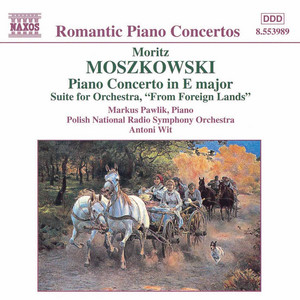 | Aus aller Herren Landern (From Foreign Lands), Op. 23: III. German: Andante | Moritz Moszkowski, Markus Pawlik, Polish National Radio Symphony Orchestra, Antoni Wit | F Major | 0 | 7B | 58 BPM | |
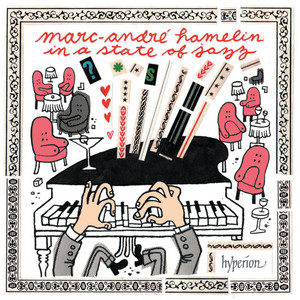 | En Avril, à Paris (Arr. Weissenberg) | Charles Trenet, Walter Eiger, Marc-André Hamelin | F♯ Minor | 0 | 11A | 96 BPM | |
 | 6 Melodies, Op. 4 - 6 melodies, Op. 5: Andante soave | Fanny Mendelssohn, Beatrice Rauchs | E♭ Major | 0 | 5B | 69 BPM | |
| Mr. Gollywogg (D’après Gollywogg’s Cake-Walk de Claude Debussy) | Enrico Pieranunzi, André Ceccarelli, Diego Imbert | C Major | 6 | 8B | 138 BPM | |
| Fantasiestücke, Op. 12: I. Des Abends | Robert Schumann, Martha Argerich | G Major | 0 | 9B | 141 BPM | |
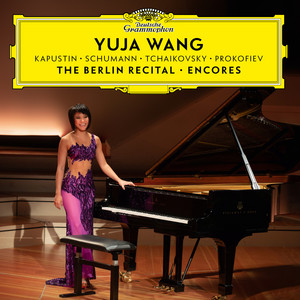 | Eight Concert Studies for Piano, Op. 40: III. Toccatina | Nikolai Kapustin, Yuja Wang | E Minor | 3 | 9A | 137 BPM | |
 | Valse lente | Germaine Tailleferre, Dario Müller | G Major | 0 | 9B | 66 BPM | |
 | Serenade for Strings in E Minor, Op. 20: I. Allegro piacevole | Edward Elgar, Orpheus Chamber Orchestra | F Minor | 0 | 4A | 124 BPM | |
 | Piano Concerto No.2 In B Flat, Op.83: 4. Allegretto grazioso - Un poco più presto | Johannes Brahms, Krystian Zimerman, Wiener Philharmoniker, Leonard Bernstein | B♭ Major | 2 | 6B | 107 BPM |
- ISRC
- JPG200405016
- Label
- L-M Records/RCA Records