- BPM
- 70
- Key
- E Minor
- Camelot
- 9A
Six Epigraphes antiques: Pour l'Egyptienne by Claude Debussy, Calefax Reed Quintet Song Details
"Six Epigraphes antiques: Pour l'Egyptienne" by Claude Debussy, Calefax Reed Quintet had its release date on January 1, 1996. The duration of This song is about 3 minutes long, at 3:04. Based on our data, This song appears to be safe for all ages and is not considered explicit. This track is about the average length of a typical track. This song is part of Wind Chamber Music by Calefax Reed Quintet. The song's track number on the album is #11 out of 19 tracks. Based on our data, Germany was the country where this track was produced or recorded. Six Epigraphes antiques: Pour l'Egyptienne is unknown right now. In our opinion, the overall tone is not very danceable and projects negative sounds, such as being sad, depressed, or angry.
BPM and Tempo
Since Six Epigraphes antiques: Pour l'Egyptienne by Claude Debussy, Calefax Reed Quintet has a tempo of 70 beats per a minute, the tempo markings of this song would be Adagio (slowly with great expression). With Six Epigraphes antiques: Pour l'Egyptienne being at 70 BPM, the half-time would be 35 BPM with a double-time of 140 BPM.In addition, we consider the tempo speed to be pretty slow for this song. The time signature for this track is 4/4.
Music Key
E Minor is the music key of this track. Which also means that the camelot key for this song is 9A. So, the perfect camelot match for 9A would be either 9A or 8B. While, a low energy boost can consist of either 9B or 10A. For moderate energy boost, you would use 6A and a high energy boost can either be 11A or 4A. However, if you are looking for a low energy drop, finding a song with a camelot key of 8A would be a great choice. Where 12A would give you a moderate drop, and 7A or 2A would be a high energy drop. Lastly, 12B allows you to change the mood.
Want to find the BPM and music key for other songs? Check out our BPM and Key Finder page!
- Popularity
- 0%
- Loudness
- -23.729 dB
- Acousticness
- 99%
- Danceability
- 15%
- Energy
- 2%
- Instrumentalness
- 93%
- Liveness
- 10%
- Loudness
- 60%
- Speechiness
- 4%
- Valence
- 12%
Recommendations
| Track | Artist | Key | Energy | Camelot | BPM | ||
|---|---|---|---|---|---|---|---|
 | Vogel als Prophet, Op. 82: No. 7 | Robert Schumann, Arthur Rubinstein | G Minor | 0 | 6A | 72 BPM | |
 | 24 Preludes, Op. 11: No. 21 in B-Flat Major - Andante | Alexander Scriabin, Mao Fujita | F Major | 1 | 7B | 149 BPM | |
 | 6 Album Leaves, Op. 2, JB 1:51: No. 2 in A Minor, Chanson. Moderato | Bedřich Smetana, Jitka Čechová | A Minor | 0 | 8A | 66 BPM | |
 | Romance In F Major, Op. 118 No. 5 | Johannes Brahms, Kun-Woo Paik | F Major | 1 | 7B | 69 BPM | |
 | Clara Schumann, Nocturne Op.6 No.2 | Angela Boutros | F♯ Major | 0 | 2B | 134 BPM | |
 | Liebesleid (Love's Sorrow) | Fritz Kreisler, Sergei Rachmaninoff, RueiBin Chen | A Major | 2 | 11B | 98 BPM | |
 | Filma Solo | Gabríel Ólafs | B♭ Major | 0 | 6B | 161 BPM | |
 | Symphony No. 3 in F Major, Op. 90: III. Poco allegretto | Johannes Brahms, David Zinman | C Minor | 0 | 5A | 173 BPM | |
 | Chopin: Waltz No. 9 in A-Flat Major, Op. 69 No. 1, "The Farewell Waltz " | Frédéric Chopin, David Fray | A♭ Major | 0 | 4B | 68 BPM | |
 | Rêverie, L. 68: Rêverie | Claude Debussy, Jean-Yves Thibaudet | G Minor | 0 | 6A | 69 BPM | |
 | Carnival of the Animals, R. 125: The Swan | Camille Saint-Saëns, Philippe Entremont, Gaby Casadesus, Yo-Yo Ma, Michel Cerruti, Michel Cals, Régis Pasquier, Yan Pascal Tortelier, Gabin Lauridon, Gerard Causse, Alain Marion, Michel Arrignon | G Major | 0 | 9B | 118 BPM | |
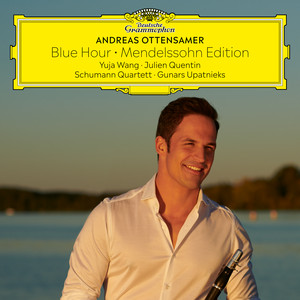 | Lieder ohne Worte I, Op. 19b: VI. Andante sostenuto "Venetian Gondola Song", MWV U78 (Arr. Ottensamer for Clarinet & Strings) | Felix Mendelssohn, Andreas Ottensamer, Schumann Quartett, Gunars Upatnieks | G Minor | 0 | 6A | 84 BPM | |
![Spartacus, Act III: Adagio of Spartacus and Phrygia (arr. Y. Grigorovich) [1968 Bolshoi Version] by Aram Khachaturian, RIAS Kammerchor, Deutsches Symphonie-Orchester Berlin, Michail Jurowski](https://i.scdn.co/image/ab67616d00001e02c21d253eed4ccdd547b4b94d) | Spartacus, Act III: Adagio of Spartacus and Phrygia (arr. Y. Grigorovich) [1968 Bolshoi Version] | Aram Khachaturian, RIAS Kammerchor, Deutsches Symphonie-Orchester Berlin, Michail Jurowski | E Major | 2 | 12B | 123 BPM | |
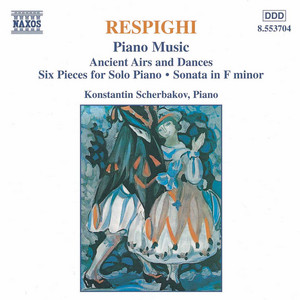 | Antiche Danze Ed Arie Per Liuto (Ancient Airs And Dances), P. 114: IV. Italiana | Ottorino Respighi, Konstantin Scherbakov | B Minor | 0 | 10A | 197 BPM | |
 | The French Library | Franz Gordon | D♭ Major | 3 | 3B | 92 BPM | |
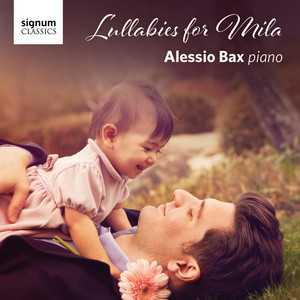 | Lyric Pieces, Book 5, Op. 54: Nocturne | Edvard Grieg, Alessio Bax | C Major | 0 | 8B | 72 BPM | |
 | En rêve, Nocturne, S. 207 | Franz Liszt, Marc-André Hamelin | B Major | 0 | 1B | 73 BPM | |
 | Lieder ohne Worte I, Op. 19b: VI. Andante sostenuto "Venetian Gondola Song", MWV U78 | Felix Mendelssohn, Daniel Barenboim | G Minor | 0 | 6A | 82 BPM | |
 | Brook Green Suite: II. Air | Gustav Holst, English Sinfonia, Howard Griffiths | E♭ Major | 0 | 5B | 128 BPM | |
 | The Planets, Op. 32: II. Venus, the Bringer of Peace | Gustav Holst, Lorin Maazel, L'Orchestre National de France, Orchestre National De France | A♭ Major | 0 | 4B | 139 BPM | |
 | 4 Impromptus, D. 899, Op. 90: No. 3 in G-Flat Major | Franz Schubert, Murray Perahia | C Minor | 5 | 5A | 150 BPM | |
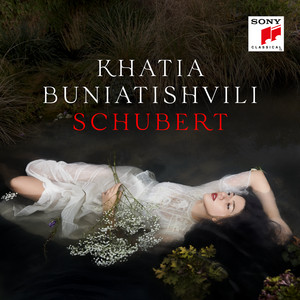 | Ständchen, S. 560 (Trans. from Schwanengesang No. 4, D. 957) | Franz Schubert, Franz Liszt, Khatia Buniatishvili | D Major | 0 | 10B | 67 BPM | |
 | No. 2 in E Minor, Dumka (Arr. P. Breiner for Piano) | Antonín Dvořák, Peter Breiner | G Major | 0 | 9B | 70 BPM | |
 | Ravel Piano Concerto In G Major, 2nd Movement | Alison Teale | D♭ Minor | 0 | 12A | 133 BPM | |
 | 2 Arabesques, L. 66: No. 1 in E Major | Claude Debussy, François-Joël Thiollier | F♯ Minor | 0 | 11A | 65 BPM |
- ISRC
- DEB249565811
- Label
- L-M Records/RCA Records