- BPM
- 90
- Key
- D♭ Major
- Camelot
- 3B
Rigoletto, Act III: But who can be inside here? (Rigoletto, Gilda) by Giuseppe Verdi, Sir Mark Elder, English National Opera Orchestra, John Rawnsley, Helen Field Song Details
"Rigoletto, Act III: But who can be inside here? (Rigoletto, Gilda)" by Giuseppe Verdi, Sir Mark Elder, English National Opera Orchestra, John Rawnsley, Helen Field had its release date on January 1, 2000. The duration of This song is about two minutes long, specifically at 2:02. This song does not appear to have any foul language. Rigoletto, Act III: But who can be inside here? (Rigoletto, Gilda)'s duration is considered a little bit shorter than the average duration of a typical track. This song is part of Verdi: Rigoletto by Giuseppe Verdi, Sir Mark Elder, English National Opera Orchestra, John Rawnsley, Helen Field, Arthur Davies, John Tomlinson, Jean Rigby, Norman Bailey. The song's track number on the album is #20 out of 38 tracks. Based on our data, United Kingdom was the country where this track was produced or recorded. In terms of popularity, Rigoletto, Act III: But who can be inside here? (Rigoletto, Gilda) is currently unknown. In our opinion, the overall tone is not very danceable and projects negative sounds, such as being sad, depressed, or angry.
BPM and Tempo
Since Rigoletto, Act III: But who can be inside here? (Rigoletto, Gilda) by Giuseppe Verdi, Sir Mark Elder, English National Opera Orchestra, John Rawnsley, Helen Field has a tempo of 90 beats per a minute, the tempo markings of this song would be Andante (at a walking pace). With Rigoletto, Act III: But who can be inside here? (Rigoletto, Gilda) being at 90 BPM, the half-time would be 45 BPM with a double-time of 180 BPM.In addition, we consider the tempo speed to be pretty slow for this song. This makes this song perfect for activities such as, yoga or pilates. The time signature for this track is 4/4.
Music Key
This song is in the music key of D♭ Major. Or for those who are familiar with the camelot wheel, this song has a camelot key of 3B. So, the perfect camelot match for 3B would be either 3B or 4A. While, 4B can give you a low energy boost. For moderate energy boost, you would use 12B and a high energy boost can either be 5B or 10B. Though, if you want a low energy drop, you should looking for songs with either a camelot key of 3A or 2B will give you a low energy drop, 6B would be a moderate one, and 1B or 8B would be a high energy drop. Lastly, 12A allows you to change the mood.
Want to find the BPM and music key for other songs? Check out our BPM and Key Finder page!
- Popularity
- 0%
- Loudness
- -17.456 dB
- Acousticness
- 98%
- Danceability
- 27%
- Energy
- 15%
- Instrumentalness
- 0%
- Liveness
- 7%
- Loudness
- 71%
- Speechiness
- 5%
- Valence
- 4%
Recommendations
| Track | Artist | Key | Energy | Camelot | BPM | ||
|---|---|---|---|---|---|---|---|
 | Norma: Sinfonia | Vincenzo Bellini, Welsh National Opera Orchestra, Richard Bonynge | G Major | 1 | 9B | 140 BPM | |
 | Verdi: Aida, Act 2: Ballabile | Giuseppe Verdi, Riccardo Muti, New Philharmonia Orchestra | F Minor | 3 | 4A | 79 BPM | |
 | La Traviata / Act 2: "Noi siamo zingarelle" | Giuseppe Verdi, Stefania Malagu, Alfredo Giacomotti, Giovanni Foiani, Chor der Bayerischen Staatsoper München, Bavarian State Orchestra, Carlos Kleiber | E Minor | 1 | 9A | 63 BPM | |
 | Requiem, K. 626 (Ed. Beyer/Levin): IIIa. Dies irae - Live | Wolfgang Amadeus Mozart, Berliner Philharmoniker, Claudio Abbado, Swedish Radio Choir, Kay Johannsen | G Minor | 4 | 6A | 72 BPM | |
 | Requiem, K. 626: Sequentia: Dies irae | Wolfgang Amadeus Mozart, Sir Colin Davis, Angela Maria Blasi, Marjana Lipovsek, Uwe Heilmann, Jan-Hendrik Rootering | G Minor | 4 | 6A | 80 BPM | |
 | Un bel di vedremo (Madame Butterfly) | Renata Tebaldi, Orchestre de la Suisse Romande | D♭ Major | 2 | 3B | 128 BPM | |
 | Das Liebesverbot: Overture | Richard Wagner, Staatskapelle Dresden, Giuseppe Sinopoli | G Major | 6 | 9B | 120 BPM | |
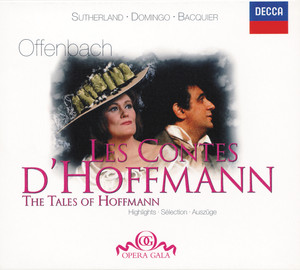 | Les Contes d'Hoffmann / Act 2: "Belle nuit, ô nuit d'amour" | Jacques Offenbach, Dame Joan Sutherland, Huguette Tourangeau, Chorus Pro Arte Lausanne Du Brassus, Radio Suisse Romande Chorus, Orchestre de la Suisse Romande, Richard Bonynge | D Major | 1 | 10B | 82 BPM | |
 | Cavalleria rusticana: Pt. I: Prelude | Pietro Mascagni, Maria Callas, Giuseppe Di Stefano, Rolando Panerai, Anna Maria Canali, Ebe Ticozzi, Vittore Veneziani, Milan La Scala Chorus, Orchestra Del Teatro Alla Scala, Milano, Tullio Serafin | C Major | 3 | 8B | 100 BPM | |
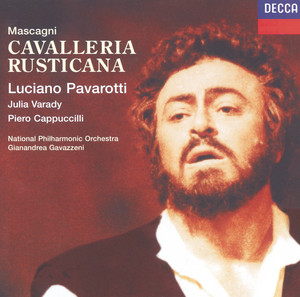 | Cavalleria rusticana: "Beato voi, compar Alfio...Inneggiamo, Il Signor" | Pietro Mascagni, Ida Bormida, Piero Cappuccilli, Julia Varady, The London Opera Chorus, National Philharmonic Orchestra, Gianandrea Gavazzeni | G Major | 2 | 9B | 68 BPM | |
 | La Sonnambula (1997 Digital Remaster): Compagne, temiri amici ....Come per me sereno | Maria Callas, Orchestra Del Teatro Alla Scala, Milano, Tullio Serafin | A♭ Major | 1 | 4B | 113 BPM | |
 | Carmen, Act II: Chanson bohème. Les tringles des sistres tintaient | Georges Bizet, Christine Barbaux, Agnes Baltsa, Jane Berbié, Berliner Philharmoniker, Herbert von Karajan | C Major | 1 | 8B | 106 BPM | |
 | Mozart: Requiem in D Minor, K. 626: III. Dies irae | Wolfgang Amadeus Mozart, Riccardo Muti, Stockholm Chamber Choir, Swedish Radio Choir, Berliner Philharmoniker | D Minor | 6 | 7A | 77 BPM | |
 | Habanera, WD 31 (From the Opera "Carmen") | Georges Bizet, André Rieu, Johann Strauss Orchestra | D Major | 4 | 10B | 70 BPM | |
 | Rigoletto, Act I: Figlia! ... Mio padre! | Giuseppe Verdi, Ileana Cotrubas, Piero Cappuccilli, Wiener Philharmoniker, Carlo Maria Giulini | D♭ Major | 2 | 3B | 128 BPM | |
 | Don Giovanni, ossia Il dissoluto punito, K.527 / Act 1: "Là ci darem la mano" | Wolfgang Amadeus Mozart, Ildebrando D'Arcangelo, Mojca Erdmann, Mahler Chamber Orchestra, Yannick Nézet-Séguin | B Minor | 9 | 10A | 180 BPM | |
 | Carmina Burana: IV. Omnia Sol temperat | Carl Orff, Dietrich Fischer-Dieskau, Orchester der Deutschen Oper Berlin, Eugen Jochum | B♭ Major | 0 | 6B | 76 BPM | |
| Verdi: Aida, Act 1: "Celeste Aida" (Radamès) | Giuseppe Verdi, Riccardo Muti, New Philharmonia Orchestra | B♭ Major | 2 | 6B | 79 BPM | |
 | Tannhäuser, WWV 70, Act II: Dich, teure Halle, grüß ich wieder | Richard Wagner, Lise Davidsen, Philharmonia Orchestra, Esa-Pekka Salonen | E Minor | 2 | 9A | 169 BPM | |
 | La Forza Del Destino: La Forza Del Destino: Sinfonia | Francesco Maria Piave, Hungarian State Opera Orchestra, Giuseppe Verdi | E Major | 1 | 12B | 94 BPM | |
 | Una voce poco fa from Il Barbiere di Siviglia, '(The) Barber of Seville' | Maria Callas, Philharmonia Orchestra, Tullio Serafin | E Major | 1 | 12B | 136 BPM | |
 | La Traviata: Libiamo ne' lieti calici (Brindisi) | Giuseppe Verdi, José Carreras, Agnes Baltsa, Plácido Domingo, London Symphony Orchestra | B♭ Major | 1 | 6B | 206 BPM | |
 | Wiener Blut, Op. 354 | Johann Strauss II, Vienna Volksoper Orchestra, Franz Bauer-Theussl | D Major | 2 | 10B | 93 BPM | |
| Cavalleria rusticana: Preludio | Pietro Mascagni, National Philharmonic Orchestra, Gianandrea Gavazzeni | F Major | 2 | 7B | 88 BPM | |
 | Così fan tutte, K. 588 / Act I: "Soave sia il vento" | Wolfgang Amadeus Mozart, Miah Persson, Angela Brower, Alessandro Corbelli, Chamber Orchestra of Europe, Yannick Nézet-Séguin | G Minor | 1 | 6A | 88 BPM |
- ISRC
- GBLWD0001120
- Label
- L-M Records/RCA Records