- BPM
- 133
- Key
- A Minor
- Camelot
- 8A
Le tombeau de Couperin: Rigaudon. Assez vif by Maurice Ravel, Calefax Reed Quintet Song Details
Maurice Ravel, Calefax Reed Quintet's 'Le tombeau de Couperin: Rigaudon. Assez vif' had a release date set for January 1, 1996. The duration of This song is about two minutes long, specifically at 2:58. This song does not appear to have any foul language. Le tombeau de Couperin: Rigaudon. Assez vif's duration is considered a little bit shorter than the average duration of a typical track. This song is part of Wind Chamber Music by Calefax Reed Quintet. The song's track number on the album is #17 out of 19 tracks. Based on our data, Germany was the country where this track was produced or recorded. Based on our statistics, Le tombeau de Couperin: Rigaudon. Assez vif's popularity is unknown right now. In our opinion, the overall tone is not very danceable and projects negative sounds, such as being sad, depressed, or angry.
BPM and Tempo
Since Le tombeau de Couperin: Rigaudon. Assez vif by Maurice Ravel, Calefax Reed Quintet has a tempo of 133 beats per a minute, the tempo markings of this song would be Allegro (fast, quick, and bright). With Le tombeau de Couperin: Rigaudon. Assez vif being at 133 BPM, the half-time would be 66 BPM with a double-time of 266 BPM.In addition, we consider the tempo speed to be pretty fast for this song. This makes this song perfect for activities such as, walking. The time signature for this track is 4/4.
Music Key
This song is in the music key of A Minor. Which also means that the camelot key for this song is 8A. So, the perfect camelot match for 8A would be either 8A or 7B. While, a low energy boost can consist of either 8B or 9A. For moderate energy boost, you would use 5A and a high energy boost can either be 10A or 3A. However, if you are looking for a low energy drop, finding a song with a camelot key of 7A would be a great choice. Where 11A would give you a moderate drop, and 6A or 1A would be a high energy drop. Lastly, 11B allows you to change the mood.
Want to find the BPM and music key for other songs? Check out our BPM and Key Finder page!
- Popularity
- 0%
- Loudness
- -26.44 dB
- Acousticness
- 98%
- Danceability
- 34%
- Energy
- 2%
- Instrumentalness
- 60%
- Liveness
- 12%
- Loudness
- 56%
- Speechiness
- 4%
- Valence
- 21%
Recommendations
| Track | Artist | Key | Energy | Camelot | BPM | ||
|---|---|---|---|---|---|---|---|
 | Piano Concerto No. 2 in F Major, Op. 102: II. Andante | Dmitri Shostakovich, Boris Giltburg, Royal Liverpool Philharmonic Orchestra, Vasily Petrenko | C Minor | 0 | 5A | 80 BPM | |
 | Valse lente | Germaine Tailleferre, Dario Müller | G Major | 0 | 9B | 66 BPM | |
 | Ravel: Piano Concerto in G Major, M. 83: II. Adagio assai | Maurice Ravel, Andrew von Oeyen, Emmanuel Villaume, Prague Philharmonia | D♭ Minor | 0 | 12A | 75 BPM | |
 | 6 Melodies, Op. 4 - 6 melodies, Op. 5: Andante soave | Fanny Mendelssohn, Beatrice Rauchs | E♭ Major | 0 | 5B | 69 BPM | |
 | Kinderszenen, Op. 15: No. 7, Träumerei | Robert Schumann, Vladimir Horowitz | F Major | 0 | 7B | 114 BPM | |
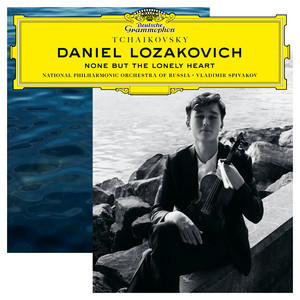 | Souvenir d'un lieu cher, Op. 42: Ib. Méditation (Orch. Glazunov) | Pyotr Ilyich Tchaikovsky, Daniel Lozakovich, National Philharmonic Orchestra of Russia, Vladimir Spivakov | B♭ Major | 2 | 6B | 99 BPM | |
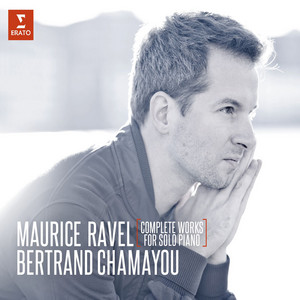 | Ravel: Sonatine, M. 40: I. Modéré | Maurice Ravel, Bertrand Chamayou | F♯ Minor | 1 | 11A | 67 BPM | |
 | XIII. Le cygne (Transcr. L. Godowsky for Piano) | Camille Saint-Saëns, Leopold Godowsky, Konstantin Scherbakov | F♯ Major | 0 | 2B | 72 BPM | |
 | Poulenc: Concerto for Two Pianos in D Minor, FP 61: I. Allegro ma non troppo | Francis Poulenc, James Conlon, Rotterdam Philharmonic Orchestra | E♭ Major | 1 | 5B | 103 BPM | |
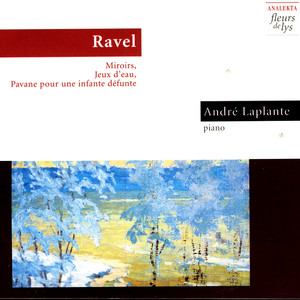 | Menuet Sur Le Nom De Haydn | Maurice Ravel, André Laplante | G Major | 0 | 9B | 69 BPM | |
 | Warsaw Concerto | Richard Addinsell, Jean-Yves Thibaudet, BBC Symphony Orchestra, Hugh Wolff | B Major | 1 | 1B | 76 BPM | |
 | Dolly Suite, Op. 56: I. Berceuse | Gabriel Fauré, Katia Labèque, Marielle Labèque | E Major | 0 | 12B | 63 BPM | |
 | Sonata No. 2, Op. 36: II. Non Allegro | Hélène Grimaud | E Minor | 0 | 9A | 68 BPM | |
 | Orfeo ed Euridice, Wq. 30: Dance of the Blessed Spirits "Melody" (Arr. Sgambati for Piano) | Christoph Willibald Gluck, Yuja Wang | D Minor | 0 | 7A | 70 BPM | |
 | Young Birches, Op. 128, No. 2 | Amy Beach, Joanne Polk | F♯ Minor | 1 | 11A | 170 BPM | |
 | 3 Danzas Argentinas, Op. 2: No. 2, Danza de la moza donosa | Alberto Ginastera, Fernando Viani | B Major | 0 | 1B | 72 BPM | |
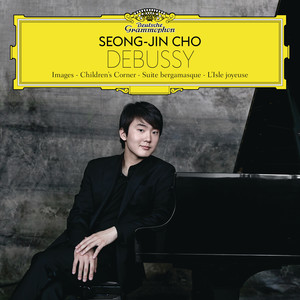 | Images I, CD 105: I. Reflets dans l'eau | Claude Debussy, Seong-Jin Cho | D♭ Major | 0 | 3B | 67 BPM | |
 | Trio for Oboe, Bassoon and Piano, FP 43: II. Andante: Andante con moto | Francis Poulenc, Olivier Doise, Laurent Lefèvre, Alexandre Tharaud | A♭ Major | 0 | 4B | 70 BPM | |
 | Variations on a Polish Theme, Op. 10: No. 5 Andantino | Karol Szymanowski, Martin Roscoe | B Minor | 0 | 10A | 70 BPM | |
 | 16 Waltzes, Op. 39: No. 15 In A Flat Major | Johannes Brahms, Idil Biret | A♭ Major | 0 | 4B | 68 BPM | |
 | Polovetsian Dances from Prince Igor: Introduzione | Alexander Borodin, George Szell, The Cleveland Orchestra | A Major | 1 | 11B | 83 BPM | |
 | Adagio in E-Flat Major | Fanny Mendelssohn, Heather Schmidt | E♭ Minor | 0 | 2A | 90 BPM | |
 | Les Barricades Mystérieuses | François Couperin, Khatia Buniatishvili | B♭ Major | 0 | 6B | 149 BPM | |
 | 6 Impromptus, Op. 5: Impromptu No. 5 in B Minor | Jean Sibelius, Håvard Gimse | B Minor | 0 | 10A | 84 BPM | |
 | 3 Preludi Sopra Melodie Gregoriane, P. 131: I. Molto Lento | Ottorino Respighi, Konstantin Scherbakov | A♭ Minor | 0 | 1A | 70 BPM |
- ISRC
- DEB249565817
- Label
- L-M Records/RCA Records