- BPM
- 90
- Key
- D♭ Major
- Camelot
- 3B
Rigoletto, Act III: Eighty dollars you were asking (Rigoletto, Sparafucile, Duke, Maddalena) by Giuseppe Verdi, Sir Mark Elder, English National Opera Orchestra, John Rawnsley, John Tomlinson, Arthur Davies, Jean Rigby Song Details
"Rigoletto, Act III: Eighty dollars you were asking (Rigoletto, Sparafucile, Duke, Maddalena)" by Giuseppe Verdi, Sir Mark Elder, English National Opera Orchestra, John Rawnsley, John Tomlinson, Arthur Davies, Jean Rigby had its release date on January 1, 2000. The duration of This song is about two minutes long, specifically at 2:21. This song does not appear to have any foul language. Rigoletto, Act III: Eighty dollars you were asking (Rigoletto, Sparafucile, Duke, Maddalena)'s duration is considered a little bit shorter than the average duration of a typical track. This song is part of Verdi: Rigoletto by Giuseppe Verdi, Sir Mark Elder, English National Opera Orchestra, John Rawnsley, Helen Field, Arthur Davies, John Tomlinson, Jean Rigby, Norman Bailey. The song's track number on the album is #15 out of 38 tracks. Based on our data, United Kingdom was the country where this track was produced or recorded. In terms of popularity, Rigoletto, Act III: Eighty dollars you were asking (Rigoletto, Sparafucile, Duke, Maddalena) is currently unknown. In our opinion, the overall tone is not very danceable and projects negative sounds, such as being sad, depressed, or angry.
BPM and Tempo
Since Rigoletto, Act III: Eighty dollars you were asking (Rigoletto, Sparafucile, Duke, Maddalena) by Giuseppe Verdi, Sir Mark Elder, English National Opera Orchestra, John Rawnsley, John Tomlinson, Arthur Davies, Jean Rigby has a tempo of 90 beats per a minute, the tempo markings of this song would be Andante (at a walking pace). With Rigoletto, Act III: Eighty dollars you were asking (Rigoletto, Sparafucile, Duke, Maddalena) being at 90 BPM, the half-time would be 45 BPM with a double-time of 180 BPM.In addition, we consider the tempo speed to be pretty slow for this song. This makes this song perfect for activities such as, yoga or pilates. The time signature for this track is 4/4.
Music Key
This song is in the music key of D♭ Major. Or for those who are familiar with the camelot wheel, this song has a camelot key of 3B. So, the perfect camelot match for 3B would be either 3B or 4A. While, 4B can give you a low energy boost. For moderate energy boost, you would use 12B and a high energy boost can either be 5B or 10B. Though, if you want a low energy drop, you should looking for songs with either a camelot key of 3A or 2B will give you a low energy drop, 6B would be a moderate one, and 1B or 8B would be a high energy drop. Lastly, 12A allows you to change the mood.
Want to find the BPM and music key for other songs? Check out our BPM and Key Finder page!
- Popularity
- 0%
- Loudness
- -17.456 dB
- Acousticness
- 98%
- Danceability
- 27%
- Energy
- 15%
- Instrumentalness
- 0%
- Liveness
- 7%
- Loudness
- 71%
- Speechiness
- 5%
- Valence
- 4%
Recommendations
| Track | Artist | Key | Energy | Camelot | BPM | ||
|---|---|---|---|---|---|---|---|
 | Requiem: IIg. Recordare | Giuseppe Verdi, Mirella Freni, Christa Ludwig, Berliner Philharmoniker, Herbert von Karajan | F Major | 1 | 7B | 77 BPM | |
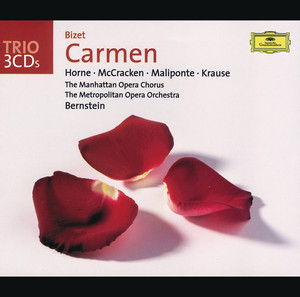 | Carmen, Act I: Habanera. L'amour est un oiseau rebelle | Georges Bizet, Marilyn Horne, The Manhattan Opera Chorus, John Mauceri, Metropolitan Opera Orchestra, Leonard Bernstein | E Minor | 2 | 9A | 107 BPM | |
 | I Puritani | Dame Joan Sutherland, Orchestra of the Royal Opera House & Covent Garden, Francesco Molinari-Pradelli | D Major | 2 | 10B | 112 BPM | |
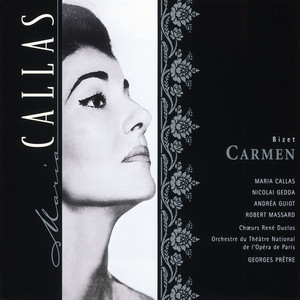 | Bizet: Carmen, WD 31, Act 1 Scene 4: No. 5, Havanaise, "L'amour est un oiseau rebelle" (Carmen, Chorus) | Georges Bizet, Maria Callas, Orchestre de l'Opéra National de Paris, Georges Prêtre, Orchestre du Théâtre National de l'Opéra Paris | D Major | 1 | 10B | 134 BPM | |
 | Carmen Votre toast, je peux vous le rendre - Instrumental Version | Arthur Fiedler, Boston Pops Orchestra | F Major | 3 | 7B | 113 BPM | |
 | Bizet: Carmen, WD 31, Act 1: Habanera. "L'amour est un oiseau rebelle" (Carmen, Chœur) | Georges Bizet, Maria Callas, Choeurs Rene Duclos, Georges Prêtre, Orchestre du Théâtre National de l'Opéra de Paris | D Major | 1 | 10B | 102 BPM | |
 | Carmina Burana: IV. Omnia Sol temperat | Carl Orff, Dietrich Fischer-Dieskau, Orchester der Deutschen Oper Berlin, Eugen Jochum | B♭ Major | 0 | 6B | 76 BPM | |
 | Bizet: Carmen, WD 31, Act 4: "Les voici ! Voici le quadrille !" (Chœur) | Georges Bizet, Michel Plasson, La Lauzeta, Les Éléments, Orchestre National Du Capitole De Toulouse | D♭ Minor | 2 | 12A | 93 BPM | |
 | Don Giovanni, K.527 / Act 2: "Don Giovanni, a cenar teco m'invitasti" | Wolfgang Amadeus Mozart, Robert Lloyd, Thomas Allen, Simone Alaimo, Ambrosian Opera Chorus, Academy of St. Martin in the Fields, Sir Neville Marriner | B♭ Major | 3 | 6B | 78 BPM | |
| Carmina Burana: I. O fortuna | Carl Orff, Orchester der Deutschen Oper Berlin, Eugen Jochum, Chor der Deutschen Oper Berlin | B♭ Major | 2 | 6B | 70 BPM | |
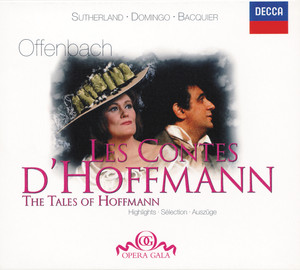 | Les Contes d'Hoffmann / Act 2: "Belle nuit, ô nuit d'amour" | Jacques Offenbach, Dame Joan Sutherland, Huguette Tourangeau, Chorus Pro Arte Lausanne Du Brassus, Radio Suisse Romande Chorus, Orchestre de la Suisse Romande, Richard Bonynge | D Major | 1 | 10B | 82 BPM | |
 | La Gioconda, Act IV: Suicido! … | Amilcare Ponchielli, Maria Callas, RAI Symphony Orchestra, Turin, Antonino Votto | D Major | 1 | 10B | 86 BPM | |
 | Les Contes d'Hoffmann (1989 Digital Remaster), Act III: Entr'acte et Barcarolle: Belle nuit, ô nuit d'amour (Une voix/Giulietta/Choeurs) | Jacques Offenbach, Nicolai Gedda, Elisabeth Schwarzkopf, Victoria de los Ángeles, Gianna D'Angelo, Christiane Gayraud, Jacques Pruvost, Robert Geay, George London, Michel Sénéchal, Jean Christophe Benoit, Jean-Pierre Laffage, Nicola Ghiuselev, André Malla | D Major | 1 | 10B | 90 BPM | |
 | L'elisir d'amore / Act 2: "Una furtiva lagrima" | Gaetano Donizetti, Luciano Pavarotti, English Chamber Orchestra, Richard Bonynge | B♭ Major | 1 | 6B | 166 BPM | |
 | Verdi: La battaglia di Legnano, Act 3: "Giuriam d'Italia" (Coro) | Giuseppe Verdi, Carlo Rizzi, Coro dell'Accademia Nazionale Di Santa Cecilia, Orchestra dell'Accademia Nazionale di Santa Cecilia | D Major | 2 | 10B | 114 BPM | |
 | Blumenduett - Lakmé | Léo Delibes, Alain Lombard, Danielle Millet, Mady Mesplé, Orchestre Du Theatre National De L'Opera Comique | B Major | 1 | 1B | 130 BPM | |
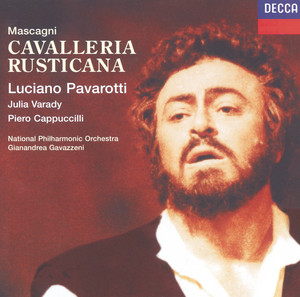 | Cavalleria rusticana: Preludio | Pietro Mascagni, National Philharmonic Orchestra, Gianandrea Gavazzeni | F Major | 2 | 7B | 88 BPM | |
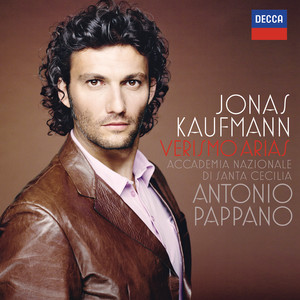 | Pagliacci / Act 1: "Recitar!...Vesti la giubba" | Ruggero Leoncavallo, Jonas Kaufmann, Orchestra dell'Accademia Nazionale di Santa Cecilia, Antonio Pappano | E Minor | 4 | 9A | 81 BPM | |
 | Bizet: Carmen, WD 31, Act 3, Scene 1: "Je dis que rien ne m'épouvante" (Micaëla) | Georges Bizet, Giuseppe Sinopoli, Angela Gheorghiu, Bavarian State Orchestra | F Major | 1 | 7B | 190 BPM | |
 | Orphée et Eurydice: J'ai perdu mon Eurydice | Maria Callas, Georges Prêtre, The Orchestra National De La Radiodiffusion Francaise | C Major | 2 | 8B | 71 BPM | |
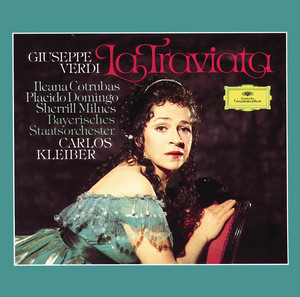 | La Traviata / Act 3: "Ah, Violetta!" - "Voi? Signor?" | Giuseppe Verdi, Ileana Cotrubas, Plácido Domingo, Sherrill Milnes, Bavarian State Orchestra, Carlos Kleiber | A Minor | 1 | 8A | 105 BPM | |
 | Libiamo Ne' Lieti Calici (Brindisi) - La Traviata Atto I | Renata Tebaldi | D Major | 2 | 10B | 85 BPM | |
 | Cavalleria rusticana: Pt. I: Prelude | Pietro Mascagni, Maria Callas, Giuseppe Di Stefano, Rolando Panerai, Anna Maria Canali, Ebe Ticozzi, Vittore Veneziani, Milan La Scala Chorus, Orchestra Del Teatro Alla Scala, Milano, Tullio Serafin | C Major | 3 | 8B | 100 BPM | |
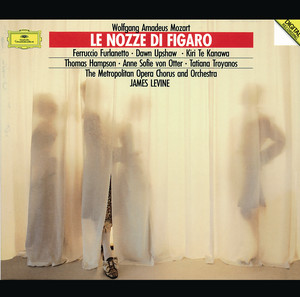 | Le nozze di Figaro, K.492 / Act 4: "Deh vieni, non tardar" | Wolfgang Amadeus Mozart, Dawn Upshaw, Metropolitan Opera Orchestra, James Levine | F Major | 0 | 7B | 97 BPM | |
 | 4 Pezzi sacri: IV. Te Deum | Giuseppe Verdi, Cheryl Studer, Wiener Philharmoniker, Claudio Abbado, Wiener Staatsopernchor, Norbert Balatsch | D Major | 2 | 10B | 85 BPM |
- ISRC
- GBLWD0001115
- Label
- L-M Records/RCA Records