- BPM
- 105
- Key
- F Minor
- Camelot
- 4A
The Salley Gardens by Benjamin Britten, Susan Manoff, Sandrine Piau Song Details
"The Salley Gardens" by Benjamin Britten, Susan Manoff, Sandrine Piau had its release date on March 21, 2011. The duration of This song is about two minutes long, specifically at 2:23. This song does not appear to have any foul language. The Salley Gardens's duration is considered a little bit shorter than the average duration of a typical track. The song is number 23 out of 25 in Après un rêve by Sandrine Piau. Going off of the ISRC code of this track, we detected that the origin of this track is from France. In terms of popularity, The Salley Gardens is currently not that popular. Although the tone can be danceable to some, this track does projects more of a negative sound rather than a postive one.
BPM and Tempo
The tempo marking of The Salley Gardens by Benjamin Britten, Susan Manoff, Sandrine Piau is Andante (at a walking pace), since this song has a tempo of 105 BPM. With that information, we can conclude that the song has a slow tempo. The time signature for this track is 5/4.
Music Key
F Minor is the music key of this track. Because this track belongs in the F Minor key, the camelot key is 4A. So, the perfect camelot match for 4A would be either 4A or 3B. While, a low energy boost can consist of either 4B or 5A. For moderate energy boost, you would use 1A and a high energy boost can either be 6A or 11A. However, if you are looking for a low energy drop, finding a song with a camelot key of 3A would be a great choice. Where 7A would give you a moderate drop, and 2A or 9A would be a high energy drop. Lastly, 7B allows you to change the mood.
Want to find the BPM and music key for other songs? Check out our BPM and Key Finder page!
- Popularity
- 3%
- Loudness
- -24.17 dB
- Acousticness
- 98%
- Danceability
- 48%
- Energy
- 2%
- Instrumentalness
- 0%
- Liveness
- 11%
- Loudness
- 60%
- Speechiness
- 7%
- Valence
- 6%
Recommendations
| Track | Artist | Key | Energy | Camelot | BPM | ||
|---|---|---|---|---|---|---|---|
 | 4 Orchestral Pieces, Sz. 51: I. Preludio | Béla Bartók, Chicago Symphony Orchestra, Pierre Boulez | D Major | 1 | 10B | 73 BPM | |
 | Symphonic Dances, Op. 64: III. Allegro giocoso | Edvard Grieg, Bergen Philharmonic Orchestra, Edward Gardner | A Major | 1 | 11B | 172 BPM | |
 | Requiem, Op. 48: 1. Introitus: Requiem aeternam - Kyrie | Gabriel Fauré, The Monteverdi Choir, Salisbury Cathedral Choristers, Orchestre Révolutionnaire et Romantique, John Eliot Gardiner | B♭ Major | 0 | 6B | 74 BPM | |
 | Gloria, FP 177: II. Laudamus te | Francis Poulenc, Britten Sinfonia, Polyphony, Stephen Layton, The Choir Of Trinity College, Cambridge | D Minor | 2 | 7A | 130 BPM | |
 | Les soirs illuminés par l'ardeur du charbon, L.150 (Arr. by Colin Matthews) | Claude Debussy, Colin Matthews, Hallé, Sir Mark Elder | D♭ Major | 0 | 3B | 79 BPM | |
 | Rejoice in the Lamb, Op. 30: Rejoice in God, O ye Tongues | Benjamin Britten, Benedict Giles, Malcolm Green, Simon Wall, Thomas Williams, Iain Farrington, Choir of St. John's College, Cambridge, Christopher Robinson | D Major | 2 | 10B | 70 BPM | |
 | Ives / Orch. Brant: A Concord Symphony: III. The Alcotts | Charles Ives, Henry Brant, San Francisco Symphony, Michael Tilson Thomas | E♭ Major | 1 | 5B | 91 BPM | |
 | Adam Zero: Approach of Autumn | Arthur Bliss, English Northern Philharmonia, David Lloyd-Jones | D Minor | 0 | 7A | 127 BPM | |
 | Nocturnes, CD 98: I. Nuages | Claude Debussy, The Cleveland Orchestra, Pierre Boulez | C Major | 0 | 8B | 90 BPM | |
 | Love's Labour's Lost, Op. 28a: II. Longaville's Sonnet | Gerald Finzi, Robert Plane, Royal Northern Sinfonia, Howard Griffiths | D Minor | 0 | 7A | 94 BPM | |
 | Symphony No. 3 In C Minor, Op. 78 "Organ Symphony": 1. Adagio - Allegro moderato - Poco adagio | Camille Saint-Saëns, Simon Preston, Berliner Philharmoniker, James Levine | A♭ Major | 1 | 4B | 118 BPM | |
 | 5 Stücke im Volkston, Op. 102: 3. Nicht schnell, mit viel Ton zu spielen | Robert Schumann, Mstislav Rostropovich, Benjamin Britten | A Major | 0 | 11B | 71 BPM | |
 | Saint Nicolas, Op. 42: He Comes To Myra and Is Chosen Bishop | Benjamin Britten, Sir Peter Pears, Aldeburgh Festival Chorus, Girls' Choir Of Sir John Leman School, Beccles, Boys' Choir Of Ipswich School Preparatory Department, Ralph Downes, The Aldeburgh Festival Orchestra | D Major | 3 | 10B | 64 BPM | |
 | A Walk To The Paradise Garden | Frederick Delius, Barry Wordsworth, London Symphony Orchestra | E Major | 0 | 12B | 103 BPM | |
| Nocturnes, L. 91: III. Sirènes (Arr. for Choir and Orchestra by Denis Herlin) | Claude Debussy, Denis Herlin, Hallé, Sir Mark Elder | F♯ Major | 0 | 2B | 81 BPM | |
 | Suite pastorale: I. Idylle | Emmanuel Chabrier, Wiener Philharmoniker, John Eliot Gardiner | F Major | 0 | 7B | 105 BPM | |
 | Requiem, Op. 9: IV. Sanctus | Maurice Duruflé, Maîtrise de Saint-Christophe de Javel, Yves Castagnet, Henri Chalet | B♭ Major | 0 | 6B | 131 BPM | |
 | Sibelius: Symphony No. 5 in E-Flat Major, Op. 82: III. Allegro molto | Jean Sibelius, Sakari Oramo, City Of Birmingham Symphony Orchestra | A♭ Major | 1 | 4B | 149 BPM | |
 | Sussex Landscape: II. Lento e molto tranquillo | Avril Coleridge-Taylor, BBC Philharmonic Orchestra, John Andrews | B♭ Major | 0 | 6B | 74 BPM | |
 | The Rite of Spring: Part One: Adoration of the Earth: The Augurs of Spring - Dance of the Young Girls | Igor Stravinsky, Teodor Currentzis, musicAeterna | B♭ Major | 3 | 6B | 120 BPM | |
 | The Dream of Gerontius, Op. 38, Pt.2: Introduction | Sir Edward Elgar, Hallé, Sir Mark Elder | F Major | 0 | 7B | 88 BPM | |
 | Les Sirènes | Lili Boulanger, Antonii Baryshevskyi, Orpheus Vokalensemble, Michael Alber | F♯ Major | 0 | 2B | 132 BPM | |
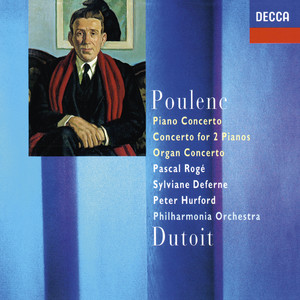 | Concerto for Organ, Strings and Percussion in G minor, FP 93: Allegro giocoso | Francis Poulenc, Peter Hurford, Philharmonia Orchestra, Charles Dutoit | D Major | 1 | 10B | 110 BPM | |
 | String Quartet No. 12 in F major, Op. 96 - "American" B.179: 2. Lento | Antonín Dvořák, Hagen Quartett | D Minor | 1 | 7A | 88 BPM | |
 | Requiem, Op. 9: Agnus Dei | Maurice Duruflé, Ivan Repušić, Munich Radio Orchestra, Bavarian Radio Chorus | F Major | 1 | 7B | 114 BPM |
- ISRC
- FRZ131010230
- Label
- L-M Records/RCA Records