- BPM
- 101
- Key
- F♯ Minor
- Camelot
- 11A
Handel: Te decus virgineum, HWV 243 by George Frideric Handel, Mary Nichols/Taverner Choir/Taverner Players/Andrew Parrott, Andrew Parrott, Taverner Players Song Details
"Handel: Te decus virgineum, HWV 243" by George Frideric Handel, Mary Nichols/Taverner Choir/Taverner Players/Andrew Parrott, Andrew Parrott, Taverner Players had its release date on January 1, 1989. The duration of This song is about two minutes long, specifically at 2:56. This song does not appear to have any foul language. Handel: Te decus virgineum, HWV 243's duration is considered a little bit shorter than the average duration of a typical track. The track order of this song in George Frideric Handel, Andrew Parrott's "Handel - Carmelite Vespers" album is number 24 out of 54. On top of that, United Kingdom appears to be the country where this track was created. In terms of popularity, Handel: Te decus virgineum, HWV 243 is currently not that popular. In our opinion, the overall tone is not very danceable and projects negative sounds, such as being sad, depressed, or angry.
BPM and Tempo
We consider the tempo marking of Handel: Te decus virgineum, HWV 243 by George Frideric Handel, Mary Nichols/Taverner Choir/Taverner Players/Andrew Parrott, Andrew Parrott, Taverner Players to be Andante (at a walking pace) because the track has a tempo of 101 BPM, a half-time of 50BPM, and a double-time of 202 BPM. Based on that, the speed of the song's tempo is slow. The time signature for this track is 3/4.
Music Key
This song is in the music key of F♯ Minor. This also means that this song has a camelot key of 11A. So, the perfect camelot match for 11A would be either 11A or 10B. While, a low energy boost can consist of either 11B or 12A. For moderate energy boost, you would use 8A and a high energy boost can either be 1A or 6A. However, if you are looking for a low energy drop, finding a song with a camelot key of 10A would be a great choice. Where 2A would give you a moderate drop, and 9A or 4A would be a high energy drop. Lastly, 2B allows you to change the mood.
Want to find the BPM and music key for other songs? Check out our BPM and Key Finder page!
- Popularity
- 1%
- Loudness
- -26.855 dB
- Acousticness
- 81%
- Danceability
- 19%
- Energy
- 4%
- Instrumentalness
- 0%
- Liveness
- 15%
- Loudness
- 55%
- Speechiness
- 5%
- Valence
- 4%
Recommendations
| Track | Artist | Key | Energy | Camelot | BPM | ||
|---|---|---|---|---|---|---|---|
 | Overture (Suite) In G Minor, TWV 55: G4: III. Les Irresoluts | Cologne Chamber Orchestra, Georg Philipp Telemann | G Minor | 1 | 6A | 82 BPM | |
![Water Music, Suite No. 3, HWV 350: Water Music, Suite No. 3, HWV 350: XIX. [Menuet 2] by George Frideric Handel, Akademie für Alte Musik Berlin](https://i.scdn.co/image/ab67616d00001e0202c7ab39ccf7f834da1596a4) | Water Music, Suite No. 3, HWV 350: Water Music, Suite No. 3, HWV 350: XIX. [Menuet 2] | George Frideric Handel, Akademie für Alte Musik Berlin | F♯ Minor | 0 | 11A | 88 BPM | |
 | Concerto Grosso in F Major, Op. 3, No. 1: I. Allegro assai: Adagio | Francesco Onofrio Manfredini, Capella Istropolitana, Jaroslav Krcek | C Major | 3 | 8B | 114 BPM | |
 | Les Barricades Mystérieuses | François Couperin, Khatia Buniatishvili | B♭ Major | 0 | 6B | 149 BPM | |
 | Méditation from Thaïs | Jules Massenet, Nicola Benedetti, London Symphony Orchestra, Daniel Harding | E Minor | 1 | 9A | 89 BPM | |
 | Capriol Suite: 5. Pied-en- l'air | Peter Warlock, Academy of St. Martin in the Fields, Nicholas Kraemer, Sir Neville Marriner | G Major | 1 | 9B | 113 BPM | |
 | Concerti a cinque Op. 9 for oboe and strings, Concerto No. 8 in G major: III. Allegro | Han De Vries, Bob van Asperen, Alma Musica Amsterdam | F♯ Minor | 2 | 11A | 106 BPM | |
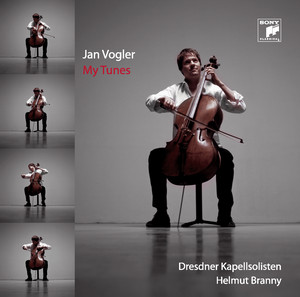 | Kol Nidrei, Op. 47 | Max Bruch, Jan Vogler, Helmut Branny | D Major | 1 | 10B | 136 BPM | |
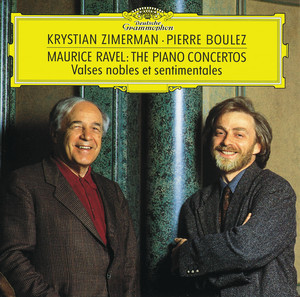 | Piano Concerto in G Major, M. 83: II. Adagio assai | Maurice Ravel, Krystian Zimerman, Cleveland Orchestra, Pierre Boulez | E Major | 0 | 12B | 74 BPM | |
 | Concerto Grosso in E Minor, Op. 6 No. 3, HWV 321: IV. Polonaise | George Frideric Handel, Academy of Ancient Music, Andrew Manze | F♯ Major | 1 | 2B | 98 BPM | |
 | Oboe Concerto in E Minor, TWV 51:E1: I. Andante | Georg Philipp Telemann, Marcel Ponseele, Il Gardellino | E♭ Minor | 2 | 2A | 98 BPM | |
 | Suite in D Minor: 2. Sarabande | Louis Couperin, Christopher Hogwood | D♭ Minor | 1 | 12A | 140 BPM | |
| Overture (Suite) In G Minor, TWV 55: G4: VI. Gasconnade | Cologne Chamber Orchestra, Georg Philipp Telemann | G Minor | 4 | 6A | 146 BPM | |
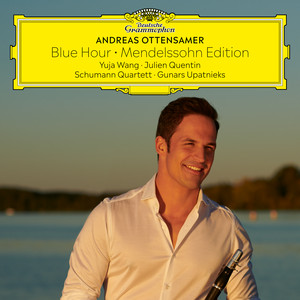 | Lieder ohne Worte I, Op. 19b: VI. Andante sostenuto "Venetian Gondola Song", MWV U78 (Arr. Ottensamer for Clarinet & Strings) | Felix Mendelssohn, Andreas Ottensamer, Schumann Quartett, Gunars Upatnieks | G Minor | 0 | 6A | 84 BPM | |
 | Oboe Concerto in C Major on Themes of Pergolesi: III. Andantino | Anthony Camden, City of London Sinfonia, Nicholas Ward | C Minor | 0 | 5A | 48 BPM | |
 | Concerto grosso in C Minor, Op. 2, No. 1: IV. Allegro | Francesco Geminiani, Capella Istropolitana, Jaroslav Krcek | C Minor | 1 | 5A | 180 BPM | |
 | Symphony in D Major, Op. 2 No. 5 "St. Cecilia's Day Ode": III. Tempo di minuetto | William Boyce, Academy of St. Martin in the Fields, Sir Neville Marriner | D Major | 2 | 10B | 152 BPM | |
 | Orfeo ed Euridice, Wq. 30: Dance of the Blessed Spirits "Melody" (Arr. Sgambati for Piano) | Christoph Willibald Gluck, Yuja Wang | D Minor | 0 | 7A | 70 BPM | |
 | Trio Sonata in G Minor, Op. 2 No. 8, HWV 393: III. Largo | George Frideric Handel, London Baroque | A Major | 0 | 11B | 77 BPM | |
 | Zoroastre, RCT 62, Acte III, Scène VII: Gavotte en rondeau | Jean-Philippe Rameau, Teodor Currentzis | A♭ Minor | 1 | 1A | 116 BPM | |
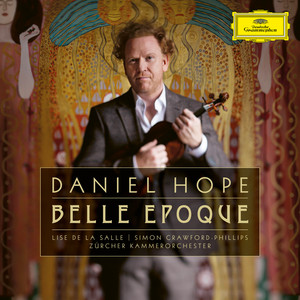 | Notturno for Strings and Harp | Arnold Schoenberg, Daniel Hope, Zürcher Kammerorchester, Jane Berthe | A♭ Major | 1 | 4B | 75 BPM | |
 | Concerto Grosso In D Major, Op. 6, No. 1 : III. Largo | Arcangelo Corelli, Daniela Ruso, Anna Holbling, Ludovit Kanta, Quido Holbling, Capella Istropolitana | D Major | 1 | 10B | 78 BPM | |
 | Symphony in D Major, Op. 3, No. 2: II. Andantino | Johann Stamitz, New Zealand Chamber Orchestra, Donald Armstrong | G Major | 0 | 9B | 113 BPM | |
 | Concerto Grosso in D Major, Op. 1, No. 5: III. Largo | Pietro Locatelli, Capella Istropolitana | G Minor | 1 | 6A | 50 BPM | |
 | Piano Concerto No. 27 in B-Flat Major, K. 595: II. Larghetto | Wolfgang Amadeus Mozart, Sophie-Mayuko Vetter, Hamburger Symphoniker, Peter Ruzicka | E♭ Major | 0 | 5B | 67 BPM |
- ISRC
- GBAYC8701587
- Label
- L-M Records/RCA Records