- BPM
- 89
- Key
- C Major
- Camelot
- 8B
Also sprach Zarathustra, Op. 30: Der Genesende by Richard Strauss, Fritz Reiner, Chicago Symphony Orchestra Song Details
"Also sprach Zarathustra, Op. 30: Der Genesende" by Richard Strauss, Fritz Reiner, Chicago Symphony Orchestra had its release date on February 1, 1993. With this song being about 5 minutes long, at This song is fairly a long song compared to the average song length. This song does not have an "Explicit" tag, making it safe for all ages. There are a total of 15 in the song's album "Richard Strauss In High Fidelity". In this album, this song's track order is #7. Furthermore, we believe that the track originated from United States. Also sprach Zarathustra, Op. 30: Der Genesende is unknown right now. In our opinion, the overall tone is not very danceable and projects negative sounds, such as being sad, depressed, or angry.
BPM and Tempo
With Also sprach Zarathustra, Op. 30: Der Genesende by Richard Strauss, Fritz Reiner, Chicago Symphony Orchestra having a BPM of 89 with a half-time of 44 BPM and a double-time of 178 BPM, we would consider this track to have a Andante (at a walking pace) tempo marking. Because of this, we believe that the song has an overall slow tempo. Looking at the BPM of this song, this song might go great with yoga or pilates. The time signature for this track is 4/4.
Music Key
This song has a musical key of C Major. Or for those who are familiar with the camelot wheel, this song has a camelot key of 8B. So, the perfect camelot match for 8B would be either 8B or 9A. While, 9B can give you a low energy boost. For moderate energy boost, you would use 5B and a high energy boost can either be 10B or 3B. Though, if you want a low energy drop, you should looking for songs with either a camelot key of 8A or 7B will give you a low energy drop, 11B would be a moderate one, and 6B or 1B would be a high energy drop. Lastly, 5A allows you to change the mood.
Want to find the BPM and music key for other songs? Check out our BPM and Key Finder page!
- Popularity
- 0%
- Loudness
- -22.619 dB
- Acousticness
- 62%
- Danceability
- 16%
- Energy
- 13%
- Instrumentalness
- 84%
- Liveness
- 47%
- Loudness
- 62%
- Speechiness
- 4%
- Valence
- 7%
Recommendations
| Track | Artist | Key | Energy | Camelot | BPM | ||
|---|---|---|---|---|---|---|---|
 | Tristan und Isolde, WWV 90: Prelude To Act I | Richard Wagner, Gewandhausorchester Leipzig, Andris Nelsons | A Minor | 1 | 8A | 79 BPM | |
 | Khovanshchina: Prelude. Dawn on the Moscow River | Modest Mussorgsky, Orchester der Wiener Staatsoper, Claudio Abbado | D♭ Major | 0 | 3B | 99 BPM | |
 | Arabella, Op. 79, TrV 263: Das war sehr gut, Mandryka | Richard Strauss, Anne Schwanewilms, Gürzenich Orchester Köln, Markus Stenz | A♭ Minor | 1 | 1A | 82 BPM | |
 | Cello Concerto in C Minor, Op. 43: I. Adagio | Mieczysław Weinberg, Kristina Reiko Cooper, Constantine Orbelian, Kaunas City Symphony Orchestra | A♭ Major | 0 | 4B | 96 BPM | |
 | Vier letzte Lieder: 1. Frühling | Richard Strauss, Renée Fleming, Munich Philharmonic Orchestra, Christian Thielemann | D Major | 0 | 10B | 98 BPM | |
 | Piano Concerto No. 2 in F Major, Op. 102: II. Andante | Dmitri Shostakovich, Boris Giltburg, Royal Liverpool Philharmonic Orchestra, Vasily Petrenko | C Minor | 0 | 5A | 80 BPM | |
 | Souvenir de Florence, Op. 70: I. Allegro con spirito | Pyotr Ilyich Tchaikovsky, Vienna Chamber Orchestra, Philippe Entremont | D♭ Major | 1 | 3B | 82 BPM | |
 | Symphony No. 3 in C Minor, Op. 78 "Organ": Allegro moderato | Camille Saint-Saëns, Eugene Ormandy, Philadelphia Orchestra | A♭ Major | 1 | 4B | 109 BPM | |
 | Symphony No. 1 in D Major "Titan" in D Major: II. Kraftig bewegt, doch nicht zu schnell | Gustav Mahler, Polish National Radio Symphony Orchestra, Michael Halasz | B♭ Major | 4 | 6B | 124 BPM | |
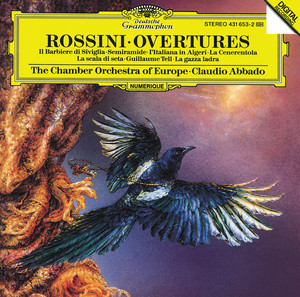 | La gazza ladra: Overture | Gioachino Rossini, Chamber Orchestra of Europe, Claudio Abbado | E Major | 2 | 12B | 99 BPM | |
 | 4 Letzte Lieder, TrV 296: 4. Im Abendrot | Richard Strauss, Joseph von Eichendorff, Yvonne Kenny, Queensland Symphony Orchestra, Johannes Fritzsch | D♭ Major | 3 | 3B | 83 BPM | |
 | Petite suite I. En bateau - Andantino En bateau - Andantino I - En bateu (Andantino) | Orchestra Sinfonica Abruzzese, Umberto Clerici, Marzio Conti | G Major | 0 | 9B | 96 BPM | |
 | Lieder ohne Worte (Songs without Words), Book 2, Op. 30: No. 7 in E-Flat Major, Op. 30, No. 1, MWV U103 | Felix Mendelssohn, Péter Nagy | E♭ Major | 0 | 5B | 65 BPM | |
 | Sibelius : Symphony No.5 in E flat major Op.82 : II Andante mosso, quasi allegretto | Jean Sibelius, Sakari Oramo, City Of Birmingham Symphony Orchestra | G Major | 0 | 9B | 142 BPM | |
 | Children's Corner (arr. A. Caplet for orchestra): Golliwogg's Cake-walk | Andre Caplet, Claude Debussy, Rheinland-Pfalz State Philharmonic Orchestra, Leif Segerstam | B♭ Major | 0 | 6B | 103 BPM | |
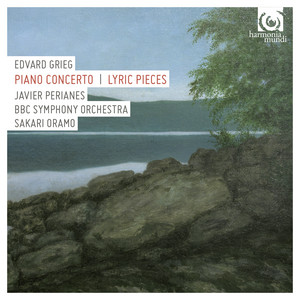 | Piano Concerto in A Minor, Op. 16: III. Allegro moderato molto e marcato | Edvard Grieg, Javier Perianes, BBC Symphony Orchestra, Sakari Oramo | F Major | 2 | 7B | 112 BPM | |
 | L'Oiseau de feu, K10: X. Khorovod (Ronde) des princesses | Igor Stravinsky, Orchestre de Paris, Klaus Mäkelä | F Minor | 0 | 4A | 68 BPM | |
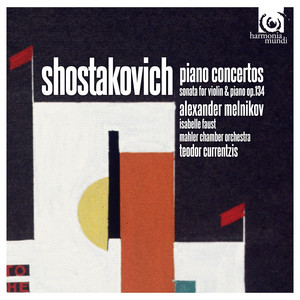 | Piano Concerto No. 2 Op. 102 in F Major: II. Andante | Dmitri Shostakovich, Alexander Melnikov, Mahler Chamber Orchestra, Teodor Currentzis | C Minor | 0 | 5A | 78 BPM | |
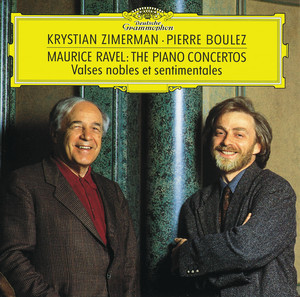 | Piano Concerto in G Major, M. 83: 3. Presto | Maurice Ravel, Krystian Zimerman, Cleveland Orchestra, Pierre Boulez | G Major | 3 | 9B | 79 BPM | |
 | Eugene Onegin, Op. 24, TH 5 / Act 3: Polonaise | Pyotr Ilyich Tchaikovsky, Staatskapelle Dresden, James Levine | G Major | 3 | 9B | 203 BPM | |
 | Die Frau ohne Schatten, Op. 65, TrV 234, Act I: Licht überm See (Live) | Richard Strauss, Frankfurter Opern- und Museumsorchester, Tanja Ariane Baumgartner, Dietrich Volle, Sebastian Weigle | B Major | 2 | 1B | 132 BPM | |
 | Ma mère l'oye, Ballet, M. 62: XI. Apothéose. Le jardin féerique | Maurice Ravel, Berliner Philharmoniker, Pierre Boulez | C Major | 0 | 8B | 83 BPM | |
 | A Midsummer Night's Dream, Incidental Music, Op.61, MWV M 13: No.1 Scherzo | Felix Mendelssohn, Judi Dench, Boston Symphony Orchestra, Seiji Ozawa | G Minor | 2 | 6A | 123 BPM | |
 | Ständchen in G Major, TrV 114: Standchen, TrV 114 | Richard Strauss, Amelia Piano Trio, Max Mandel | D♭ Major | 1 | 3B | 126 BPM | |
 | Thaïs, Act II: Méditation | Jules Massenet, Joshua Bell, Royal Philharmonic Orchestra, Andrew Litton | E Minor | 1 | 9A | 172 BPM |
- ISRC
- USBC15400209
- Label
- L-M Records/RCA Records