- BPM
- 133
- Key
- A♭ Major
- Camelot
- 4B
Liebeslieder-Walzer, Op.52 - Verses From "Polydora": 8. Wenn so lind dein Auge mir by Johannes Brahms, Edith Mathis, Brigitte Fassbaender, Peter Schreier, Dietrich Fischer-Dieskau, Karl Engel, Wolfgang Sawallisch Song Details
Johannes Brahms, Edith Mathis, Brigitte Fassbaender, Peter Schreier, Dietrich Fischer-Dieskau, Karl Engel, Wolfgang Sawallisch's 'Liebeslieder-Walzer, Op.52 - Verses From "Polydora": 8. Wenn so lind dein Auge mir' had a release date set for January 1, 1983. With This song being less than two minutes long, at 1:27, we are fairly confident that this song is not explicit and is safe for all ages. Based on the duration of this song, this song duration is much smaller than the average song duration. The song is number 8 out of 36 in Brahms: Liebeslieder-Walzer by Johannes Brahms, Edith Mathis, Brigitte Fassbaender, Peter Schreier, Dietrich Fischer-Dieskau. Based on our statistics, Liebeslieder-Walzer, Op.52 - Verses From "Polydora": 8. Wenn so lind dein Auge mir's popularity is not that popular right now. In our opinion, the overall tone is not very danceable and projects negative sounds, such as being sad, depressed, or angry.
BPM and Tempo
The tempo marking of Liebeslieder-Walzer, Op.52 - Verses From "Polydora": 8. Wenn so lind dein Auge mir by Johannes Brahms, Edith Mathis, Brigitte Fassbaender, Peter Schreier, Dietrich Fischer-Dieskau, Karl Engel, Wolfgang Sawallisch is Allegro (fast, quick, and bright), since this song has a tempo of 133 BPM. With that information, we can conclude that the song has a fast tempo. This song can go great with walking. The time signature for this track is 3/4.
Music Key
This song is in the music key of A♭ Major. This also means that this song has a camelot key of 4B. So, the perfect camelot match for 4B would be either 4B or 5A. While, 5B can give you a low energy boost. For moderate energy boost, you would use 1B and a high energy boost can either be 6B or 11B. Though, if you want a low energy drop, you should looking for songs with either a camelot key of 4A or 3B will give you a low energy drop, 7B would be a moderate one, and 2B or 9B would be a high energy drop. Lastly, 1A allows you to change the mood.
Want to find the BPM and music key for other songs? Check out our BPM and Key Finder page!
- Popularity
- 5%
- Loudness
- -25.225 dB
- Acousticness
- 98%
- Danceability
- 31%
- Energy
- 14%
- Instrumentalness
- 0%
- Liveness
- 11%
- Loudness
- 58%
- Speechiness
- 4%
- Valence
- 35%
Recommendations
| Track | Artist | Key | Energy | Camelot | BPM | ||
|---|---|---|---|---|---|---|---|
 | Violin Concerto in D Major, Op. 77: II. Adagio | Johannes Brahms, Takako Nishizaki, Slovak Philharmonic, Stephen Gunzenhauser | C Major | 1 | 8B | 136 BPM | |
 | La forza del destino: Overture (Sinfonia) | Giuseppe Verdi, Berliner Philharmoniker, Claudio Abbado | E Minor | 2 | 9A | 80 BPM | |
 | Halvorsen: Passacaglia (After Handel's Keyboard Suite, HWV 432) | Johan Halvorsen, Itzhak Perlman, Pinchas Zukerman | G Minor | 2 | 6A | 109 BPM | |
 | Trio Sonata for 2 Violins and Continuo in G Minor, HWV 393 "Dresden" No. 2: III. Largo (Arr. for Oboe, Violin, Harpsichord and Orchestra by Andreas Tarkmann) | George Frideric Handel, Albrecht Mayer, Sinfonia Varsovia, Jakub Haufa, Monika Razynska | B♭ Major | 2 | 6B | 143 BPM | |
 | Matthäus-Passion, BWV 244: Erbarme dich mein Gott | Yo-Yo Ma, Johann Sebastian Bach, Ton Koopman, Amsterdam Baroque Orchestra | B♭ Minor | 1 | 3A | 91 BPM | |
 | Haydn: Cello Concerto No. 1 in C Major, Hob. VIIb, 1: I. Moderato (Cadenza by Britten) | Franz Joseph Haydn, Mstislav Rostropovich, Academy of St. Martin in the Fields | C Major | 1 | 8B | 68 BPM | |
 | Romeo and Juliette, Op. 64 (Arr. for Viola and Piano by Vadim Borisovsky, Orchestration for Viola and String Orchestra by François Vallières): Introduction | Sergei Prokofiev, Elvira Misbakhova, I Musici de Montréal, Jean-François Rivest | D Major | 1 | 10B | 99 BPM | |
 | Gottes Zeit ist die allerbeste Zeit, BWV 106 "Actus tragicus": I. Sonatina | Johann Sebastian Bach, Márta Kurtág, György Kurtág | F Major | 3 | 7B | 102 BPM | |
 | The Well-Tempered Clavier I, Prelude & Fugue No. 1 in C Major, BWV 846: I. Prelude | Johann Sebastian Bach, Lang Lang | C Major | 1 | 8B | 134 BPM | |
 | Polovetsian Dances from Prince Igor: Introduzione | Alexander Borodin, George Szell, The Cleveland Orchestra | A Major | 1 | 11B | 83 BPM | |
 | Orpheo ed Euridice, Wq. 30, Act II: Dance of the Blessed Spirits | Christoph Willibald Gluck, Eugene Ormandy, Philadelphia Orchestra | D Minor | 1 | 7A | 67 BPM | |
 | Romance No. 2 In F Major, Op. 50 | Slovak Philharmonic, Takako Nishizaki, Ludwig van Beethoven | F Major | 1 | 7B | 88 BPM | |
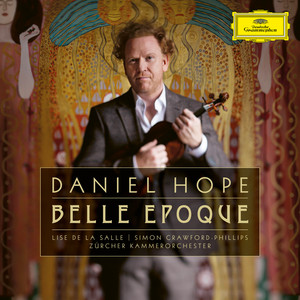 | Notturno for Strings and Harp | Arnold Schoenberg, Daniel Hope, Zürcher Kammerorchester, Jane Berthe | A♭ Major | 1 | 4B | 75 BPM | |
 | Adagio in D Minor, BWV 974: II. Adagio | Johann Sebastian Bach, Alexandre Tharaud | D Minor | 0 | 7A | 65 BPM | |
 | Carmen Suite No. 1 (Arr. E. Guiraud): IV. Séguedille | Georges Bizet, Orquestra Simfònica de Barcelona i Nacional de Catalunya, Pablo González | G Minor | 0 | 6A | 66 BPM | |
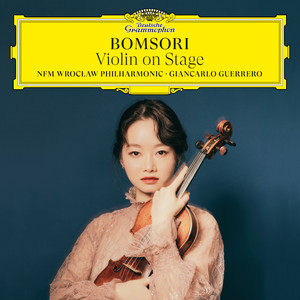 | Thaïs: Méditation | Jules Massenet, Bomsori, NFM Wrocław Philharmonic, Giancarlo Guerrero | D Major | 0 | 10B | 84 BPM | |
 | Gypsy Melodies, Op. 55, B. 104: IV. Songs My Mother Taught Me (Arr. Soltani For Solo Cello and Cello Ensemble) | Antonín Dvořák, Kian Soltani, Staatskapelle Berlin, Cellists | D Major | 1 | 10B | 125 BPM | |
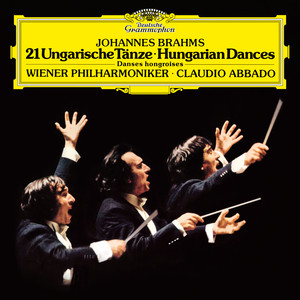 | 21 Hungarian Dances, WoO 1: Hungarian Dance No. 6 in D Major. Vivace (Orch. Schmeling) | Johannes Brahms, Wiener Philharmoniker, Claudio Abbado | D Major | 2 | 10B | 153 BPM | |
 | Rhapsody in G Minor, Op. 79 No. 2 | Johannes Brahms, Radu Lupu | C Major | 1 | 8B | 140 BPM | |
 | Tchaikovsky / Arr. Stetsuk for Cello and Orchestra: 16 Children's Songs, Op. 54: No. 10, Lullaby in a Storm | Pyotr Ilyich Tchaikovsky, Alexander Kniazev, Constantine Orbelian, Moscow Chamber Orchestra | D Minor | 0 | 7A | 89 BPM | |
 | 21 Hungarian Dances, WoO 1 (arr. J. Joachim for violin and piano): No. 8 in A Minor | Joseph Joachim, Johannes Brahms, Marat Bisengaliev, John Lenehan | A Minor | 2 | 8A | 94 BPM | |
 | Bach: Adagio (After Violin Concerto No. 2, BWV 1042) | Johann Sebastian Bach, Gabriela Montero | F♯ Minor | 0 | 11A | 73 BPM | |
 | Les Barricades Mystérieuses | François Couperin, Khatia Buniatishvili | B♭ Major | 0 | 6B | 149 BPM | |
 | Scottish Fantasy for Violin and Orchestra, Op. 46: I. Introduction: Grave, Adagio cantabile | Max Bruch, Joshua Bell, Academy of St. Martin in the Fields | E♭ Major | 2 | 5B | 60 BPM | |
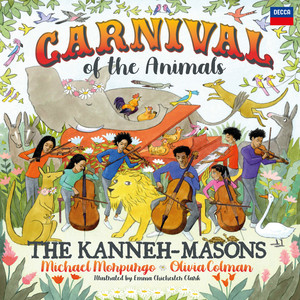 | Carnival of the Animals: The Swan | Camille Saint-Saëns, Isata Kanneh-Mason, Jeneba Kanneh-Mason, Sheku Kanneh-Mason | G Major | 1 | 9B | 65 BPM |
- ISRC
- This song does not have an ISRC.
- Label
- L-M Records/RCA Records