- BPM
- 91
- Key
- C Major
- Camelot
- 8B
Pictures at an Exhibition: Gnomus by Modest Mussorgsky, Juan Francisco Otón Song Details
"Pictures at an Exhibition: Gnomus" by Modest Mussorgsky, Juan Francisco Otón had its release date on January 20, 2023. The duration of This song is about two minutes long, specifically at 2:38. This song does not appear to have any foul language. Pictures at an Exhibition: Gnomus's duration is considered a little bit shorter than the average duration of a typical track. There are a total of 20 in the song's album "Portraits: Music by Mussorgsky, Prokofiev and Scriabin". In this album, this song's track order is #6. Furthermore, we believe that the track originated from Switzerland. In terms of popularity, Pictures at an Exhibition: Gnomus is currently not that popular. In our opinion, the overall tone is not very danceable and projects negative sounds, such as being sad, depressed, or angry.
BPM and Tempo
With Pictures at an Exhibition: Gnomus by Modest Mussorgsky, Juan Francisco Otón having a BPM of 91 with a half-time of 46 BPM and a double-time of 182 BPM, we would consider this track to have a Andante (at a walking pace) tempo marking. Because of this, we believe that the song has an overall slow tempo. Looking at the BPM of this song, this song might go great with yoga or pilates. The time signature for this track is 4/4.
Music Key
This song is in the music key of C Major. Or for those who are familiar with the camelot wheel, this song has a camelot key of 8B. So, the perfect camelot match for 8B would be either 8B or 9A. While, 9B can give you a low energy boost. For moderate energy boost, you would use 5B and a high energy boost can either be 10B or 3B. Though, if you want a low energy drop, you should looking for songs with either a camelot key of 8A or 7B will give you a low energy drop, 11B would be a moderate one, and 6B or 1B would be a high energy drop. Lastly, 5A allows you to change the mood.
Want to find the BPM and music key for other songs? Check out our BPM and Key Finder page!
- Popularity
- 1%
- Loudness
- -15.317 dB
- Acousticness
- 98%
- Danceability
- 32%
- Energy
- 16%
- Instrumentalness
- 88%
- Liveness
- 9%
- Loudness
- 74%
- Speechiness
- 3%
- Valence
- 12%
Recommendations
| Track | Artist | Key | Energy | Camelot | BPM | ||
|---|---|---|---|---|---|---|---|
 | Boris Godunov | Modest Mussorgsky, Choir of the Bolshoi Theater, Vladimir Atlantov, Mark Ermler, Yevgeny Nesterenko, Yelena Obratsova, Yuri Mazurok, Alexandr Ognivcev, Orchestra of The Bolshoi Theater | C Major | 2 | 8B | 80 BPM | |
 | Peer Gynt Suite No. 1, Op. 46: III. Anitra's Dance | Edvard Grieg, Berliner Philharmoniker, Herbert von Karajan | D Minor | 0 | 7A | 84 BPM | |
 | Brook Green Suite: I. Prelude | Gustav Holst, English Sinfonia, Howard Griffiths | D♭ Major | 0 | 3B | 66 BPM | |
 | Pictures at an Exhibition (Orch. Ravel): IV. Bydlo | Modest Mussorgsky, Wiener Philharmoniker, Gustavo Dudamel | A Major | 1 | 11B | 90 BPM | |
 | Scheherazade: The Fight | Nikolai Rimsky-Korsakov, Joakim Svenheden | E Minor | 1 | 9A | 80 BPM | |
 | String Quartet No. 2 in D Major: III. Notturno: Andante | Alexander Borodin, Budapest Haydn Quartet | A Major | 1 | 11B | 89 BPM | |
 | Enigma Variations, Op. 36: Var. 1. L'istesso tempo "C.A.E." | Edward Elgar, BBC Symphony Orchestra, Leonard Bernstein | G Minor | 0 | 6A | 81 BPM | |
| St. Paul's Suite, Op. 29 No. 2: IV. Finale, "the Dargason" | Gustav Holst, English Sinfonia, Howard Griffiths | D♭ Major | 0 | 3B | 66 BPM | |
 | Saint-Saëns: Piano Concerto No. 2 in G Minor, Op. 22: III. Presto | Camille Saint-Saëns, Bertrand Chamayou, Emmanuel Krivine, Orchestre National De France | C Minor | 4 | 5A | 110 BPM | |
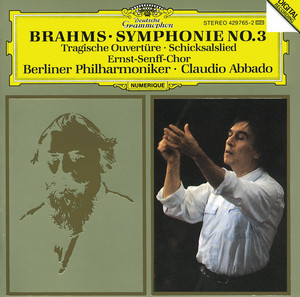 | Symphony No. 3 in F Major, Op. 90: IV. Allegro | Johannes Brahms, Berliner Philharmoniker, Claudio Abbado | C Major | 1 | 8B | 79 BPM | |
 | Simple Symphony, Op. 4: II. Playful Pizzicato | Benjamin Britten, Metamorphose String Orchestra, Pavel Lyubomudrov | C Major | 2 | 8B | 175 BPM | |
 | Hungarian Dance No. 1 in G Minor, WoO 1/1. Allegro molto (Orch. by Brahms) | Johannes Brahms, Chicago Symphony Orchestra, Daniel Barenboim | G Major | 0 | 9B | 81 BPM | |
 | Oberon, J.306: Ouvertüre | Carl Maria von Weber, Bavarian Radio Symphony Orchestra, Rafael Kubelík | D Major | 1 | 10B | 131 BPM | |
 | Chamber Symphony No. 5 in A-Flat Major, Op. 118a: IV. Allegretto | Dmitri Shostakovich, Yuli Turovsky, I Musici de Montréal | C Minor | 0 | 5A | 121 BPM | |
 | Pelléas et Mélisande - Incidental Music To Maeterlinck's Play, Op.46 (1905): 9. The Death Of Mélisande | Jean Sibelius, Berliner Philharmoniker, Herbert von Karajan | B♭ Major | 0 | 6B | 72 BPM | |
 | Symphony No. 1 in D Major "Titan": III. Feierlich und gemessen, ohne zu schleppen | Gustav Mahler, Leonard Bernstein, New York Philharmonic | A♭ Major | 0 | 4B | 72 BPM | |
 | Symphonie fantastique, Op. 14, H 48: 5d. Songe d'une nuit du Sabbat - Dies irae et Ronde du Sabbat ensemble | Hector Berlioz, Chicago Symphony Orchestra, Claudio Abbado | B♭ Major | 1 | 6B | 153 BPM | |
 | 6 Impromptus, Op. 5: Impromptu VI | Jean Sibelius, Leif Ove Andsnes | E Major | 0 | 12B | 62 BPM | |
 | Scottish Fantasy for Violin and Orchestra, Op. 46: I. Introduction: Grave, Adagio cantabile | Max Bruch, Joshua Bell, Academy of St. Martin in the Fields | E♭ Major | 2 | 5B | 60 BPM | |
 | Piano Concerto No. 3, BB 127, Sz. 119: I. Allegretto | Béla Bartók, Géza Anda, Deutsches Symphonie-Orchester Berlin, Ferenc Fricsay | B Major | 2 | 1B | 150 BPM | |
 | Masquerade Suite: Gallop | Aram Khachaturian, St. Petersburg State Symphony Orchestra, Andre Anichanov | G Major | 1 | 9B | 104 BPM | |
 | Mephisto Waltz No. 1, S. 514 | Franz Liszt, Evgeny Kissin | D♭ Minor | 2 | 12A | 70 BPM | |
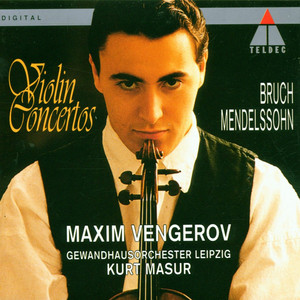 | Bruch: Violin Concerto No. 1 in G Minor, Op. 26: II. Adagio | Max Bruch, Maxim Vengerov, Kurt Masur, Gewandhausorchester | E♭ Major | 1 | 5B | 110 BPM | |
 | Brahms: Violin Concerto in D Major, Op. 77: III. Allegro giocoso, ma non troppo vivace | Johannes Brahms, Itzhak Perlman, Carlo Maria Giulini, Chicago Symphony Orchestra | G Major | 3 | 9B | 87 BPM | |
![Spartacus, Act III: Adagio of Spartacus and Phrygia (arr. Y. Grigorovich) [1968 Bolshoi Version] by Aram Khachaturian, RIAS Kammerchor, Deutsches Symphonie-Orchester Berlin, Michail Jurowski](https://i.scdn.co/image/ab67616d00001e02c21d253eed4ccdd547b4b94d) | Spartacus, Act III: Adagio of Spartacus and Phrygia (arr. Y. Grigorovich) [1968 Bolshoi Version] | Aram Khachaturian, RIAS Kammerchor, Deutsches Symphonie-Orchester Berlin, Michail Jurowski | E Major | 2 | 12B | 123 BPM |
- ISRC
- CH6542284235
- Label
- L-M Records/RCA Records