- BPM
- 135
- Key
- D Major
- Camelot
- 10B
Strauss, R: An Alpine Symphony, Op. 64: XVII. Elegy by Richard Strauss, Rudolf Kempe, Staatskapelle Dresden Song Details
"Strauss, R: An Alpine Symphony, Op. 64: XVII. Elegy" by Richard Strauss, Rudolf Kempe, Staatskapelle Dresden had its release date on January 1, 2013. With This song being less than two minutes long, at 1:45, we are fairly confident that this song is not explicit and is safe for all ages. Based on the duration of this song, this song duration is much smaller than the average song duration. There are a total of 103 in the song's album "Strauss: Complete Orchestral Works". In this album, this song's track order is #36. Furthermore, we believe that the track originated from United Kingdom. Based on our statistics, Strauss, R: An Alpine Symphony, Op. 64: XVII. Elegy's popularity is not that popular right now. In our opinion, the overall tone is not very danceable and projects negative sounds, such as being sad, depressed, or angry.
BPM and Tempo
With Strauss, R: An Alpine Symphony, Op. 64: XVII. Elegy by Richard Strauss, Rudolf Kempe, Staatskapelle Dresden having a BPM of 135 with a half-time of 68 BPM and a double-time of 270 BPM, we would consider this track to have a Allegro (fast, quick, and bright) tempo marking. Because of this, we believe that the song has an overall fast tempo. Looking at the BPM of this song, this song might go great with walking. The time signature for this track is 4/4.
Music Key
This song has a musical key of D Major. Or for those who are familiar with the camelot wheel, this song has a camelot key of 10B. So, the perfect camelot match for 10B would be either 10B or 11A. While, 11B can give you a low energy boost. For moderate energy boost, you would use 7B and a high energy boost can either be 12B or 5B. Though, if you want a low energy drop, you should looking for songs with either a camelot key of 10A or 9B will give you a low energy drop, 1B would be a moderate one, and 8B or 3B would be a high energy drop. Lastly, 7A allows you to change the mood.
Want to find the BPM and music key for other songs? Check out our BPM and Key Finder page!
- Popularity
- 1%
- Loudness
- -25.89 dB
- Acousticness
- 79%
- Danceability
- 16%
- Energy
- 11%
- Instrumentalness
- 94%
- Liveness
- 10%
- Loudness
- 57%
- Speechiness
- 4%
- Valence
- 3%
Recommendations
| Track | Artist | Key | Energy | Camelot | BPM | ||
|---|---|---|---|---|---|---|---|
 | Scottish Fantasy for Violin and Orchestra, Op. 46: I. Introduction: Grave, Adagio cantabile | Max Bruch, Joshua Bell, Academy of St. Martin in the Fields | E♭ Major | 2 | 5B | 60 BPM | |
 | Sonata In G Minor For Cello & Piano, Op. 19: 3. Andante | Sergei Rachmaninoff, Alisa Weilerstein, Inon Barnatan | F Major | 2 | 7B | 82 BPM | |
 | Sibelius: Symphony No. 5 in E-Flat Major, Op. 82: III. Allegro molto | Jean Sibelius, Sakari Oramo, City Of Birmingham Symphony Orchestra | A♭ Major | 1 | 4B | 149 BPM | |
 | Lieder ohne Worte (Songs without Words), Book 2, Op. 30: No. 7 in E-Flat Major, Op. 30, No. 1, MWV U103 | Felix Mendelssohn, Péter Nagy | E♭ Major | 0 | 5B | 65 BPM | |
 | Mahler: Symphony No. 8, "Symphony of a Thousand": II. Finale Scene from Goethe's Faust, (l) "Alles Vergängliche" (Chorus Mysticus) | Gustav Mahler, Elizabeth Connell/Edith Wiens/Dame Felicity Lott/Trudeliese Schmidt/Nadine Denize/Richard Versalle/Jorma Hynninen/Hans Sotin/London Philharmonic Choir/Tiffin School Boys' Choir/London Philharmonic Orchestra/Klaus Tennstedt, Klaus Tennstedt, London Philharmonic Orchestra | E♭ Major | 2 | 5B | 71 BPM | |
 | Prince Igor: Polovtsian Dances (Version for Chorus) | Alexander Borodin, Kiev Chamber Choir, Ukraine National Radio Symphony Orchestra, Theodore Kuchar | A Major | 2 | 11B | 110 BPM | |
 | Candide: Overture | Leonard Bernstein, New York Philharmonic | E♭ Major | 4 | 5B | 82 BPM | |
 | Romeo and Juliet Suite No. 2, Op. 64ter: I. Montagues and Capulets (Live) | Sergei Prokofiev, Riccardo Muti, Chicago Symphony Orchestra | A Minor | 1 | 8A | 93 BPM | |
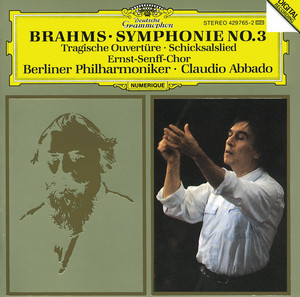 | Tragic Overture, Op. 81 | Johannes Brahms, Berliner Philharmoniker, Claudio Abbado | D Minor | 1 | 7A | 85 BPM | |
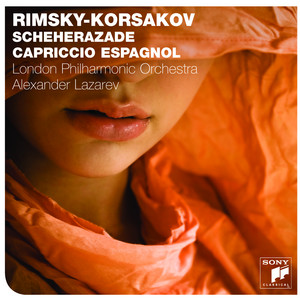 | Scheherazade: Calm - the triumph of Scheherazade | Nikolai Rimsky-Korsakov, Lars Hjalmar Joakim | E Minor | 0 | 9A | 68 BPM | |
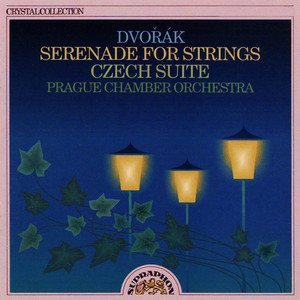 | Serenade for Strings in E Major, Op. 22, B. 52: I. Moderato | Antonín Dvořák, Prague Chamber Orchestra, Petr Skvor | E Major | 1 | 12B | 83 BPM | |
 | Pelléas et Mélisande, Op. 80 (Arr. C. Koechlin): V. Sicilienne. Allegretto molto moderato | Gabriel Fauré, Radio Sinfonieorchester Stuttgart des SWR, Heinz Holliger | G Minor | 0 | 6A | 91 BPM | |
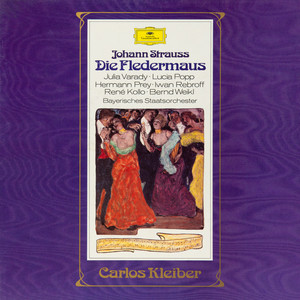 | Die Fledermaus: Overture | Johann Strauss II, Bavarian State Orchestra, Carlos Kleiber | D Major | 2 | 10B | 109 BPM | |
 | Zdes' khorosho ('How Fair This Spot'), Op. 21, No. 7 | Sergei Rachmaninoff, Pablo Ferrandez, Denis Kozhukhin | A Major | 0 | 11B | 87 BPM | |
| Scheherazade: Calm at Sea | Nikolai Rimsky-Korsakov, Lars Hjalmar Joakim | E Major | 2 | 12B | 84 BPM | |
 | Elektra: Iii. Elektra! | Hugo von Hofmannsthal, Richard Strauss, Anita Soldh, Laila Andersson-palme, Royal Swedish Opera Orchestra, Siegfried Köhler | D♭ Major | 5 | 3B | 118 BPM | |
 | Warsaw Concerto | Richard Addinsell, Jean-Yves Thibaudet, BBC Symphony Orchestra, Hugh Wolff | B Major | 1 | 1B | 76 BPM | |
| Sibelius : Symphony No.5 in E flat major Op.82 : II Andante mosso, quasi allegretto | Jean Sibelius, Sakari Oramo, City Of Birmingham Symphony Orchestra | G Major | 0 | 9B | 142 BPM | |
 | Piano Concerto No. 2 in C Minor, Op. 18: I. Moderato | Sergei Rachmaninoff, Yuja Wang, Los Angeles Philharmonic, Gustavo Dudamel | G Minor | 3 | 6A | 97 BPM | |
 | Japanese Suite, Op. 33, H. 126: I. Prelude. Song of the Fisherman | Gustav Holst, Ulster Orchestra, Joann Falletta | C Minor | 3 | 5A | 103 BPM | |
 | Symphony No.8 In G, Op.88, B. 163: 4. Allegro ma non troppo | Antonín Dvořák, Berliner Philharmoniker, Rafael Kubelík | G Major | 2 | 9B | 141 BPM | |
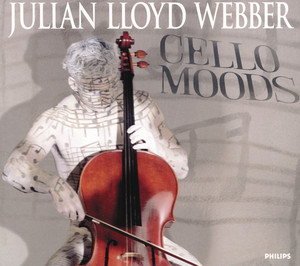 | Mélodie, Op. 20, No. 1 | Alexander Glazunov, Julian Lloyd Webber, Royal Philharmonic Orchestra, James Judd | D Major | 1 | 10B | 84 BPM | |
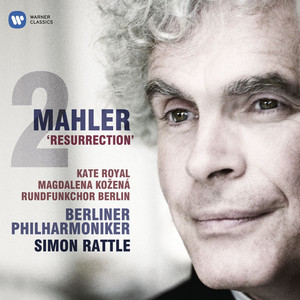 | Mahler: Symphony No. 2 in C Minor "Resurrection": V. (d) Wieder zurückhaltend | Gustav Mahler, Sir Simon Rattle, Berliner Philharmoniker | F♯ Major | 0 | 2B | 144 BPM | |
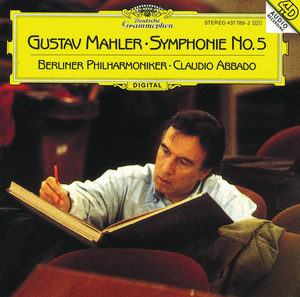 | Symphony No. 5: IV. Adagietto. Sehr langsam | Gustav Mahler, Berliner Philharmoniker, Claudio Abbado | F Major | 0 | 7B | 91 BPM | |
 | Tchaikovsky: Symphony No. 5 in E Minor, Op. 64: III. Valse. Allegro moderato | Pyotr Ilyich Tchaikovsky, Daniel Barenboim, Chicago Symphony Orchestra | A Major | 1 | 11B | 146 BPM |
- ISRC
- GBAYC1201662
- Label
- L-M Records/RCA Records