- BPM
- 97
- Key
- G Major
- Camelot
- 9B
String Quartet No. 1, Op. 20: II. Vivacissimo by Alberto Ginastera, Enso String Quartet Song Details
Alberto Ginastera, Enso String Quartet's 'String Quartet No. 1, Op. 20: II. Vivacissimo' had a release date set for June 30, 2009. With this song being around four minutes long, at 3:44, the duration of this song is pretty average compared to other songs. This track is safe for children and doesn't appear to contain any foul language, since the "Explicit" tag was not present in this track. The track order of this song in Alberto Ginastera, Enso String Quartet's "Ginastera: String Quartets Nos. 1-3" album is number 2 out of 14. On top of that, Hong Kong appears to be the country where this track was created. In terms of popularity, String Quartet No. 1, Op. 20: II. Vivacissimo is currently unknown. Although the tone can be danceable to some, this track does projects more of a negative sound rather than a postive one.
BPM and Tempo
We consider the tempo marking of String Quartet No. 1, Op. 20: II. Vivacissimo by Alberto Ginastera, Enso String Quartet to be Andante (at a walking pace) because the track has a tempo of 97 BPM, a half-time of 48BPM, and a double-time of 194 BPM. Based on that, the speed of the song's tempo is slow. The time signature for this track is 3/4.
Music Key
G Major is the music key of this track. This also means that this song has a camelot key of 9B. So, the perfect camelot match for 9B would be either 9B or 10A. While, 10B can give you a low energy boost. For moderate energy boost, you would use 6B and a high energy boost can either be 11B or 4B. Though, if you want a low energy drop, you should looking for songs with either a camelot key of 9A or 8B will give you a low energy drop, 12B would be a moderate one, and 7B or 2B would be a high energy drop. Lastly, 6A allows you to change the mood.
Want to find the BPM and music key for other songs? Check out our BPM and Key Finder page!
- Popularity
- 0%
- Loudness
- -28.496 dB
- Acousticness
- 94%
- Danceability
- 44%
- Energy
- 17%
- Instrumentalness
- 38%
- Liveness
- 8%
- Loudness
- 53%
- Speechiness
- 5%
- Valence
- 20%
Recommendations
| Track | Artist | Key | Energy | Camelot | BPM | ||
|---|---|---|---|---|---|---|---|
 | Préludes, Book 1, CD 125: XII. Minstrels | Claude Debussy, Daniel Barenboim | G Major | 0 | 9B | 98 BPM | |
 | Fantasia & Fugue in C Minor, Op. 86 (After J.S. Bach's BWV 537): Fantasia | Edward Elgar, Seattle Symphony Orchestra, Gerard Schwarz | F Minor | 1 | 4A | 143 BPM | |
 | Carnaval, Op. 9: XII. Chopin | Robert Schumann, Daniil Trifonov | E Major | 0 | 12B | 68 BPM | |
 | 3 Preludes: II. Andante con moto e poco rubato | George Gershwin, Jon Nakamatsu | F♯ Major | 0 | 2B | 72 BPM | |
 | Rondo capriccioso in E Major, Op. 14, MWV U67: I. Andante | Felix Mendelssohn, Jan Lisiecki | E Major | 0 | 12B | 70 BPM | |
 | Morgen, Op. 27 No. 4 (Arr. Reger for Piano) | Richard Strauss, Angela Hewitt | A Major | 2 | 11B | 143 BPM | |
 | Takemitsu: Romance | Toru Takemitsu, Kenji Miura | B♭ Major | 1 | 6B | 102 BPM | |
 | Piano Concerto No. 1 in C Minor, Op. 35: III. Moderato | Dmitri Shostakovich, Boris Giltburg, Royal Liverpool Philharmonic Orchestra, Vasily Petrenko | A♭ Major | 1 | 4B | 48 BPM | |
 | 15 Pieces, Op. 3: Prelude | Gabriel Pierné, Hae Won Chang | C Minor | 0 | 5A | 83 BPM | |
 | Mahler: Blumine | Gustav Mahler, San Francisco Symphony, Michael Tilson Thomas | C Major | 1 | 8B | 100 BPM | |
 | Partita pour Piano: II. Notturno. Andantino | Germaine Tailleferre, Cristina Ariagno | A Minor | 0 | 8A | 71 BPM | |
 | Piano Concerto in F-Sharp Minor, Op. 20: II. Andante | Alexander Scriabin, Konstantin Scherbakov, Moscow Philharmonic Orchestra, Igor Golovschin | E♭ Major | 0 | 5B | 81 BPM | |
 | Orfeo ed Euridice, Wq. 30: Melodie dell'Orfeo (Arr. Sgambati for Piano) | Yuja Wang | D♭ Minor | 1 | 12A | 80 BPM | |
 | Notturno in G Minor | Fanny Mendelssohn, Heather Schmidt | G Minor | 1 | 6A | 125 BPM | |
 | Cello Concerto in C Minor, Op. 43: I. Adagio | Mieczysław Weinberg, Kristina Reiko Cooper, Constantine Orbelian, Kaunas City Symphony Orchestra | F Minor | 0 | 4A | 70 BPM | |
 | Piano Concerto No. 3, Sz. 119: II. Adagio religioso | Béla Bartók, Géza Anda, Deutsches Symphonie-Orchester Berlin, Ferenc Fricsay | B Major | 2 | 1B | 150 BPM | |
 | 24 Dainas: Daina No. 11, Tranquillo | Janis Medins, Arta Arnicane | F Minor | 0 | 4A | 70 BPM | |
 | 24 Preludes, Op. 11: No. 21 in B-Flat Major - Andante | Alexander Scriabin, Mao Fujita | F Major | 1 | 7B | 149 BPM | |
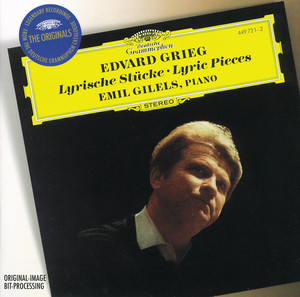 | Lyric Pieces, Book 5, Op. 54: No. 4, Notturno | Edvard Grieg, Emil Gilels | D Minor | 0 | 7A | 72 BPM | |
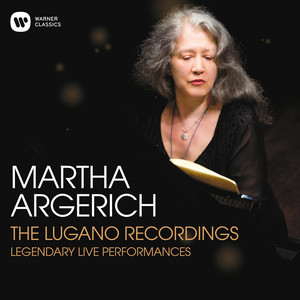 | Debussy: Petite suite, CD 71, L. 65: I. En bateau (Live) | Martha Argerich, Cristina Marton | G Major | 0 | 9B | 72 BPM | |
 | D'un matin de printemps | Lili Boulanger, Yan Pascal Tortelier, BBC Philharmonic | C Major | 1 | 8B | 130 BPM | |
 | Ginastera: Danzas argentinas, Op. 2: II. Danza de la moza donosa | Alberto Ginastera, Martha Argerich | E Minor | 0 | 9A | 106 BPM | |
 | Suk: Serenade for Strings in E-Flat Major, Op. 6: IV. Allegro giocoso ma non troppo presto | Josef Suk, Christopher Warren-Green, Andrew Shulman, Lyn Fletcher, Roger Chase, Nigel Warren-Green, London Chamber Orchestra | B♭ Major | 2 | 6B | 106 BPM | |
 | La Cinquième Saison, Op. 15: I. Le Secret des feuilles: L'arbre aux légendes 2 | Corentin Apparailly, Julien Martineau, Orchestre Victor Hugo, Jean-François Verdier | F Minor | 0 | 4A | 70 BPM | |
 | Piano Sonata No. 21 In B Flat Major, D.960: II. Andante sostenuto | Franz Schubert, Krystian Zimerman | D♭ Minor | 0 | 12A | 134 BPM |
- ISRC
- HKI190879102
- Label
- L-M Records/RCA Records