- BPM
- 94
- Key
- D Minor
- Camelot
- 7A
Flight of the Bumblebee by Nikolai Rimsky-Korsakov, Isaac Stern, Milton Katims, Columbia Symphony Orchestra Song Details
On 1963, the song "Flight of the Bumblebee" was released by Nikolai Rimsky-Korsakov, Isaac Stern, Milton Katims, Columbia Symphony Orchestra. With This song being less than two minutes long, at 1:17, we are fairly confident that this song is not explicit and is safe for all ages. Based on the duration of this song, this song duration is much smaller than the average song duration. The track order of this song in Isaac Stern's "Humoresque - Favorite Violin Encores [Expanded Edition]" album is number 1 out of 21. On top of that, United States appears to be the country where this track was created. In terms of popularity, Flight of the Bumblebee is currently average in popularity. The overall mood can be danceable to some, especially with it's high amount of postive energy.
BPM and Tempo
We consider the tempo marking of Flight of the Bumblebee by Nikolai Rimsky-Korsakov, Isaac Stern, Milton Katims, Columbia Symphony Orchestra to be Andante (at a walking pace) because the track has a tempo of 94 BPM, a half-time of 47BPM, and a double-time of 188 BPM. Based on that, the speed of the song's tempo is slow. Activities such as, yoga or pilates, can go well with this song. The time signature for this track is 3/4.
Music Key
This song has a musical key of D Minor. Because this track belongs in the D Minor key, the camelot key is 7A. So, the perfect camelot match for 7A would be either 7A or 6B. While, a low energy boost can consist of either 7B or 8A. For moderate energy boost, you would use 4A and a high energy boost can either be 9A or 2A. However, if you are looking for a low energy drop, finding a song with a camelot key of 6A would be a great choice. Where 10A would give you a moderate drop, and 5A or 12A would be a high energy drop. Lastly, 10B allows you to change the mood.
Want to find the BPM and music key for other songs? Check out our BPM and Key Finder page!
- Popularity
- 52%
- Loudness
- -11.645 dB
- Acousticness
- 86%
- Danceability
- 58%
- Energy
- 72%
- Instrumentalness
- 81%
- Liveness
- 39%
- Loudness
- 81%
- Speechiness
- 4%
- Valence
- 97%
Recommendations
| Track | Artist | Key | Energy | Camelot | BPM | ||
|---|---|---|---|---|---|---|---|
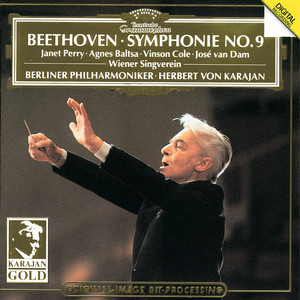 | Symphony No.9 In D Minor, Op.125 - "Choral" - Excerpt From 4th Movement: 4. Presto | Ludwig van Beethoven, Berliner Philharmoniker, Herbert von Karajan | D Major | 1 | 10B | 74 BPM | |
 | Russian Sailor's Dance | US Army Band | A Minor | 4 | 8A | 154 BPM | |
 | The Dance of the Goblins. Op. 25 | Antonio Bazzini, Sarah Chang, Charles Abramovic | G Major | 3 | 9B | 93 BPM | |
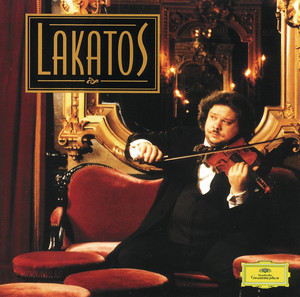 | Czardas | Vittorio Monti, Lakatos | D Minor | 3 | 7A | 104 BPM | |
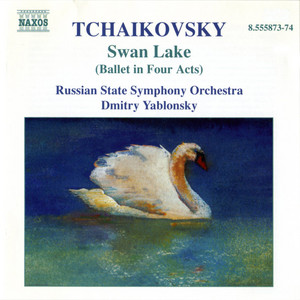 | Schwanensee, Op. 20: Act II No. 10: Scene | Pyotr Ilyich Tchaikovsky, Russian State Symphony Orchestra, Dmitry Yablonsky | E Minor | 2 | 9A | 87 BPM | |
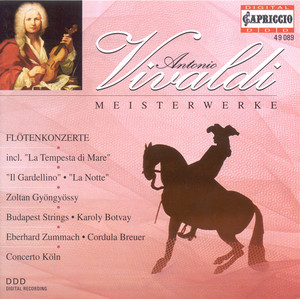 | The 4 Seasons: Violin Concerto in F minor, Op. 8, No. 4, RV 297, "L'inverno" (Winter): I. Allegro non molto | Karoly Botvay | F Minor | 1 | 4A | 151 BPM | |
 | Toccata and Fugue in D minor | Johann Sebastian Bach, William McVicker | D Minor | 0 | 7A | 72 BPM | |
 | Russian Easter Overture, Op. 36 | Nikolai Rimsky-Korsakov, Leonard Slatkin, St. Louis Symphony | E Minor | 3 | 9A | 101 BPM | |
 | Dance of the goblins | Razvan Stoica | C Major | 4 | 8B | 177 BPM | |
 | Serenade In G Major, K. 525 "Eine Kleine Nachtmusik": I. Allegro | Wolfgang Amadeus Mozart, Talich Quartet | G Major | 1 | 9B | 141 BPM | |
 | The Blue Danube | Johann Strauss II, Eugene Ormandy | D Major | 1 | 10B | 176 BPM | |
 | Hoe-Down from Rodeo | Aaron Copland, Isaac Stern, Milton Katims, Columbia Symphony Orchestra | D Major | 4 | 10B | 127 BPM | |
 | Rossini: Il Barbiere di Siviglia: Overture | Gioachino Rossini, Beverly Sills, Nicolai Gedda, Sherrill Milnes, Renato Capecchi, Ruggero Raimondi, Michael Rippon, John Alldis Choir, Joseph Galiano, London Symphony Orchestra, James Levine, Fedora Barbieri | E Major | 2 | 12B | 88 BPM | |
 | Hungarian Dances, WoO 1: No. 1 in G Minor | Johannes Brahms, Cristian Mandeal, George Enescu Philharmonic Orchestra, Bucharest | G Minor | 2 | 6A | 73 BPM | |
 | Peer Gynt Suite No. 1, Op. 46: IV. In the Hall of the Mountain King | Tbilisi Symphony Orchestra | F♯ Major | 2 | 2B | 95 BPM | |
 | Symphony No. 7 in A major, Op. 92: IV. Allegro con brio | Nicolaus Esterhazy Sinfonia | A Major | 3 | 11B | 146 BPM | |
 | Violin Partita No. 3 in E Major, BWV 1006: I. Preludio | Johann Sebastian Bach, Hilary Hahn | A Major | 3 | 11B | 126 BPM | |
 | Wilhelm Tell-Galoppe, Op. 29b | Johann Strauss I, Slovak Sinfonietta, Zilina, Ernst Marzendorfer | C Major | 1 | 8B | 155 BPM | |
 | Romeo and Juliet Suite No. 2, Op. 64ter: I. Montagues and Capulets (Live) | Sergei Prokofiev, Riccardo Muti, Chicago Symphony Orchestra | A Minor | 1 | 8A | 93 BPM | |
 | Serenade in C Major, Op. 48: II. Walzer | Pyotr Ilyich Tchaikovsky, Vienna Chamber Orchestra, Philippe Entremont | G Major | 2 | 9B | 180 BPM | |
 | The Firebird (L'oiseau De Feu) - Suite (1919): Finale | Igor Stravinsky, Orchestre de l'Opéra National de Paris, Myung-Whun Chung | E Major | 2 | 12B | 78 BPM | |
 | Le nozze di Figaro - Comic opera in four acts K492 (2000 Digital Remaster): Overture | Wolfgang Amadeus Mozart, Glyndebourne Festival Orchestra/Vittorio Gui, Vittorio Gui, Glyndebourne Festival Orchestra | D Major | 1 | 10B | 79 BPM | |
 | String Quartet No. 8 in C Minor, Op. 110: II. Allegro molto - Live | Dmitri Shostakovich, Emerson String Quartet | G Major | 4 | 9B | 135 BPM | |
 | Waltz No.2 | Cihat Aşkın | G Major | 8 | 9B | 85 BPM | |
 | Symphony No. 2 In C Minor - "Resurrection" / 1st Movement - Allegro maestoso (Totenfeier): Allegro maestoso | Gustav Mahler, Wiener Philharmoniker, Gilbert Kaplan | C Minor | 1 | 5A | 80 BPM |
- ISRC
- USSM16301354
- Label
- L-M Records/RCA Records