- BPM
- 133
- Key
- G Major
- Camelot
- 9B
Christ Is Made the Sure Foundation by Henry Purcell, John Rutter, John Scott, City of London Sinfonia, The Cambridge Singers Song Details
"Christ Is Made the Sure Foundation" by Henry Purcell, John Rutter, John Scott, City of London Sinfonia, The Cambridge Singers had its release date on August 1, 2000. With this song being about 5 minutes long, at This song is fairly a long song compared to the average song length. This song does not have an "Explicit" tag, making it safe for all ages. There are a total of 21 in the song's album "Sing, Ye Heavens: Hymns for All Time". In this album, this song's track order is #21. Furthermore, we believe that the track originated from United Kingdom. Based on our statistics, Christ Is Made the Sure Foundation's popularity is unknown right now. In our opinion, the overall tone is not very danceable and projects negative sounds, such as being sad, depressed, or angry.
BPM and Tempo
With Christ Is Made the Sure Foundation by Henry Purcell, John Rutter, John Scott, City of London Sinfonia, The Cambridge Singers having a BPM of 133 with a half-time of 66 BPM and a double-time of 266 BPM, we would consider this track to have a Allegro (fast, quick, and bright) tempo marking. Because of this, we believe that the song has an overall fast tempo. Looking at the BPM of this song, this song might go great with walking. The time signature for this track is 5/4.
Music Key
This song is in the music key of G Major. Or for those who are familiar with the camelot wheel, this song has a camelot key of 9B. So, the perfect camelot match for 9B would be either 9B or 10A. While, 10B can give you a low energy boost. For moderate energy boost, you would use 6B and a high energy boost can either be 11B or 4B. Though, if you want a low energy drop, you should looking for songs with either a camelot key of 9A or 8B will give you a low energy drop, 12B would be a moderate one, and 7B or 2B would be a high energy drop. Lastly, 6A allows you to change the mood.
Want to find the BPM and music key for other songs? Check out our BPM and Key Finder page!
- Popularity
- 0%
- Loudness
- -23.848 dB
- Acousticness
- 93%
- Danceability
- 19%
- Energy
- 9%
- Instrumentalness
- 2%
- Liveness
- 10%
- Loudness
- 60%
- Speechiness
- 4%
- Valence
- 5%
Recommendations
| Track | Artist | Key | Energy | Camelot | BPM | ||
|---|---|---|---|---|---|---|---|
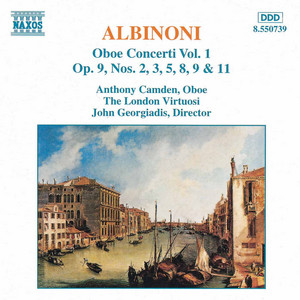 | Oboe Concerto in D Minor, Op. 9, No. 2: I. Allegro e non presto | Tomaso Albinoni, Anthony Camden, London Virtuosi, John Georgiadis | D Minor | 2 | 7A | 145 BPM | |
 | Byrd: Pavana Lachrymae (After Dowland's "Flow My Tears") | William Byrd, Shani Diluka | D Minor | 0 | 7A | 134 BPM | |
 | Dido and Aeneas, Z. 626: Overture | Henry Purcell, Kym Amps, David van Asch, Anna Crookes, The Scholars Baroque Ensemble | B Minor | 2 | 10A | 91 BPM | |
 | Sonata in C Minor, Jung III.2.B: I. Largo | Johann Georg Pisendel, Concerto Köln, Mayumi Hirasaki | B Minor | 1 | 10A | 96 BPM | |
 | Symphony No. 3 in C Major, Op. 2, "the Chaplet": II. Vivace | William Boyce, Aradia Ensemble, Kevin Mallon | B Major | 0 | 1B | 82 BPM | |
 | Concerto a cinque No. 2, Op. 9: II. Adagio | Tomaso Albinoni, Paul Dombrecht, Il Fondamento | A Major | 1 | 11B | 45 BPM | |
 | The Tempest, Z. 631, "The Enchanted Island": Masque Of Spirits, Act II, No. 3(Trio and Chorus) | Thomas Shadwell, Gillian Keith, Rosemarie van der Hooft, Paul Grindlay, Brett Polegato, Nils Brown, Meredith Hall, Aradia Ensemble, Michael Colvin, John Dryden, Henry Purcell | D♭ Major | 1 | 3B | 59 BPM | |
 | Salve Regina in C minor (1736): 4. Et Jesum | Giovanni Battista Pergolesi, Emma Kirkby, Academy of Ancient Music, Christopher Hogwood | A Major | 1 | 11B | 95 BPM | |
 | Orpheo ed Euridice, Wq. 30, Act II: Dance of the Blessed Spirits | Christoph Willibald Gluck, Eugene Ormandy, Philadelphia Orchestra | D Minor | 1 | 7A | 67 BPM | |
 | Strozzi: Arie, Op. 8 No. 6: "Che si può fare" | Barbara Strozzi, Emőke Baráth, Francesco Corti, Il Pomo D'oro | C Major | 1 | 8B | 73 BPM | |
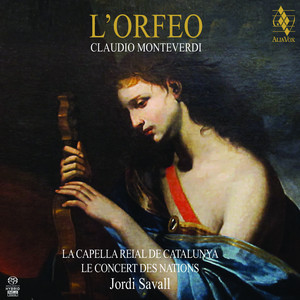 | L'Orfeo, Prologo: Ritornello - Dal mio permesso amato | Claudio Monteverdi, Jordi Savall, Montserrat Figueras, Le Concert Des Nations | D Minor | 1 | 7A | 89 BPM | |
 | Dido and Aeneas: Overture | Henry Purcell, English Chamber Orchestra, Raymond Leppard | C Minor | 3 | 5A | 147 BPM | |
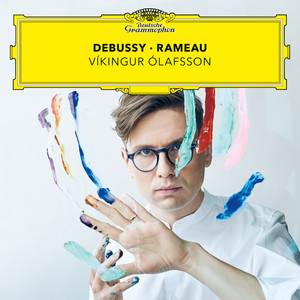 | Les tendres plaintes | Jean-Philippe Rameau, Víkingur Ólafsson | D Minor | 0 | 7A | 110 BPM | |
 | Concerto in D Minor; Op. 6 No. 5: I. Largo | Charles Avison, Café Zimmermann | D♭ Minor | 1 | 12A | 134 BPM | |
 | Purcell: Dido and Aeneas, Z. 626, Act II: Thanks to These Lonesome Vales | Henry Purcell, Thomas Dunford, Lea Desandre, Jupiter, Alex Rosen, Jess Dandy, Laurence Kilsby | F♯ Major | 1 | 2B | 77 BPM | |
 | Laudate pueri: Quis sicut Dominus (Salmo 112), RV 600 | Antonio Vivaldi, Concerto Italiano, Rinaldo Alessandrini, Gemma Bertagnolli | A Minor | 0 | 8A | 77 BPM | |
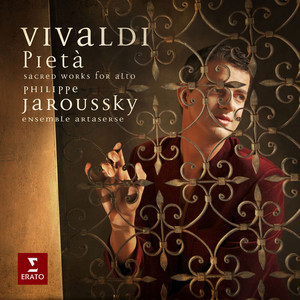 | Vivaldi: Stabat Mater in F Minor, RV 621: I. Stabat Mater dolorosa | Antonio Vivaldi, Philippe Jaroussky, Artaserse | B♭ Major | 0 | 6B | 76 BPM | |
 | Les Boréades / Act IV: Entrée de Polymnie - Live | Jean-Philippe Rameau, Les Musiciens du Louvre, Marc Minkowski | G Major | 1 | 9B | 94 BPM | |
 | Stabat Mater: 3. O quam tristis | Giovanni Battista Pergolesi, Margaret Marshall, Lucia Valentini Terrani, London Symphony Orchestra, Claudio Abbado, Leslie Pearson | G Minor | 1 | 6A | 80 BPM | |
 | Requiem in C Minor: II. Graduale | Luigi Cherubini, Filharmonie Brno, Czech Philharmonic Chorus Brno, Petr Fiala | G Minor | 1 | 6A | 105 BPM | |
 | The Fairy Queen, Z. 629: Act I: Scene Of The Drunken Poet | The Scholars Baroque Ensemble, Elkanah Settle, Henry Purcell | E Major | 2 | 12B | 117 BPM | |
 | Laudate pueri in G Major, RV 601 "Salmo 112": III. A solis ortu (Andante) | Antonio Vivaldi, Sandrine Piau, Accademia Bizantina, Ottavio Dantone, Stefano Montanari | A♭ Major | 1 | 4B | 128 BPM | |
 | Matthäus-Passion, BWV 244: Erbarme dich mein Gott | Yo-Yo Ma, Johann Sebastian Bach, Ton Koopman, Amsterdam Baroque Orchestra | B♭ Minor | 1 | 3A | 91 BPM | |
 | The Fairy Queen, Z. 629: Prelude | Henry Purcell, Vox Orchester, Lorenzo Ghirlanda | F♯ Minor | 4 | 11A | 113 BPM | |
 | Sonata in D Minor, K. 9 | Domenico Scarlatti, Ivo Pogorelich | D Minor | 0 | 7A | 94 BPM |
- ISRC
- GBAKR0012621
- Label
- L-M Records/RCA Records