- BPM
- 85
- Key
- C Major
- Camelot
- 8B
Sonata For Clarinet And Piano No. 2 In E Flat, Op. 120 No. 2: 2. Appassionato, Ma Non Troppo Allegro by Johannes Brahms, Veronika Hagen, Paul Gulda Song Details
Johannes Brahms, Veronika Hagen, Paul Gulda's ' "Sonata For Clarinet And Piano No. 2 In E Flat, Op. 120 No. 2: 2. Appassionato, Ma Non Troppo Allegro" was released on its scheduled release date, January 1, 1997. With this song being about 5 minutes long, at This song is fairly a long song compared to the average song length. This song does not have an "Explicit" tag, making it safe for all ages. The song is number 6 out of 9 in Brahms: Sonatas For Clarinet And Piano, Op.120 No.1 & 2; Gestillte Sehnsucht, Op.91, No.1; Geistliches Wiegenlied, Op.91, No.2 by Johannes Brahms, Veronika Hagen, Paul Gulda, Iris Vermillion. Going off of the ISRC code of this track, we detected that the origin of this track is from Germany. Sonata For Clarinet And Piano No. 2 In E Flat, Op. 120 No. 2: 2. Appassionato, Ma Non Troppo Allegro is unknown right now. Since there is more of a neutral sound being played, this makes the track somewhat danceable.
BPM and Tempo
The tempo marking of Sonata For Clarinet And Piano No. 2 In E Flat, Op. 120 No. 2: 2. Appassionato, Ma Non Troppo Allegro by Johannes Brahms, Veronika Hagen, Paul Gulda is Andante (at a walking pace), since this song has a tempo of 85 BPM. With that information, we can conclude that the song has a slow tempo. This song can go great with yoga or pilates. The time signature for this track is 4/4.
Music Key
This song is in the music key of C Major. This also means that this song has a camelot key of 8B. So, the perfect camelot match for 8B would be either 8B or 9A. While, 9B can give you a low energy boost. For moderate energy boost, you would use 5B and a high energy boost can either be 10B or 3B. Though, if you want a low energy drop, you should looking for songs with either a camelot key of 8A or 7B will give you a low energy drop, 11B would be a moderate one, and 6B or 1B would be a high energy drop. Lastly, 5A allows you to change the mood.
Want to find the BPM and music key for other songs? Check out our BPM and Key Finder page!
- Popularity
- 0%
- Loudness
- -14.192 dB
- Acousticness
- 98%
- Danceability
- 55%
- Energy
- 16%
- Instrumentalness
- 0%
- Liveness
- 10%
- Loudness
- 76%
- Speechiness
- 7%
- Valence
- 47%
Recommendations
| Track | Artist | Key | Energy | Camelot | BPM | ||
|---|---|---|---|---|---|---|---|
 | Orfeo ed Euridice, Wq. 30 / Act II: Dance of the Blessed Spirits (Arr. by Mathieu Herzog for Cello and Strings) | Christoph Willibald Gluck, Camille Thomas, Brussels Philharmonic, Mathieu Herzog | B Minor | 1 | 10A | 87 BPM | |
 | Six Pieces, Op. 51, TH 143: VI. Valse sentimentale. Tempo di Valse | Pyotr Ilyich Tchaikovsky, Daniel Lozakovich, Stanislav Soloviev | D♭ Major | 1 | 3B | 108 BPM | |
 | Piano Concerto No. 21 in C Major, K. 467: II. Andante | Wolfgang Amadeus Mozart, London Mozart Players, Howard Shelley | F Major | 0 | 7B | 179 BPM | |
 | 2nd Movement: Largo | London Philharmonic Orchestra | D♭ Major | 0 | 3B | 74 BPM | |
 | Melody from « Orfeo » | Christoph Willibald Gluck, Roberto Giordano | G Minor | 2 | 6A | 115 BPM | |
 | Polovetsian Dances from Prince Igor: Introduzione | Alexander Borodin, George Szell, The Cleveland Orchestra | A Major | 1 | 11B | 83 BPM | |
 | Liebestraume, S541/R211 : No. 3: Nocturne in A-Flat Major | Franz Liszt, Jenő Jandó | A♭ Major | 0 | 4B | 60 BPM | |
 | Notturno in G Minor | Fanny Mendelssohn, Heather Schmidt | G Minor | 1 | 6A | 125 BPM | |
 | Variations on a Rococo Theme, Op. 33, TH 57: Var: VI. Andante | Pyotr Ilyich Tchaikovsky, Jean-Guihen Queyras, BBC Symphony Orchestra, Jiří Bělohlávek | D Major | 0 | 10B | 114 BPM | |
 | Mahler: Blumine | Gustav Mahler, San Francisco Symphony, Michael Tilson Thomas | C Major | 1 | 8B | 100 BPM | |
 | 21 Hungarian Dances, WoO 1 (arr. J. Joachim for violin and piano): No. 6 in D Major (original in D-Flat Major) | Joseph Joachim, Johannes Brahms, Marat Bisengaliev, John Lenehan | B♭ Major | 1 | 6B | 72 BPM | |
 | 6 Impromptus, Op. 5: Impromptu V | Jean Sibelius, Leif Ove Andsnes | B Minor | 0 | 10A | 72 BPM | |
 | Piano Concerto in A Minor, Op. 7: II. Romanze. Andante non troppo con grazia | Clara Schumann, Veronica Jochum, Bamberg Symphony, Joseph Silverstein | A♭ Major | 0 | 4B | 96 BPM | |
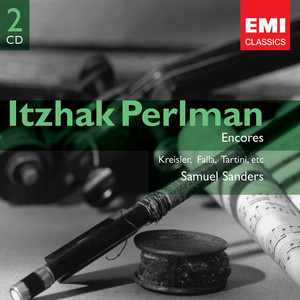 | Prelude and Allegro in the style of Pugnani | Samuel Sanders, Itzhak Perlman | E Minor | 3 | 9A | 107 BPM | |
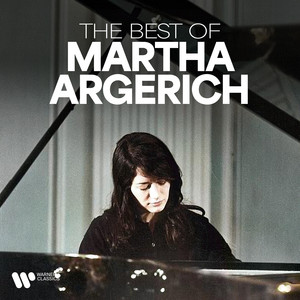 | Scarlatti, D: Keyboard Sonata in D Minor, Kk. 141 | Martha Argerich | F♯ Major | 3 | 2B | 104 BPM | |
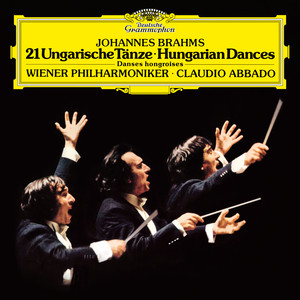 | 21 Hungarian Dances, WoO 1: Hungarian Dance No. 5 in G Minor. Allegro (Orch. Schmeling) | Johannes Brahms, Wiener Philharmoniker, Claudio Abbado | G Minor | 2 | 6A | 145 BPM | |
| 21 Hungarian Dances, WoO 1: Hungarian Dance No. 4 in F Minor. Poco sostenuto (Orch. Juon in F-Sharp Minor) | Johannes Brahms, Wiener Philharmoniker, Claudio Abbado | F♯ Minor | 2 | 11A | 80 BPM | |
| 3rd Movement: Scherzo | London Philharmonic Orchestra | C Major | 1 | 8B | 118 BPM | |
 | 6 Violin Sonatas, Op. 10b No. 3 in D Minor, J. 101: I. Air russe. Allegretto moderato | Carl Maria von Weber, Nino Gvetadze, Frederieke Saeijs | D Minor | 1 | 7A | 113 BPM | |
 | Elgar: Salut d'amour, Op. 12 | Edward Elgar, Min Kym, Gordon Back | E Major | 1 | 12B | 86 BPM | |
 | Nocturnes, Op. 27: No. 2 in D Flat Major. Lento sostenuto | Frédéric Chopin, Jan Lisiecki | D♭ Major | 0 | 3B | 68 BPM | |
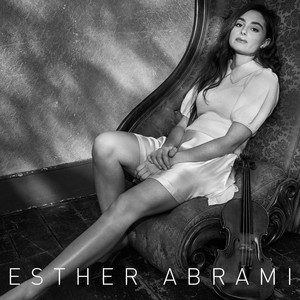 | Three Romances for Violin and Piano, Op. 22: I. Andante molto | Clara Schumann, Esther Abrami, Iyad Sughayer | D♭ Major | 2 | 3B | 81 BPM | |
| 21 Hungarian Dances, WoO 1: Hungarian Dance No. 3 in F Major. Allegretto (Orch. Brahms) | Johannes Brahms, Wiener Philharmoniker, Claudio Abbado | F Major | 0 | 7B | 77 BPM | |
 | Mahler Adagietto Variation (From Symphony No. 5 in C-Sharp Minor, Arr. for Violin and Piano by Jan-Peter Klöpfel) | Gustav Mahler, Gabriele Bagnati, Esther Abrami | F Major | 2 | 7B | 82 BPM | |
 | Violin Concerto No. 1 in G Minor, Op. 26: II. Adagio | Max Bruch, Itzhak Perlman, Bernard Haitink, Royal Concertgebouw Orchestra | E♭ Major | 1 | 5B | 87 BPM |
- ISRC
- DEF059603192
- Label
- L-M Records/RCA Records