- BPM
- 83
- Key
- D♭ Major
- Camelot
- 3B
Verdi : Rigoletto : Act 1 "Riedo! ... perché?" [Rigoletto, Borsa, Ceprano, Marullo] by Giuseppe Verdi, Carlo Rizzi, Orchestra of Welsh National Opera Song Details
"Verdi : Rigoletto : Act 1 "Riedo! ... perché?" [Rigoletto, Borsa, Ceprano, Marullo]" by Giuseppe Verdi, Carlo Rizzi, Orchestra of Welsh National Opera had its release date on 1992. The duration of This song is about two minutes long, specifically at 2:04. This song does not appear to have any foul language. Verdi : Rigoletto : Act 1 "Riedo! ... perché?" [Rigoletto, Borsa, Ceprano, Marullo]'s duration is considered a little bit shorter than the average duration of a typical track. This song is part of Verdi : Rigoletto by Giuseppe Verdi, Leontina Vaduva, Jennifer Larmore, Richard Leech, Alexandru Agache, Samuel Ramey, Carlo Rizzi & Orchestra of Welsh National Opera, Carlo Rizzi, Orchestra of Welsh National Opera. The song's track number on the album is #16 out of 36 tracks. Based on our data, Germany was the country where this track was produced or recorded. Verdi : Rigoletto : Act 1 "Riedo! ... perché?" [Rigoletto, Borsa, Ceprano, Marullo] is unknown right now. In our opinion, the overall tone is not very danceable and projects negative sounds, such as being sad, depressed, or angry.
BPM and Tempo
Since Verdi : Rigoletto : Act 1 "Riedo! ... perché?" [Rigoletto, Borsa, Ceprano, Marullo] by Giuseppe Verdi, Carlo Rizzi, Orchestra of Welsh National Opera has a tempo of 83 beats per a minute, the tempo markings of this song would be Andante (at a walking pace). With Verdi : Rigoletto : Act 1 "Riedo! ... perché?" [Rigoletto, Borsa, Ceprano, Marullo] being at 83 BPM, the half-time would be 42 BPM with a double-time of 166 BPM.In addition, we consider the tempo speed to be pretty slow for this song. The time signature for this track is 4/4.
Music Key
This song is in the music key of D♭ Major. Or for those who are familiar with the camelot wheel, this song has a camelot key of 3B. So, the perfect camelot match for 3B would be either 3B or 4A. While, 4B can give you a low energy boost. For moderate energy boost, you would use 12B and a high energy boost can either be 5B or 10B. Though, if you want a low energy drop, you should looking for songs with either a camelot key of 3A or 2B will give you a low energy drop, 6B would be a moderate one, and 1B or 8B would be a high energy drop. Lastly, 12A allows you to change the mood.
Want to find the BPM and music key for other songs? Check out our BPM and Key Finder page!
- Popularity
- 0%
- Loudness
- -25.821 dB
- Acousticness
- 97%
- Danceability
- 21%
- Energy
- 3%
- Instrumentalness
- 1%
- Liveness
- 7%
- Loudness
- 57%
- Speechiness
- 6%
- Valence
- 4%
Recommendations
| Track | Artist | Key | Energy | Camelot | BPM | ||
|---|---|---|---|---|---|---|---|
 | Nabucco: Overture | Giuseppe Verdi, Berliner Philharmoniker, Claudio Abbado | F Major | 2 | 7B | 100 BPM | |
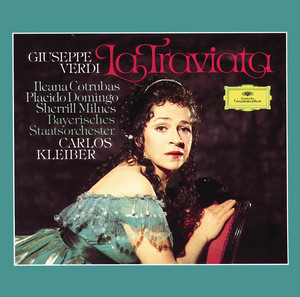 | La Traviata / Act 2: "Di Madride noi siam mattadori" | Giuseppe Verdi, Stefania Malagu, Walter Gullino, Giovanni Foiani, Alfredo Giacomotti, Chor der Bayerischen Staatsoper München, Bavarian State Orchestra, Carlos Kleiber | G Major | 4 | 9B | 138 BPM | |
 | Bizet: Carmen: Prelude - Act One | Georges Bizet, Orchestra of the Royal Opera House, Covent Garden | A Minor | 3 | 8A | 118 BPM | |
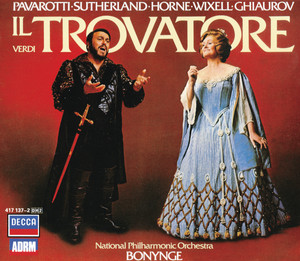 | Il Trovatore / Act 1: "Di tale amor" | Giuseppe Verdi, Joan Sutherland, Norma Burrowes, National Philharmonic Orchestra, Richard Bonynge | A♭ Major | 2 | 4B | 125 BPM | |
 | Offenbach: Les contes d'Hoffmann, Act 4: Barcarolle. "Belle nuit, ô nuit d'amour" (Nicklausse, Giulietta, Chœur) | Jacques Offenbach, Sylvain Cambreling, Ann Murray, Chœurs de la Monnaie, Jessye Norman, Orchestre Symphonique De La Monnaie | D Major | 1 | 10B | 81 BPM | |
 | Pelléas et Mélisande, CD 93, Act III: Mes longs cheveux descendent | Claude Debussy, Francois Le Roux, Maria Ewing, Wiener Philharmoniker, Claudio Abbado | A Minor | 1 | 8A | 123 BPM | |
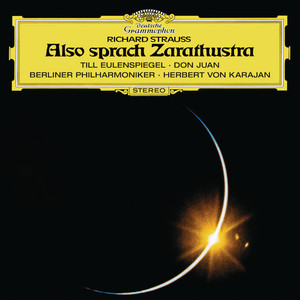 | Also sprach Zarathustra, Op. 30, TrV 176: Prelude (Sonnenaufgang) | Richard Strauss, Berliner Philharmoniker, Herbert von Karajan | C Major | 3 | 8B | 77 BPM | |
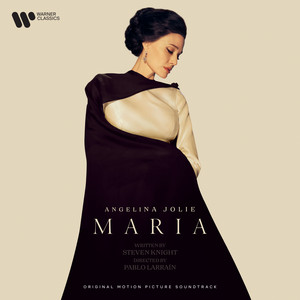 | Sempre libera | Maria Callas | D♭ Major | 2 | 3B | 126 BPM | |
 | Si, Mi Chiamano Mimì - La Boheme Atto I | Renata Tebaldi | B♭ Major | 3 | 6B | 134 BPM | |
 | Le nozze di Figaro, K. 492, Act I: No. 10, Non più andrai | Wolfgang Amadeus Mozart, Bryn Terfel, Scottish Chamber Orchestra, Sir Charles Mackerras | G Major | 2 | 9B | 134 BPM | |
 | Rigoletto / Act 2: Cortigiani, vil razza dannata (Rigoletto) | Giuseppe Verdi, Vladimir Chernov, Metropolitan Opera Orchestra, James Levine | D♭ Major | 2 | 3B | 86 BPM | |
 | Thaïs: Meditation | Jules Massenet, Michel Schwalbé, Berliner Philharmoniker, Herbert von Karajan | E Minor | 1 | 9A | 95 BPM | |
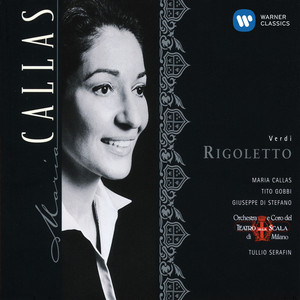 | Rigoletto, Act III: Bella figlia dell'amore (Duca/Maddalena/Gilda/Rigoletto) | Giuseppe Verdi, Giuseppe Di Stefano, Adriana Lazzarini, Maria Callas, Tito Gobbi, Orchestra Del Teatro Alla Scala, Milano, Tullio Serafin, Orchestra Del Teatro Alla Scala Di Milan | D♭ Major | 2 | 3B | 104 BPM | |
 | Carmina Burana: V. Ecce gratum | Carl Orff, Chor der Deutschen Oper Berlin, Orchester der Deutschen Oper Berlin, Eugen Jochum | B♭ Major | 4 | 6B | 139 BPM | |
 | The Four Seasons, Violin Concerto No. 2 in G Minor, RV 315 "L'estate": III. Tempo impetuoso d'estate | Antonio Vivaldi, Europa Galante, Fabio Biondi | F♯ Major | 6 | 2B | 85 BPM | |
 | La traviata: Act II: Amami, Alfredo! (Violetta, Alfredo) | Giuseppe Verdi, Orquestra Sinfónica do Teatro Nacional de São Carlos Lisboa, Maria Callas, Alfredo Kraus, Franco Ghione | F Major | 6 | 7B | 90 BPM | |
 | Hungarian Dances, WoO 1: No. 1 in G Minor | Johannes Brahms, Cristian Mandeal, George Enescu Philharmonic Orchestra, Bucharest | G Minor | 2 | 6A | 73 BPM | |
| La traviata, Act I: Follie! Follie! – Sempre libera "Cabaletta" | Giuseppe Verdi, Ileana Cotrubas, Plácido Domingo, Bavarian State Orchestra, Carlos Kleiber | A♭ Major | 1 | 4B | 117 BPM | |
 | Mozart: Requiem in D Minor, K. 626: VIII. Lacrimosa | Wolfgang Amadeus Mozart, Riccardo Muti, Stockholm Chamber Choir, Swedish Radio Choir, Berliner Philharmoniker | D Minor | 1 | 7A | 147 BPM | |
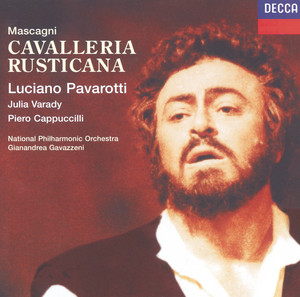 | Cavalleria rusticana: Preludio | Pietro Mascagni, National Philharmonic Orchestra, Gianandrea Gavazzeni | F Major | 2 | 7B | 88 BPM | |
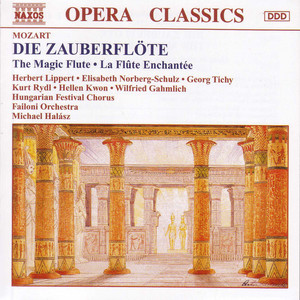 | The Magic Flute, K. 620, Act II: Aria. Der Hölle Rache kocht in meinem Herzen | Wolfgang Amadeus Mozart, Wilfried Gahmlich, Anna Gonda, Hungarian Festival Chorus, Budapest Failoni Chamber Orchestra, Michael Halasz, Hellen Kwon, Lotte Leitner, Herbert Lippert, Elizabeth Norberg-Schulz, Kurt Rydl, Georg Tichy, Julia Faulkner, Waltraud Winsauer | F Major | 1 | 7B | 147 BPM | |
 | La Bohème / Act I: "Quando Me'n Vò" | Giacomo Puccini, Anna Netrebko, Wiener Philharmoniker, Gianandrea Noseda | F♯ Minor | 2 | 11A | 135 BPM | |
 | Serenade for Strings in E Major, Op. 22, B. 52: II. Tempo di valse | Antonín Dvořák, Prague Chamber Orchestra, Petr Skvor | A Major | 1 | 11B | 0 BPM | |
 | The Abduction from the Seraglio, K. 384, Act III: Pasha Selim, live for ever (Chorus) | Wolfgang Amadeus Mozart, Yehudi Menuhin, Bath Festival Orchestra, Ambrosian Singers | D♭ Major | 0 | 3B | 138 BPM | |
 | Orpheus-Quadrille, Op. 236 | Johann Strauss II, Georges Prêtre, Wiener Philharmoniker | G Major | 6 | 9B | 109 BPM |
- ISRC
- DEA809360015
- Label
- L-M Records/RCA Records