- BPM
- 122
- Key
- F Minor
- Camelot
- 4A
Piano Concerto No. 1 in F sharp minor, Op. 1: 3. Allegro vivace by Sergei Rachmaninoff, Vladimir Ashkenazy, London Symphony Orchestra, André Previn Song Details
"Piano Concerto No. 1 in F sharp minor, Op. 1: 3. Allegro vivace" by Sergei Rachmaninoff, Vladimir Ashkenazy, London Symphony Orchestra, André Previn had its release date on January 1, 1972. Since This song is still less than 10 minute long, it is still considered a pretty long duration song compared to the average song length. This song does not appear to be explicit due to the lack of the "E" tag. There are a total of 12 in the song's album "Rachmaninov: Piano Concertos Nos. 1-4". In this album, this song's track order is #3. Furthermore, we believe that the track originated from United Kingdom. Based on our statistics, Piano Concerto No. 1 in F sharp minor, Op. 1: 3. Allegro vivace's popularity is not that popular right now. In our opinion, the overall tone is not very danceable and projects negative sounds, such as being sad, depressed, or angry.
BPM and Tempo
With Piano Concerto No. 1 in F sharp minor, Op. 1: 3. Allegro vivace by Sergei Rachmaninoff, Vladimir Ashkenazy, London Symphony Orchestra, André Previn having a BPM of 122 with a half-time of 61 BPM and a double-time of 244 BPM, we would consider this track to have a Allegro (fast, quick, and bright) tempo marking. Because of this, we believe that the song has an overall fast tempo. Looking at the BPM of this song, this song might go great with walking. The time signature for this track is 4/4.
Music Key
This song has a musical key of F Minor. Which also means that the camelot key for this song is 4A. So, the perfect camelot match for 4A would be either 4A or 3B. While, a low energy boost can consist of either 4B or 5A. For moderate energy boost, you would use 1A and a high energy boost can either be 6A or 11A. However, if you are looking for a low energy drop, finding a song with a camelot key of 3A would be a great choice. Where 7A would give you a moderate drop, and 2A or 9A would be a high energy drop. Lastly, 7B allows you to change the mood.
Want to find the BPM and music key for other songs? Check out our BPM and Key Finder page!
- Popularity
- 18%
- Loudness
- -21.189 dB
- Acousticness
- 99%
- Danceability
- 31%
- Energy
- 11%
- Instrumentalness
- 90%
- Liveness
- 12%
- Loudness
- 65%
- Speechiness
- 4%
- Valence
- 9%
Recommendations
| Track | Artist | Key | Energy | Camelot | BPM | ||
|---|---|---|---|---|---|---|---|
 | Rachmaninov: Symphony No. 3 in A Minor, Op. 44: II. Adagio ma non troppo - Allegro vivace | Sergei Rachmaninoff, Mariss Jansons, St. Petersburg Philharmonic Orchestra | E♭ Minor | 0 | 2A | 117 BPM | |
 | Crisantemi | Brodsky Quartet | F♯ Minor | 0 | 11A | 75 BPM | |
 | Ave Maria, S. 558/12 | Franz Schubert, Lang Lang | B♭ Major | 0 | 6B | 64 BPM | |
 | String Quartet No.2 in D Major | Alexander Borodin, Borodin Quartet | A Major | 1 | 11B | 90 BPM | |
 | Liebesleid (Love's Sorrow) | Fritz Kreisler, Sergei Rachmaninoff, RueiBin Chen | A Major | 2 | 11B | 98 BPM | |
 | Songs Without Words, Book VI Opus 67: No. 2 in F-Sharp Minor | Felix Mendelssohn, Bertrand Chamayou | F♯ Minor | 1 | 11A | 69 BPM | |
 | Pavane, Op. 50 (Version for Piano) | Gabriel Fauré, Jorge Federico Osorio | F♯ Minor | 0 | 11A | 75 BPM | |
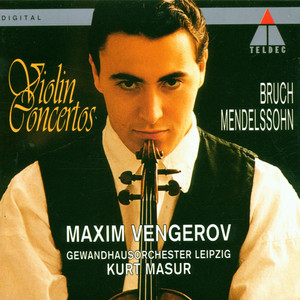 | Mendelssohn: Violin Concerto in E Minor, Op. 64, MWV O14: II. Andante | Felix Mendelssohn, Maxim Vengerov, Kurt Masur, Gewandhausorchester | C Major | 1 | 8B | 96 BPM | |
 | La lisonjera, Op. 50 | Cécile Chaminade, Péter Nagy | D♭ Major | 1 | 3B | 132 BPM | |
 | Sonata in D Minor, K. 9 | Domenico Scarlatti, Ivo Pogorelich | D Minor | 0 | 7A | 94 BPM | |
 | 6 Studies in English Folksong (Version for Cello & Piano): No. 3, Larghetto "Van Dieman's Land" | Ralph Vaughan Williams, Gerald Peregrine, Antony Ingham | D Minor | 0 | 7A | 81 BPM | |
 | Come, Sweet Death, BWV 478 (Arr. for 5 Cellos) | Sheku Kanneh-Mason, Hannah Roberts, Ben Davies, Desmond Neysmith, Max Ruisi | C Major | 0 | 8B | 122 BPM | |
 | Rachmaniana: I. Andante improvizato | Daniil Trifonov | E Minor | 0 | 9A | 63 BPM | |
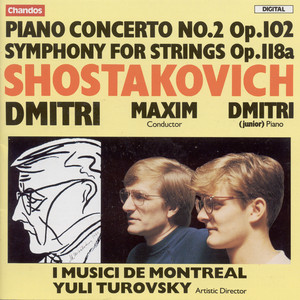 | Piano Concerto No. 2 in F Major, Op. 102: I. Allegro | Dmitri Shostakovich, I Musici de Montréal, Maxim Shostakovich | B♭ Major | 3 | 6B | 160 BPM | |
 | Orfeo ed Euridice, Wq. 30: Dance of the Blessed Spirits "Melody" (Arr. Sgambati for Piano) | Christoph Willibald Gluck, Yuja Wang | D Minor | 0 | 7A | 70 BPM | |
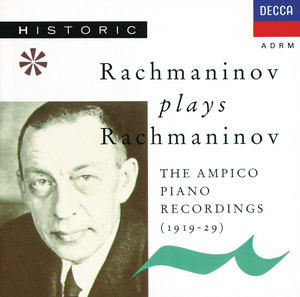 | Elegie in E-Flat Minor, Op. 3, No. 1 | Sergei Rachmaninoff | E♭ Minor | 1 | 2A | 68 BPM | |
 | Cello Concerto No. 1 in A Minor, Op. 33: I. Allegro non troppo | Camille Saint-Saëns, Mischa Maisky, Orpheus Chamber Orchestra | F Major | 2 | 7B | 131 BPM | |
 | Rosa Mundi | Paul Lewis, Royal Ballet Sinfonia, Gavin Sutherland | E Major | 0 | 12B | 81 BPM | |
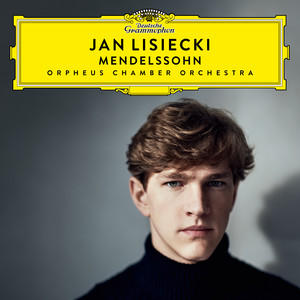 | Lieder ohne Worte, Op. 19: No. 6 in G Minor (Andante sostenuto) "Venetian Gondola Song", MWV U78 | Felix Mendelssohn, Jan Lisiecki | G Minor | 0 | 6A | 168 BPM | |
| Prélude in C-Sharp Minor, Op. 3, No. 2 | Sergei Rachmaninoff | F♯ Minor | 1 | 11A | 115 BPM | |
 | Bach: Adagio (After Violin Concerto No. 2, BWV 1042) | Johann Sebastian Bach, Gabriela Montero | F♯ Minor | 0 | 11A | 73 BPM | |
 | Piano Concerto No. 2 in C Minor, Op. 18: I. Moderato | Sergei Rachmaninoff, Yefim Bronfman, Esa-Pekka Salonen, Philharmonia Orchestra | F Major | 0 | 7B | 83 BPM | |
 | Schumann, Clara: 3 Romances, Op. 11: No. 1 in E-Flat Minor | Clara Schumann, Sophie Pacini | E♭ Minor | 0 | 2A | 60 BPM | |
 | Piazzolla: Oblivion | Julian Lloyd Webber, John Lenehan | D Minor | 0 | 7A | 81 BPM | |
 | Lieder ohne Worte, Op.19: No. 1 In E Major, MWV U 86 - "Sweet Remembrance" | Felix Mendelssohn, Daniel Barenboim | B Major | 0 | 1B | 89 BPM |
- ISRC
- GBF077110783
- Label
- L-M Records/RCA Records