- BPM
- 109
- Key
- F Minor
- Camelot
- 4A
Variations And Fugue On A Theme By Ludwig van Beethoven, Op. 86: 6. Var. X: Andante sostenuto by Max Reger, Bamberg Symphony, Horst Stein Song Details
"Variations And Fugue On A Theme By Ludwig van Beethoven, Op. 86: 6. Var. X: Andante sostenuto" by Max Reger, Bamberg Symphony, Horst Stein had its release date on June 29, 2018. The duration of This song is about 3 minutes long, at 3:03. Based on our data, This song appears to be safe for all ages and is not considered explicit. This track is about the average length of a typical track. The track order of this song in Max Reger, Various Artists's "Max Reger - Orchestral Edition - Variations, Suites, Romances" album is number 45 out of 56. On top of that, Germany appears to be the country where this track was created. In terms of popularity, Variations And Fugue On A Theme By Ludwig van Beethoven, Op. 86: 6. Var. X: Andante sostenuto is currently unknown. In our opinion, the overall tone is not very danceable and projects negative sounds, such as being sad, depressed, or angry.
BPM and Tempo
We consider the tempo marking of Variations And Fugue On A Theme By Ludwig van Beethoven, Op. 86: 6. Var. X: Andante sostenuto by Max Reger, Bamberg Symphony, Horst Stein to be Moderato (at a moderate speed) because the track has a tempo of 109 BPM, a half-time of 54BPM, and a double-time of 218 BPM. Based on that, the speed of the song's tempo is moderate. The time signature for this track is 5/4.
Music Key
This song is in the music key of F Minor. Because this track belongs in the F Minor key, the camelot key is 4A. So, the perfect camelot match for 4A would be either 4A or 3B. While, a low energy boost can consist of either 4B or 5A. For moderate energy boost, you would use 1A and a high energy boost can either be 6A or 11A. However, if you are looking for a low energy drop, finding a song with a camelot key of 3A would be a great choice. Where 7A would give you a moderate drop, and 2A or 9A would be a high energy drop. Lastly, 7B allows you to change the mood.
Want to find the BPM and music key for other songs? Check out our BPM and Key Finder page!
- Popularity
- 0%
- Loudness
- -24.897 dB
- Acousticness
- 98%
- Danceability
- 16%
- Energy
- 8%
- Instrumentalness
- 90%
- Liveness
- 13%
- Loudness
- 59%
- Speechiness
- 4%
- Valence
- 3%
Recommendations
| Track | Artist | Key | Energy | Camelot | BPM | ||
|---|---|---|---|---|---|---|---|
 | Valses nobles et sentimentales, M.61: 7. Moins vif | Maurice Ravel, Gordon Fergus-Thompson | A Major | 1 | 11B | 105 BPM | |
 | Piano Quartet in E-Flat Major, Op. 47: III. Andante cantabile | Robert Schumann, Isabelle Faust, Antoine Tamestit, Jean-Guihen Queyras, Alexander Melnikov | B♭ Major | 0 | 6B | 78 BPM | |
 | Liebeslied, S. 566 (After Schumann's Op. 25 No. 1) | Franz Liszt, Kasparas Uinskas | A♭ Major | 1 | 4B | 69 BPM | |
 | Du bist die Ruh, D 776 | Nils Mönkemeyer | E♭ Major | 0 | 5B | 68 BPM | |
 | Stabat Mater, FP 148: I. Stabat mater dolorosa | Francis Poulenc, Cappella Amsterdam, Estonian Philharmonic Chamber Choir, Estonian National Symphony Orchestra, Daniel Reuss | A Minor | 1 | 8A | 135 BPM | |
 | Stabat Mater, Op. 58: V. Tui nati vulnerati (Andante con moto, quasi allegretto) | Antonín Dvořák, Philippe Herreweghe, Collegium Vocale Gent, Royal Flemish Philharmonic | E♭ Major | 0 | 5B | 81 BPM | |
 | Hahn: Le rossignol éperdu: No. 52, Hivernale (Version for Piano) | Reynaldo Hahn, Shani Diluka | F♯ Minor | 0 | 11A | 137 BPM | |
 | Adagio in E-Flat Major | Fanny Mendelssohn, Heather Schmidt | E♭ Minor | 0 | 2A | 90 BPM | |
 | Love Like the Dawn Came Stealing - Duo-Art 6079 | Charles Cadman, Peter Phillips | A Major | 1 | 11B | 63 BPM | |
 | 6 Romances sans paroles: No. 4, Le calme, CG 2e | Charles Gounod, Warren Lee | D♭ Major | 1 | 3B | 73 BPM | |
 | Petite messe solennelle: XVI. Sanctus | Gioachino Rossini, Giulio Prandi, Coro Ghislieri, Sandrine Piau, José Maria Lo Monaco, Edgardo Rocha, Christian Senn, Deniel Perer | E Minor | 1 | 9A | 93 BPM | |
 | Requiem, Op. 9: IV. Sanctus | Maurice Duruflé, Maîtrise de Saint-Christophe de Javel, Yves Castagnet, Henri Chalet | B♭ Major | 0 | 6B | 131 BPM | |
 | 7 Morceaux de salon, Op. 10: No. 6, Romance | Sergei Rachmaninoff, Boris Giltburg | A Major | 1 | 11B | 63 BPM | |
 | 9 Preludes, Op. 1: No. 2, Andante con moto | Karol Szymanowski, Paolo Ceccarini | G Minor | 0 | 6A | 72 BPM | |
 | 8 Short Preludes on Gregorian Themes, Op. 45: III. Pange lingua | Marcel Dupré, Stefan Engels | D Major | 1 | 10B | 129 BPM | |
 | Suite No. 1, "Orientale": I. Okenstamning: Adagio | Kurt Atterberg, Ferenc Balogh, Gyorgy Kertesz, Andras Kiss, Ilona Prunyi | B Minor | 1 | 10A | 61 BPM | |
 | Sostenuto in F Major, MWV U 167 | Felix Mendelssohn, Howard Shelley | E Major | 0 | 12B | 97 BPM | |
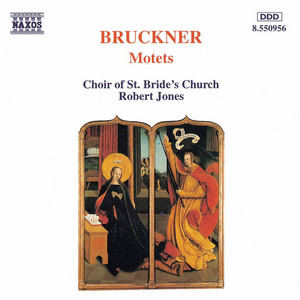 | Locus iste, WAB 23 | Anton Bruckner, St. Bride's Church Choir, Fleet Street, Robert Jones | C Major | 0 | 8B | 78 BPM | |
 | Nielsen: 5 Piano Pieces, Op. 3: No. 1, Folk Tune | Carl Nielsen, Leif Ove Andsnes | C Major | 0 | 8B | 76 BPM | |
 | Symphony No. 2 in B-Flat Major, Op. 52 "Hymn of Praise": Ic. Sinfonia: Adagio religioso | Felix Mendelssohn, Deutsche Kammerphilharmonie Bremen, Frieder Bernius | D Major | 0 | 10B | 75 BPM | |
 | Eine Alpensinfonie, Op. 64, TrV 233: Nacht (2) | Richard Strauss, Finnish Radio Symphony Orchestra, Nicholas Collon | F♯ Minor | 3 | 11A | 129 BPM | |
 | Grand Duet in E-Flat Minor (Version for Harp & Piano): II. Adagio | John Thomas, Duo Praxedis | E♭ Minor | 1 | 2A | 60 BPM | |
 | Trois romances op.11 Andante | Pierre-Alain Volondat, Clara Schumann | E♭ Minor | 0 | 2A | 69 BPM | |
 | Pictures and Tales Suite: IV. Sleep, Baby, Sleep | Karl Weigl, Deutsche Staatsphilharmonie Rheinland-Pfalz, Jurgen Bruns | B Major | 0 | 1B | 119 BPM | |
 | Lyric Pieces: Melodie / Melody, Op. 47, 3 | Edvard Grieg, Heidi Kommerell | A Major | 1 | 11B | 63 BPM |
- ISRC
- DEN120504468
- Label
- L-M Records/RCA Records