- BPM
- 121
- Key
- D Major
- Camelot
- 10B
Orchestral Suite in D Minor (Version for Piano): I. Lento - Allegro moderato by Sergei Rachmaninoff, Julia Severus Song Details
Sergei Rachmaninoff, Julia Severus's 'Orchestral Suite in D Minor (Version for Piano): I. Lento - Allegro moderato' had a release date set for May 12, 2017. Since This song is still less than 10 minute long, it is still considered a pretty long duration song compared to the average song length. This song does not appear to be explicit due to the lack of the "E" tag. There are a total of 26 in the song's album "Rachmaninoff: Rare Piano Transcriptions". In this album, this song's track order is #23. Furthermore, we believe that the track originated from Hong Kong. Based on our statistics, Orchestral Suite in D Minor (Version for Piano): I. Lento - Allegro moderato's popularity is unknown right now. Although the tone can be danceable to some, this track does projects more of a negative sound rather than a postive one.
BPM and Tempo
With Orchestral Suite in D Minor (Version for Piano): I. Lento - Allegro moderato by Sergei Rachmaninoff, Julia Severus having a BPM of 121 with a half-time of 60 BPM and a double-time of 242 BPM, we would consider this track to have a Allegro (fast, quick, and bright) tempo marking. Because of this, we believe that the song has an overall fast tempo. Looking at the BPM of this song, this song might go great with walking. The time signature for this track is 4/4.
Music Key
This song has a musical key of D Major. Or for those who are familiar with the camelot wheel, this song has a camelot key of 10B. So, the perfect camelot match for 10B would be either 10B or 11A. While, 11B can give you a low energy boost. For moderate energy boost, you would use 7B and a high energy boost can either be 12B or 5B. Though, if you want a low energy drop, you should looking for songs with either a camelot key of 10A or 9B will give you a low energy drop, 1B would be a moderate one, and 8B or 3B would be a high energy drop. Lastly, 7A allows you to change the mood.
Want to find the BPM and music key for other songs? Check out our BPM and Key Finder page!
- Popularity
- 0%
- Loudness
- -17.009 dB
- Acousticness
- 99%
- Danceability
- 44%
- Energy
- 24%
- Instrumentalness
- 88%
- Liveness
- 12%
- Loudness
- 72%
- Speechiness
- 4%
- Valence
- 33%
Recommendations
| Track | Artist | Key | Energy | Camelot | BPM | ||
|---|---|---|---|---|---|---|---|
 | 3 Romances sans paroles, Op. 17: No. 3 in A-Flat Major. Andante moderato | Gabriel Fauré, Kun-Woo Paik | A♭ Major | 0 | 4B | 65 BPM | |
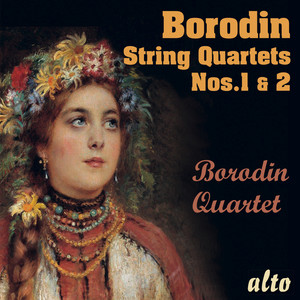 | String Quartet No.2 in D Major | Alexander Borodin, Borodin Quartet | D Major | 1 | 10B | 174 BPM | |
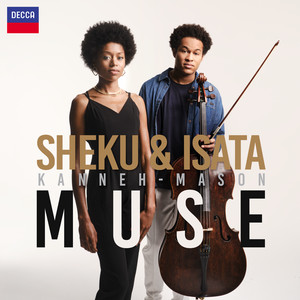 | 12 Romances, Op. 21: No. 7, How Fair This Spot (Arr. Sheku Kanneh-Mason for Cello and Piano) | Sergei Rachmaninoff, Sheku Kanneh-Mason, Isata Kanneh-Mason | A Major | 1 | 11B | 89 BPM | |
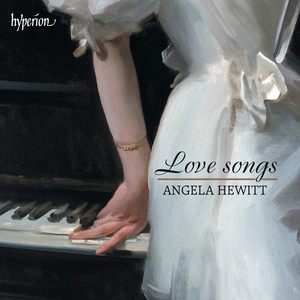 | Liebeslied "Widmung, von Robert Schumann", S. 566 (After Myrthen, Op. 25/1) | Franz Liszt, Angela Hewitt | G Major | 0 | 9B | 63 BPM | |
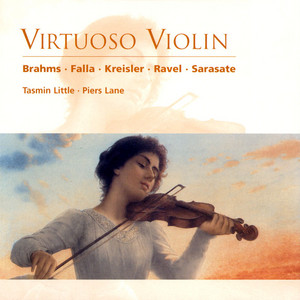 | Shostakovich / Arr. Atovmyan: Suite from the Gadfly, Op. 97a: VIII. Romance | Dmitri Shostakovich, Tasmin Little, Piers Lane | C Major | 1 | 8B | 175 BPM | |
 | 8 Slavonic Dances, Op. 72, B. 147: 2. Dumka. Allegretto grazioso | Antonín Dvořák, Czech Philharmonic, Jiří Bělohlávek | C Major | 2 | 8B | 97 BPM | |
 | Symphony No. 2 In C Minor - "Resurrection" / 1st Movement - Allegro maestoso (Totenfeier): Im Tempo nachgeben | Gustav Mahler, Wiener Philharmoniker, Gilbert Kaplan | B Major | 1 | 1B | 152 BPM | |
 | Romance for Violin and Piano, Op. 23 | Amy Beach, Esther Abrami, Iyad Sughayer | A Major | 2 | 11B | 87 BPM | |
 | Fauré: Élégie in C Minor, Op. 24 | Gabriel Fauré, Jacqueline du Pré, Gerald Moore | A♭ Major | 0 | 4B | 56 BPM | |
 | Liszt: Lieder aus Franz Schubert's "Schwanengesang", S. 560: No. 7 Ständchen | Franz Liszt, Mariam Batsashvili | A Minor | 1 | 8A | 120 BPM | |
 | 10 Preludes, Op. 23: No. 4 in D Major: Andante cantabile | Sergei Rachmaninoff, Eldar Nebolsin | D♭ Major | 1 | 3B | 63 BPM | |
 | 6 Pezzi, P. 44: No. 3. Notturno | Ottorino Respighi, Konstantin Scherbakov | F♯ Major | 0 | 2B | 87 BPM | |
 | Études-tableaux, Op. 39: No. 5, Appassionato | Sergei Rachmaninoff, Boris Giltburg | E♭ Minor | 1 | 2A | 66 BPM | |
 | Liebesleid (Love's Sorrow) | Fritz Kreisler, Sergei Rachmaninoff, RueiBin Chen | A Major | 2 | 11B | 98 BPM | |
 | Symphony in B Minor (arr. T. Finno for orchestra): Ii. Un poco lento, cantabile | Claude Debussy, フランス国立リヨン管弦楽団, 準・メルクル | E♭ Major | 1 | 5B | 92 BPM | |
 | Piano Quartet in E-Flat Major, Op. 47: III. Andante cantabile | Robert Schumann, Beaux Arts Trio, Samuel Rhodes | B♭ Major | 0 | 6B | 141 BPM | |
 | Chopin - 6 Chants Polonais, S480/R145: No. 2. Fruhling(Wiosna, Spring) | Joseph Banowetz, Franz Liszt | G Major | 1 | 9B | 108 BPM | |
 | Mélancolie | Francis Poulenc, Alexandre Tharaud | D Major | 1 | 10B | 70 BPM | |
 | Variations on a Theme from Bizet's "Carmen" - Live at Philharmonie, Berlin / 2018 | Vladimir Horowitz, Yuja Wang | E Major | 2 | 12B | 129 BPM | |
 | Thaïs: Méditation | Jules Massenet, Bomsori, NFM Wrocław Philharmonic, Giancarlo Guerrero | D Major | 0 | 10B | 84 BPM | |
 | Bruch : Violin Concerto No.1 in G minor Op.26 : III Finale - Allegro energico | Max Bruch, Maxim Vengerov, Kurt Masur, Gewandhausorchester Leipzig | G Major | 2 | 9B | 90 BPM | |
 | Brook Green Suite: II. Air | Gustav Holst, English Sinfonia, Howard Griffiths | E♭ Major | 0 | 5B | 128 BPM | |
 | II. Dumka (Arr. P. Breiner for Piano) | Antonín Dvořák, Peter Breiner | B Minor | 0 | 10A | 71 BPM | |
 | Tristan und Isolde, WWV 90: Prelude To Act I | Richard Wagner, Gewandhausorchester Leipzig, Andris Nelsons | A Minor | 1 | 8A | 79 BPM | |
 | Lyric Pieces, Book 1, Op. 12: Arietta | Edvard Grieg, Einar Steen-Nøkleberg | E♭ Major | 0 | 5B | 111 BPM |
- ISRC
- HKI191625123
- Label
- L-M Records/RCA Records