- BPM
- 83
- Key
- B♭ Major
- Camelot
- 6B
Reineke Fuchs (Arr. H. Ruhmann for Narrator & Chamber Ensemble): Zwischenspiel No. 7, Canzonetta by Peter Kiesewetter, Heinz Rühmann, Symphonieorchester des Bayerischen Rundfunks Song Details
Peter Kiesewetter, Heinz Rühmann, Symphonieorchester des Bayerischen Rundfunks's 'Reineke Fuchs (Arr. H. Ruhmann for Narrator & Chamber Ensemble): Zwischenspiel No. 7, Canzonetta' had a release date set for January 1, 2016. With This song being less than two minutes long, at 1:59, we are fairly confident that this song is not explicit and is safe for all ages. Based on the duration of this song, this song duration is much smaller than the average song duration. The track order of this song in Peter Kiesewetter, Heinz Rühmann's "Kiesewetter: Reineke Fuchs (Arr. H. Ruhmann for Narrator & Chamber Ensemble)" album is number 3 out of 25. On top of that, Germany appears to be the country where this track was created. Reineke Fuchs (Arr. H. Ruhmann for Narrator & Chamber Ensemble): Zwischenspiel No. 7, Canzonetta is not that popular right now. Although the tone can be danceable to some, this track does projects more of a negative sound rather than a postive one.
BPM and Tempo
We consider the tempo marking of Reineke Fuchs (Arr. H. Ruhmann for Narrator & Chamber Ensemble): Zwischenspiel No. 7, Canzonetta by Peter Kiesewetter, Heinz Rühmann, Symphonieorchester des Bayerischen Rundfunks to be Andante (at a walking pace) because the track has a tempo of 83 BPM, a half-time of 42BPM, and a double-time of 166 BPM. Based on that, the speed of the song's tempo is slow. The time signature for this track is 4/4.
Music Key
This song has a musical key of B♭ Major. This also means that this song has a camelot key of 6B. So, the perfect camelot match for 6B would be either 6B or 7A. While, 7B can give you a low energy boost. For moderate energy boost, you would use 3B and a high energy boost can either be 8B or 1B. Though, if you want a low energy drop, you should looking for songs with either a camelot key of 6A or 5B will give you a low energy drop, 9B would be a moderate one, and 4B or 11B would be a high energy drop. Lastly, 3A allows you to change the mood.
Want to find the BPM and music key for other songs? Check out our BPM and Key Finder page!
- Popularity
- 4%
- Loudness
- -24.438 dB
- Acousticness
- 99%
- Danceability
- 43%
- Energy
- 4%
- Instrumentalness
- 86%
- Liveness
- 25%
- Loudness
- 59%
- Speechiness
- 3%
- Valence
- 21%
Recommendations
| Track | Artist | Key | Energy | Camelot | BPM | ||
|---|---|---|---|---|---|---|---|
 | 4 Spanish Pieces: No. 4, Polo Gitano | Tomás Bretón, LOM Piano Trio | C Major | 1 | 8B | 100 BPM | |
 | String Quartet No. 13 in A Minor, D. 804 "Rosamunde": I. Allegro ma non troppo | Franz Schubert, Emerson String Quartet | A♭ Major | 1 | 4B | 77 BPM | |
 | Violin Sonata in A Major, FWV 8: II. Allegro | César Franck, Isabelle Faust, Alexander Melnikov | G Minor | 1 | 6A | 108 BPM | |
 | Violin Concerto in D Major, Op. 35: II. Romanze. Andante | Erich Wolfgang Korngold, Vadim Gluzman, Hague Residentie Orchestra, Neeme Järvi | G Major | 0 | 9B | 86 BPM | |
 | Lalo: Symphonie espagnole, Op. 21: I. Allegro non troppo | Édouard Lalo, Anne-Sophie Mutter, Orchestre National De France, Seiji Ozawa | B♭ Major | 1 | 6B | 76 BPM | |
 | Caplet: Quintet for Piano & Winds, Op. 8: II. Adagio | André Caplet, Les Vents Français | F♯ Minor | 1 | 11A | 131 BPM | |
 | Piano Trio in G Minor, Op. 17: II. Scherzo. Tempo di Menuetto | Clara Schumann, Nash Ensemble | D Major | 0 | 10B | 66 BPM | |
 | Fantasiestücke, Op. 73: 1. Zart und mit Ausdruck | Robert Schumann, Janine Jansen, Antonio Pappano | A Minor | 1 | 8A | 55 BPM | |
 | Piano Quintet in G Minor, Op. 57: II. Fugue | Dmitri Shostakovich, Julian Rachlin, Janine Jansen, Yuri Bashmet, Mischa Maisky, Itamar Golan | C Minor | 1 | 5A | 141 BPM | |
 | Cypresses, B. 152: I. Moderato | Antonín Dvořák, Prague String Quartet | D♭ Major | 1 | 3B | 87 BPM | |
| Piano Quintet in G Minor, Op. 57: V. Finale | Dmitri Shostakovich, Julian Rachlin, Janine Jansen, Yuri Bashmet, Mischa Maisky, Itamar Golan | G Major | 1 | 9B | 98 BPM | |
| Der Opernball: Midnight Bells (Arr. Kreisler for Violin and Piano) | Richard Heuberger, Janine Jansen, Antonio Pappano | C Major | 1 | 8B | 80 BPM | |
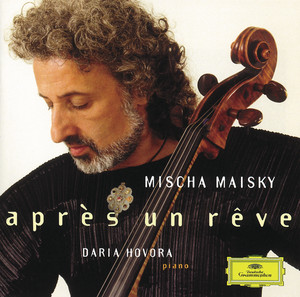 | Les chemins de l'amour, FP. 106 | Francis Poulenc, Mischa Maisky, Daria Hovora | E Major | 1 | 12B | 67 BPM | |
 | Nielsen: 5 Piano Pieces, Op. 3: No. 1, Folk Tune | Carl Nielsen, Leif Ove Andsnes | C Major | 0 | 8B | 76 BPM | |
| Piano Trio in D Minor, Op. 11: I. Allegro molto vivace | Fanny Mendelssohn, Nash Ensemble | D Minor | 2 | 7A | 83 BPM | |
 | Carmen Fantasy, Op. 25: II. Lento assai | Pablo de Sarasate, Anne-Sophie Mutter, Wiener Philharmoniker, James Levine | A Minor | 1 | 8A | 82 BPM | |
 | 3 Romances for Violin and Piano, Op. 22: II. Allegretto: Mit zartem Vortrage | Clara Schumann, Koji Morishita | G Major | 1 | 9B | 104 BPM | |
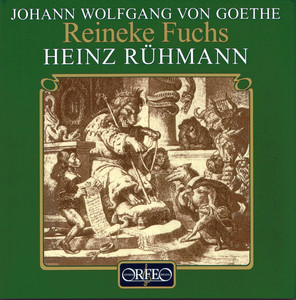 | Reineke Fuchs (Arr. H. Ruhmann for Narrator & Chamber Ensemble): Nachspiel - Ciaccona | Peter Kiesewetter, Heinz Rühmann, Symphonieorchester des Bayerischen Rundfunks | D♭ Major | 1 | 3B | 116 BPM | |
 | 8 Pieces, Op. 83: V. Rumänische Melodie (Andante) | Max Bruch, Philon Trio | F♯ Minor | 0 | 11A | 78 BPM | |
 | Sonata No. 1 for Violin and Piano in A Minor, Op. 105: III. Lebhaft | Robert Schumann, Gidon Kremer, Martha Argerich | A Minor | 3 | 8A | 122 BPM | |
 | Trio for Clarinet, Cello and Piano: I. Allegro | Nino Rota, Roeland Hendrikx, Sébastien Walnier, Liebrecht Vanbeckevoort | A♭ Major | 0 | 4B | 133 BPM | |
 | Suita Concertante-Encounters IV for Viola Clarinet and Chamber Orchestra: II. Allegro | Menachem Wiesenberg, Yuval Gotlibovich, Chen Halevi, Thomas Rösner, Beethoven Philarmonie Orchestra | A Minor | 2 | 8A | 137 BPM | |
 | Poème, Op. 25 | Ernest Chausson, Jascha Heifetz, Izler Solomon, RCA Victor Symphony Orchestra | E♭ Minor | 2 | 2A | 106 BPM | |
 | Tchaikovsky: Piano Trio in A Minor, Op. 50: II. (k) Variation X | Pyotr Ilyich Tchaikovsky, Itzhak Perlman, Lynn Harrell, Vladimir Ashkenazy | A♭ Major | 1 | 4B | 178 BPM | |
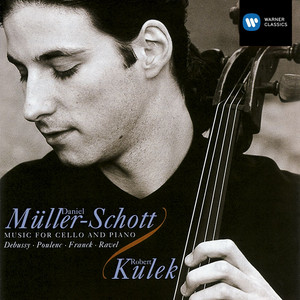 | Poulenc: Cello Sonata, FP 143: I. Allegro - Tempo di marcia | Francis Poulenc, Daniel Müller-Schott/Robert Kulek | F Minor | 0 | 4A | 174 BPM |
- ISRC
- DEB958411015
- Label
- L-M Records/RCA Records