- BPM
- 83
- Key
- D Major
- Camelot
- 10B
Cello Concerto in E Minor, Op. 85: I. Adagio - Moderato by Edward Elgar, Andrew Manze, Johannes Moser, Orchestre de la Suisse Romande Song Details
Edward Elgar, Andrew Manze, Johannes Moser, Orchestre de la Suisse Romande's 'Cello Concerto in E Minor, Op. 85: I. Adagio - Moderato' had a release date set for February 1, 2017. Since This song is still less than 10 minute long, it is still considered a pretty long duration song compared to the average song length. This song does not appear to be explicit due to the lack of the "E" tag. The song is number 1 out of 17 in Elgar: Cello Concerto - Tchaikovsky: Roccoco Variations by Johannes Moser, Orchestre de la Suisse Romande, Andrew Manze. Going off of the ISRC code of this track, we detected that the origin of this track is from Netherlands. Cello Concerto in E Minor, Op. 85: I. Adagio - Moderato is unknown right now. In our opinion, the overall tone is not very danceable and projects negative sounds, such as being sad, depressed, or angry.
BPM and Tempo
The tempo marking of Cello Concerto in E Minor, Op. 85: I. Adagio - Moderato by Edward Elgar, Andrew Manze, Johannes Moser, Orchestre de la Suisse Romande is Andante (at a walking pace), since this song has a tempo of 83 BPM. With that information, we can conclude that the song has a slow tempo. The time signature for this track is 4/4.
Music Key
D Major is the music key of this track. This also means that this song has a camelot key of 10B. So, the perfect camelot match for 10B would be either 10B or 11A. While, 11B can give you a low energy boost. For moderate energy boost, you would use 7B and a high energy boost can either be 12B or 5B. Though, if you want a low energy drop, you should looking for songs with either a camelot key of 10A or 9B will give you a low energy drop, 1B would be a moderate one, and 8B or 3B would be a high energy drop. Lastly, 7A allows you to change the mood.
Want to find the BPM and music key for other songs? Check out our BPM and Key Finder page!
- Popularity
- 0%
- Loudness
- -29.46 dB
- Acousticness
- 96%
- Danceability
- 18%
- Energy
- 8%
- Instrumentalness
- 82%
- Liveness
- 8%
- Loudness
- 51%
- Speechiness
- 5%
- Valence
- 24%
Recommendations
| Track | Artist | Key | Energy | Camelot | BPM | ||
|---|---|---|---|---|---|---|---|
 | Violin Concerto No. 1 in G Minor, Op. 26: II. Adagio | Max Bruch, Arabella Steinbacher, Orquestra Gulbenkian, Lawrence Foster | E♭ Major | 0 | 5B | 100 BPM | |
 | Carmen Suite No. 1: 3. Intermezzo | Georges Bizet, Orchestre de Paris, Semyon Bychkov | B♭ Major | 0 | 6B | 74 BPM | |
 | Elgar: Salut d'amour, Op. 12 (Version for Cello and Piano) | Edward Elgar, Edgar Moreau, Pierre-Yves Hodique | D Major | 1 | 10B | 83 BPM | |
 | Sadko: Hindu Song (arr. N. Mercz): Hindu Song from the Opera 'Sadko' | Nora Mercz, Nikolai Rimsky-Korsakov, Janos Balint | F Major | 0 | 7B | 65 BPM | |
 | Symphony No. 1 in G Minor, Op. 13, TH 24, "Winter Daydreams": II. Adagio cantabile ma non tanto, "Land of Desolation, Land of Mist | Pyotr Ilyich Tchaikovsky, Mariss Jansons, Oslo Philharmonic Orchestra | B Minor | 2 | 10A | 139 BPM | |
 | Cello Concerto No. 1 in A Minor, Op. 33: I. Allegro non troppo | Camille Saint-Saëns, Mischa Maisky, Orpheus Chamber Orchestra | F Major | 2 | 7B | 131 BPM | |
 | Romance "O pourquoi donc" in E Minor, S. 169 | Franz Liszt, Lang Lang | E Minor | 0 | 9A | 67 BPM | |
![Etudes symphoniques (Symphonic Etudes), Op. 13, Adagio and Allegro brillante: Variation 11 [arr. P.I. Tchaikovsky for orchestra] by Robert Schumann, Seattle Symphony Orchestra, Gerard Schwarz](https://i.scdn.co/image/ab67616d00001e029057c124b554163ef1edd618) | Etudes symphoniques (Symphonic Etudes), Op. 13, Adagio and Allegro brillante: Variation 11 [arr. P.I. Tchaikovsky for orchestra] | Robert Schumann, Seattle Symphony Orchestra, Gerard Schwarz | A Minor | 0 | 8A | 104 BPM | |
 | Prelude: Allegro - Meno mosso - Alla breve (Allegro) - Adagio - | Ottorino Respighi, Seattle Symphony Orchestra, Gerard Schwarz | D Major | 1 | 10B | 74 BPM | |
 | Les chemins de l'amour, FP. 106 | Francis Poulenc, Mischa Maisky, Daria Hovora | E Major | 1 | 12B | 67 BPM | |
 | Má vlast, JB 1:112: II. Vltava "The Moldau" | Bedřich Smetana, Berliner Philharmoniker, Herbert von Karajan | G Major | 2 | 9B | 75 BPM | |
 | Suite for Violin and Orchestra in A Minor, Op.10 (Suite im alten Stil): II. Adagio | Christian Sinding, Itzhak Perlman, André Previn, Pittsburgh Symphony Orchestra | A Minor | 2 | 8A | 108 BPM | |
 | Romance, Op. 11 | Gerald Finzi, London Philharmonic Orchestra, Sir Adrian Boult | A♭ Major | 1 | 4B | 82 BPM | |
 | Piano Concerto in A Minor, Op. 7: Romanze. Andante non troppo con grazia | Clara Schumann, Francesco Nicolosi, Alma Mahler Sinfonietta, Stefania Rinaldi | A Minor | 1 | 8A | 103 BPM | |
 | Serenade for Strings in E Minor, Op. 20: II. Larghetto | Edward Elgar, Norman Del Mar, Bournemouth Symphony Orchestra | F Major | 1 | 7B | 113 BPM | |
 | Violin Concerto In E Minor, Op. 64, MWV O14: II. Andante | Felix Mendelssohn, Anne-Sophie Mutter, Gewandhausorchester, Kurt Masur | C Major | 1 | 8B | 103 BPM | |
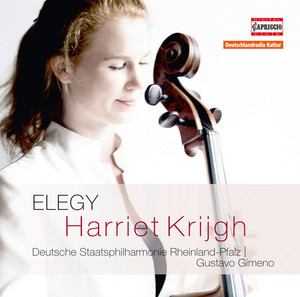 | From Jewish Life: I. Prayer (Arr. for Cello & Orchestra) | Ernest Bloch, Harriet Krijgh, Gustavo Gimeno, Deutsche Staatsphilharmonie Rheinland-Pfalz | F Minor | 1 | 4A | 91 BPM | |
 | Dvořák: From the Bohemian Forest, Op. 68, B. 182: No. 5, Silent Woods | Antonín Dvořák, Jacqueline du Pré, Daniel Barenboim, Chicago Symphony Orchestra | D♭ Major | 1 | 3B | 95 BPM | |
 | 3 Small Tone Poems: No. 3, Spring Morning | Frederick Delius, Royal Scottish National Orchestra, David Lloyd-Jones | A Major | 0 | 11B | 89 BPM | |
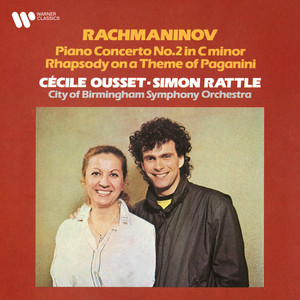 | Rachmaninov: Rhapsody on a Theme of Paganini, Op. 43: Variation XVIII. Andante cantabile | Sergei Rachmaninoff, Cecile Ousset, City Of Birmingham Symphony Orchestra, Sir Simon Rattle | C Major | 2 | 8B | 106 BPM | |
 | Much Ado about Nothing Suite, Op. 11: IV. Intermezzo (Garden Scene) | Erich Wolfgang Korngold, Mineria Symphony Orchestra, Carlos Miguel Prieto | C Major | 0 | 8B | 108 BPM | |
 | Tu mancavi a tormentarmi, crudelissima speranza (Arr. L. Stokowski) | Antonio Cesti, Brussels Philharmonic, Richard Egarr | E Major | 1 | 12B | 87 BPM | |
 | Symphony No. 3 in C Minor, Op. 78 "Organ": Allegro moderato | Camille Saint-Saëns, Eugene Ormandy, Philadelphia Orchestra | A♭ Major | 1 | 4B | 109 BPM | |
 | L'Arlésienne Suite No. 1, WD 40: III. Adagietto | Georges Bizet, Orchestre Symphonique de Montréal, Charles Dutoit | F Major | 0 | 7B | 86 BPM | |
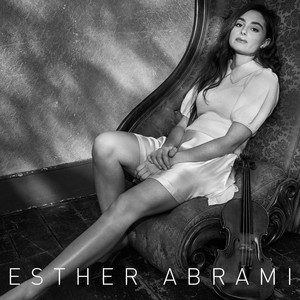 | Three Romances for Violin and Piano, Op. 22: I. Andante molto | Clara Schumann, Esther Abrami, Iyad Sughayer | D♭ Major | 2 | 3B | 81 BPM |
- ISRC
- NLE421502901
- Label
- L-M Records/RCA Records