- BPM
- 103
- Key
- C Major
- Camelot
- 8B
Nonet in F Minor, Op. 2 "Gradus ad Parnassum": I. Allegro moderato by Samuel Coleridge-Taylor, Kaleidoscope Chamber Collective Song Details
"Nonet in F Minor, Op. 2 "Gradus ad Parnassum": I. Allegro moderato" by Samuel Coleridge-Taylor, Kaleidoscope Chamber Collective had its release date on May 27, 2022. Since This song is still less than 10 minute long, it is still considered a pretty long duration song compared to the average song length. This song does not appear to be explicit due to the lack of the "E" tag. There are a total of 11 in the song's album "Samuel Coleridge-Taylor: Nonet, Piano Trio, Piano Quintet". In this album, this song's track order is #1. Furthermore, we believe that the track originated from United Kingdom. In terms of popularity, Nonet in F Minor, Op. 2 "Gradus ad Parnassum": I. Allegro moderato is currently not that popular. In our opinion, the overall tone is not very danceable and projects negative sounds, such as being sad, depressed, or angry.
BPM and Tempo
With Nonet in F Minor, Op. 2 "Gradus ad Parnassum": I. Allegro moderato by Samuel Coleridge-Taylor, Kaleidoscope Chamber Collective having a BPM of 103 with a half-time of 52 BPM and a double-time of 206 BPM, we would consider this track to have a Andante (at a walking pace) tempo marking. Because of this, we believe that the song has an overall slow tempo. The time signature for this track is 4/4.
Music Key
This song has a musical key of C Major. Or for those who are familiar with the camelot wheel, this song has a camelot key of 8B. So, the perfect camelot match for 8B would be either 8B or 9A. While, 9B can give you a low energy boost. For moderate energy boost, you would use 5B and a high energy boost can either be 10B or 3B. Though, if you want a low energy drop, you should looking for songs with either a camelot key of 8A or 7B will give you a low energy drop, 11B would be a moderate one, and 6B or 1B would be a high energy drop. Lastly, 5A allows you to change the mood.
Want to find the BPM and music key for other songs? Check out our BPM and Key Finder page!
- Popularity
- 5%
- Loudness
- -21.619 dB
- Acousticness
- 99%
- Danceability
- 34%
- Energy
- 8%
- Instrumentalness
- 9%
- Liveness
- 6%
- Loudness
- 64%
- Speechiness
- 4%
- Valence
- 11%
Recommendations
| Track | Artist | Key | Energy | Camelot | BPM | ||
|---|---|---|---|---|---|---|---|
 | Clarinet Sonata in F Minor, Op. 120 No. 1: II. Andante un poco adagio | Johannes Brahms, Andreas Ottensamer, José Gallardo | F Major | 0 | 7B | 173 BPM | |
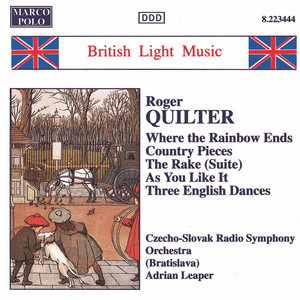 | Where the Rainbow Ends Suite (version for orchestra): No. 1a Rainbow Land | Roger Quilter, Slovak Radio Symphony Orchestra, Adrian Leaper | A Major | 0 | 11B | 69 BPM | |
 | English Folk Song Suite: 1. March: Seventeen come Sunday | Ralph Vaughan Williams, Academy of St. Martin in the Fields, Sir Neville Marriner | F Minor | 2 | 4A | 121 BPM | |
 | Waltz No. 19 in A Minor, KK IVb (Version for Harp in A Flat Minor) | Frédéric Chopin, Magdalena Hoffmann | A♭ Minor | 1 | 1A | 127 BPM | |
 | Berceuse | Germaine Tailleferre, Sara Chenal, Jean-Pierre Ferey | A Major | 0 | 11B | 102 BPM | |
 | The Moon | William Lloyd Webber, English Chamber Orchestra, Julian Lloyd Webber | B♭ Major | 1 | 6B | 119 BPM | |
 | Three Jamaican Dances: No. 2 | Oswald Russell, William Chapman Nyaho | E Major | 0 | 12B | 117 BPM | |
 | The Tempest: Suite No. 2, Op. 109: VI. Miranda | Jean Sibelius, Iceland Symphony Orchestra, Petri Sakari | C Major | 1 | 8B | 70 BPM | |
 | Florida Suite: II. By the River | Frederick Delius, English Northern Philharmonia, David Lloyd-Jones | G Major | 0 | 9B | 68 BPM | |
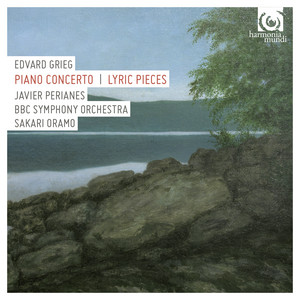 | Lyric Pieces, Book VI, Op. 57: No. 6, Hjemve. Andante | Edvard Grieg, Javier Perianes | E Minor | 0 | 9A | 166 BPM | |
 | Cascade I | Julius Asal | E Major | 1 | 12B | 64 BPM | |
 | Concerto for Violin and Orchestra (To the memory of my mother): I. Lento, ma non troppo | Ina Boyle, Esther Abrami, Vienna Radio Symphony Orchestra, Irene Delgado-Jiménez | A Minor | 2 | 8A | 80 BPM | |
 | The Banks of Green Willow | George Butterworth, Royal Liverpool Philharmonic Orchestra, Grant Llewellyn | A Minor | 0 | 8A | 71 BPM | |
 | St. Paul's Suite, Op. 29, No. 2: I. Jig | Gustav Holst, Bournemouth Sinfonietta, Richard Studt | D Minor | 2 | 7A | 84 BPM | |
 | Bagatelles, Op. 47, B. 79: No. 1 in G Minor, Allegretto scherzando | Antonín Dvořák, Josef Suk, Miroslav Ambroš, Jiří Bárta, Jan Simon | G Minor | 1 | 6A | 99 BPM | |
 | Japanese Suite, Op. 33, H. 126: I. Prelude. Song of the Fisherman | Gustav Holst, Ulster Orchestra, Joann Falletta | C Minor | 3 | 5A | 103 BPM | |
 | Bruch: Scottish Fantasy, Op. 46: I. (b) Adagio cantabile | Max Bruch, Itzhak Perlman, Jesús López-Cobos, New Philharmonia Orchestra | E♭ Minor | 0 | 2A | 59 BPM | |
 | Oboe Concerto in C Major, K. 314: II. Adagio non troppo | Wolfgang Amadeus Mozart, Ivan Podyomov, Il Pomo D'oro, Maxim Emelyanychev | F Major | 1 | 7B | 116 BPM | |
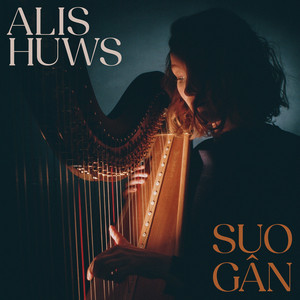 | Soliloquies on 3 Welsh Folk Songs: No. 2, Suo gân | Haldon Evans, Alis Huws | F Major | 0 | 7B | 88 BPM | |
 | Walton: Henry V: Passacaglia "Death of Falstaff" | William Walton, Sir Neville Marriner, Academy of St. Martin in the Fields | E Minor | 1 | 9A | 79 BPM | |
 | Orphée - Arr. for Piano duet / Act 1: III. La chambre d'Orphée | Philip Glass, Katia Labèque, Marielle Labèque | F Minor | 0 | 4A | 137 BPM | |
 | Idyl for Strings - Adagio | Leoš Janáček, Hanspeter Gmür, Camerata Romana | G Major | 1 | 9B | 105 BPM | |
 | 6 Pieces for Piano, P. 44: No. 3. Notturno. Lento (Version for Harp) | Ottorino Respighi, Magdalena Hoffmann | F♯ Major | 0 | 2B | 88 BPM | |
 | Piano Concerto in One Movement: Adagio cantabile | Florence Beatrice Price, Jeneba Kanneh-Mason, Chineke! Orchestra, Leslie Suganandarajah | D Major | 0 | 10B | 77 BPM | |
 | Sospiri, Op. 70 | Edward Elgar, Academy of St. Martin in the Fields, Sir Neville Marriner | F Major | 1 | 7B | 177 BPM |
- ISRC
- GBLWD2202601
- Label
- L-M Records/RCA Records