- BPM
- 122
- Key
- C Minor
- Camelot
- 5A
String Quartet in E Flat Major, Op. 44, No. 3, MWV R 28: II. Scherzo: Assai leggiero vivace by Felix Mendelssohn, Emerson String Quartet Song Details
Felix Mendelssohn, Emerson String Quartet's ' "String Quartet in E Flat Major, Op. 44, No. 3, MWV R 28: II. Scherzo: Assai leggiero vivace" was released on its scheduled release date, January 1, 2005. With this song being around four minutes long, at 4:05, the duration of this song is pretty average compared to other songs. This track is safe for children and doesn't appear to contain any foul language, since the "Explicit" tag was not present in this track. The track order of this song in Felix Mendelssohn, Emerson String Quartet's "Mendelssohn: The String Quartets & Octet In Two Parts" album is number 15 out of 38. On top of that, Germany appears to be the country where this track was created. Based on our statistics, String Quartet in E Flat Major, Op. 44, No. 3, MWV R 28: II. Scherzo: Assai leggiero vivace's popularity is not that popular right now. The overall mood can be danceable to some, especially with it's high amount of postive energy.
BPM and Tempo
We consider the tempo marking of String Quartet in E Flat Major, Op. 44, No. 3, MWV R 28: II. Scherzo: Assai leggiero vivace by Felix Mendelssohn, Emerson String Quartet to be Allegro (fast, quick, and bright) because the track has a tempo of 122 BPM, a half-time of 61BPM, and a double-time of 244 BPM. Based on that, the speed of the song's tempo is fast. Activities such as, walking, can go well with this song. The time signature for this track is 3/4.
Music Key
C Minor is the music key of this track. Because this track belongs in the C Minor key, the camelot key is 5A. So, the perfect camelot match for 5A would be either 5A or 4B. While, a low energy boost can consist of either 5B or 6A. For moderate energy boost, you would use 2A and a high energy boost can either be 7A or 12A. However, if you are looking for a low energy drop, finding a song with a camelot key of 4A would be a great choice. Where 8A would give you a moderate drop, and 3A or 10A would be a high energy drop. Lastly, 8B allows you to change the mood.
Want to find the BPM and music key for other songs? Check out our BPM and Key Finder page!
- Popularity
- 12%
- Loudness
- -23.586 dB
- Acousticness
- 94%
- Danceability
- 48%
- Energy
- 24%
- Instrumentalness
- 87%
- Liveness
- 9%
- Loudness
- 61%
- Speechiness
- 5%
- Valence
- 67%
Recommendations
| Track | Artist | Key | Energy | Camelot | BPM | ||
|---|---|---|---|---|---|---|---|
 | String Quartet No. 12 in F major, Op. 96 - "American" B.179: 2. Lento | Antonín Dvořák, Hagen Quartett | D Minor | 1 | 7A | 88 BPM | |
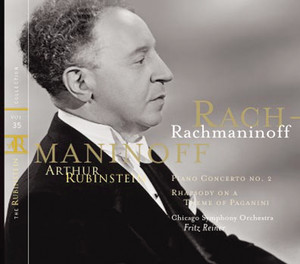 | Piano Concerto No. 2 in C Minor, Op. 18: I. Moderato | Sergei Rachmaninoff, Arthur Rubinstein, Fritz Reiner | C Minor | 1 | 5A | 71 BPM | |
 | 6 Impromptus, Op. 5: Impromptu V | Jean Sibelius, Leif Ove Andsnes | B Minor | 0 | 10A | 72 BPM | |
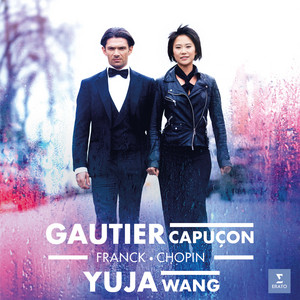 | Chopin: Cello Sonata in G Minor, Op. 65: III. Largo | Frédéric Chopin, Gautier Capuçon, Yuja Wang | B♭ Major | 0 | 6B | 167 BPM | |
 | Panis Angelicus (Arr. Leopold Stokowski) | César Franck, Matthias Bamert, BBC Philharmonic | A Major | 1 | 11B | 65 BPM | |
 | The Lark | Mikhail Glinka, Evgeny Kissin | B♭ Minor | 0 | 3A | 96 BPM | |
 | The Seasons, Op. 37b: VI. June, "Barcarolle" | Pyotr Ilyich Tchaikovsky, Yefim Bronfman | G Minor | 0 | 6A | 87 BPM | |
 | Lieder ohne Worte, Op. 19b: Lieder ohne Worte (Song without Words) No. 6 in G Minor, Op. 19, No. 6, "Venezianisches Gondellied" [Venetian Gondola Song] | Felix Mendelssohn, Péter Nagy | G Major | 0 | 9B | 101 BPM | |
 | La separation, Nocturne in F Minor | Mikhail Glinka, Victor Ryabchikov | F Minor | 1 | 4A | 73 BPM | |
 | Piano Trio No. 1 in D Minor, Op. 49: I. Molto allegro e agitato | Felix Mendelssohn, Yo-Yo Ma, Itzhak Perlman, Emanuel Ax | D Minor | 1 | 7A | 98 BPM | |
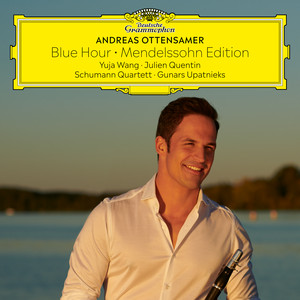 | Lieder ohne Worte, Op. 62: No. 6 Allegretto grazioso "Frühlingslied" (Arr. Ottensamer for Clarinet and Strings) | Felix Mendelssohn, Andreas Ottensamer, Schumann Quartett, Gunars Upatnieks | A Major | 1 | 11B | 99 BPM | |
 | Double Concerto in A Minor, Op. 102 for Violin, Cello and Orchestra: III. Vivace non troppo | Johannes Brahms, Joshua Bell, Steven Isserlis, Academy of St. Martin in the Fields | A Minor | 2 | 8A | 86 BPM | |
 | 3 Violin Duets (1996 Digital Remaster): I. Praeludium | Pinchas Zukerman, Itzhak Perlman | B Minor | 1 | 10A | 91 BPM | |
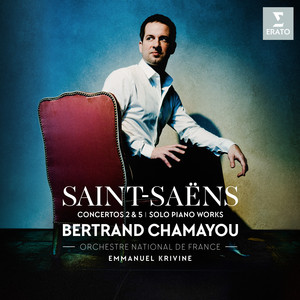 | Saint-Saëns: Piano Concerto No. 2 in G Minor, Op. 22: II. Allegro scherzando | Camille Saint-Saëns, Bertrand Chamayou, Emmanuel Krivine, Orchestre National De France | F♯ Minor | 0 | 11A | 84 BPM | |
 | Orfeo ed Euridice, Wq. 30 / Act II: Dance of the Blessed Spirits (Arr. by Mathieu Herzog for Cello and Strings) | Christoph Willibald Gluck, Camille Thomas, Brussels Philharmonic, Mathieu Herzog | B Minor | 1 | 10A | 87 BPM | |
 | Violin Concerto No. 1 in G Minor, Op. 26: II. Adagio | Max Bruch, Itzhak Perlman, Bernard Haitink, Royal Concertgebouw Orchestra | E♭ Major | 1 | 5B | 87 BPM | |
 | Morgen, Op. 27 No. 4 (Arr. Reger for Piano) | Richard Strauss, Angela Hewitt | A Major | 2 | 11B | 143 BPM | |
 | Adagio from Violin Sonata in G Minor, Op. 5 No. 5 (Arr. Leopold Stokowski) | Arcangelo Corelli, Matthias Bamert, BBC Philharmonic | G Minor | 0 | 6A | 175 BPM | |
 | Piano Sonata No. 16 in C Major, K. 545 "Sonata facile": II. Andante | Wolfgang Amadeus Mozart, András Schiff | G Major | 0 | 9B | 67 BPM | |
 | Minuet in G Minor, HWV 434 No. 4 (Transc. W. Kempff) | George Frideric Handel, Roberto Cominati | G Minor | 0 | 6A | 66 BPM | |
 | Franck: Prélude, fugue et variation, Op. 18, FWV 30: Prélude | César Franck, Aldo Ciccolini | B Minor | 0 | 10A | 127 BPM | |
 | Nocturnes, Op. 27: No. 2 in D-Flat Major | Frédéric Chopin, Arthur Rubinstein | D♭ Major | 0 | 3B | 77 BPM | |
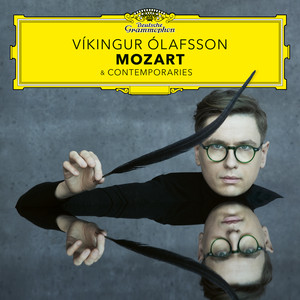 | Sonata No. 42 in D Minor (Arr. Ólafsson) | Domenico Cimarosa, Víkingur Ólafsson | D Minor | 0 | 7A | 61 BPM | |
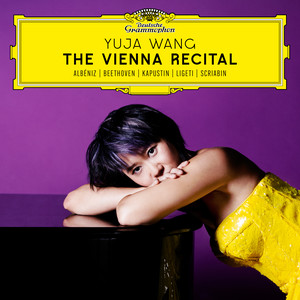 | Orfeo ed Euridice, Wq. 30: Melodie dell'Orfeo (Arr. Sgambati for Piano) | Yuja Wang | D♭ Minor | 1 | 12A | 80 BPM | |
![Organ Sonata No. 4, BWV 528: II. Andante [Adagio] (Transcr. by August Stradal) by Johann Sebastian Bach, Víkingur Ólafsson](https://i.scdn.co/image/ab67616d00001e02369f6761d1cccba9a34f05cf) | Organ Sonata No. 4, BWV 528: II. Andante [Adagio] (Transcr. by August Stradal) | Johann Sebastian Bach, Víkingur Ólafsson | B Minor | 0 | 10A | 71 BPM |
- ISRC
- DEN960400832
- Label
- L-M Records/RCA Records