- BPM
- 87
- Key
- B Minor
- Camelot
- 10A
The Rite of Spring: Part One: Adoration of the Earth: Introduction by Igor Stravinsky, Teodor Currentzis, musicAeterna Song Details
"The Rite of Spring: Part One: Adoration of the Earth: Introduction" by Igor Stravinsky, Teodor Currentzis, musicAeterna had its release date on October 9, 2015. The duration of This song is about 3 minutes long, at 3:28. Based on our data, This song appears to be safe for all ages and is not considered explicit. This track is about the average length of a typical track. There are a total of 14 in the song's album "Stravinsky: Le Sacre du Printemps". In this album, this song's track order is #1. Furthermore, we believe that the track originated from United States. The Rite of Spring: Part One: Adoration of the Earth: Introduction is average in popularity right now. In our opinion, the overall tone is not very danceable and projects negative sounds, such as being sad, depressed, or angry.
BPM and Tempo
With The Rite of Spring: Part One: Adoration of the Earth: Introduction by Igor Stravinsky, Teodor Currentzis, musicAeterna having a BPM of 87 with a half-time of 44 BPM and a double-time of 174 BPM, we would consider this track to have a Andante (at a walking pace) tempo marking. Because of this, we believe that the song has an overall slow tempo. Looking at the BPM of this song, this song might go great with yoga or pilates. The time signature for this track is 3/4.
Music Key
This song is in the music key of B Minor. Or for those who are familiar with the camelot wheel, this song has a camelot key of 10A. So, the perfect camelot match for 10A would be either 10A or 9B. While, a low energy boost can consist of either 10B or 11A. For moderate energy boost, you would use 7A and a high energy boost can either be 12A or 5A. However, if you are looking for a low energy drop, finding a song with a camelot key of 9A would be a great choice. Where 1A would give you a moderate drop, and 8A or 3A would be a high energy drop. Lastly, 1B allows you to change the mood.
Want to find the BPM and music key for other songs? Check out our BPM and Key Finder page!
- Popularity
- 43%
- Loudness
- -30.172 dB
- Acousticness
- 95%
- Danceability
- 10%
- Energy
- 2%
- Instrumentalness
- 85%
- Liveness
- 7%
- Loudness
- 50%
- Speechiness
- 5%
- Valence
- 3%
Recommendations
| Track | Artist | Key | Energy | Camelot | BPM | ||
|---|---|---|---|---|---|---|---|
 | Iron Foundry (machine music), Op. 19 | Alexander Mosolov, Royal Concertgebouw Orchestra, Riccardo Chailly | F Minor | 7 | 4A | 117 BPM | |
 | Symphony No. 5: IV. Adagietto. Sehr langsam | Gustav Mahler, Berliner Philharmoniker, Claudio Abbado | F Major | 0 | 7B | 91 BPM | |
 | Wagner: Tristan und Isolde: Prelude to Act 1 | Richard Wagner, Daniel Barenboim, Berliner Philharmoniker | C Major | 2 | 8B | 177 BPM | |
 | Come, Sweet Death | Johann Sebastian Bach, Eugene Ormandy, Philadelphia Orchestra | E Minor | 1 | 9A | 87 BPM | |
 | Symphony No. 3 In C Minor, Op. 78 "Organ Symphony": 2b. Maestoso - Più allegro - Molto allegro | Camille Saint-Saëns, Simon Preston, Berliner Philharmoniker, James Levine | C Major | 3 | 8B | 106 BPM | |
 | Polovetsian Dances from Prince Igor: Introduzione | Alexander Borodin, George Szell, The Cleveland Orchestra | A Major | 1 | 11B | 83 BPM | |
 | String Quartet No. 1 'Kreutzer Sonata': String Quartet No. 1 'Kreutzer Sonata': I. Adagio. Con moto | Leoš Janáček, Jerusalem Quartet | B Major | 1 | 1B | 92 BPM | |
 | Carnival of the Animals, R. 125: Aquarium | Camille Saint-Saëns, Philippe Entremont, Gaby Casadesus, Yo-Yo Ma, Michel Cerruti, Michel Cals, Régis Pasquier, Yan Pascal Tortelier, Gabin Lauridon, Gerard Causse, Alain Marion, Michel Arrignon | A Minor | 0 | 8A | 81 BPM | |
 | The Planets, Op. 32: II. Venus, the Bringer of Peace | Gustav Holst, Lorin Maazel, L'Orchestre National de France, Orchestre National De France | A♭ Major | 0 | 4B | 139 BPM | |
 | Pictures At An Exhibition: Promenade I | Modest Mussorgsky, Chicago Symphony Orchestra, Carlo Maria Giulini | F Major | 1 | 7B | 79 BPM | |
 | Dido and Aeneas, Z. 626 / Act III: "When I Am Laid in Earth" Dido's Lamento (Arr. by Mathieu Herzog for Cello and Strings) | Henry Purcell, Camille Thomas, Brussels Philharmonic, Mathieu Herzog | G Minor | 1 | 6A | 77 BPM | |
 | Prelude a l'apres-midi d'un faune, L. 86 | Claude Debussy, Valery Gergiev, London Symphony Orchestra | D♭ Major | 0 | 3B | 77 BPM | |
 | Symphony No. 3 in C Minor, Op. 78 "Organ Symphony": 2b. Maestoso - Più allegro - Molto allegro | Camille Saint-Saëns, Peter Hurford, Orchestre Symphonique de Montréal, Charles Dutoit | G Major | 3 | 9B | 150 BPM | |
 | Scheherazade, Op. 35: I. Largo e maestoso - Allegro non troppo "The Sea and Sinbad's Ship" | Nikolai Rimsky-Korsakov, New York Philharmonic, Alan Gilbert, Lawrence Rock | E Major | 1 | 12B | 79 BPM | |
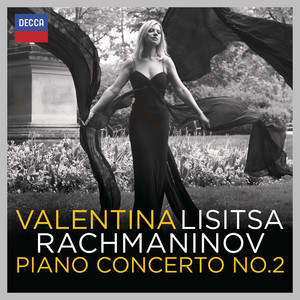 | Piano Concerto No. 2 in C Minor, Op. 18: 1. Moderato | Sergei Rachmaninoff, Valentina Lisitsa, London Symphony Orchestra, Michael Francis | C Minor | 1 | 5A | 55 BPM | |
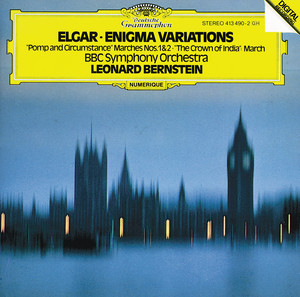 | Enigma Variations, Op. 36: Var. 1. L'istesso tempo "C.A.E." | Edward Elgar, BBC Symphony Orchestra, Leonard Bernstein | G Minor | 0 | 6A | 81 BPM | |
 | Brook Green Suite: II. Air | Gustav Holst, English Sinfonia, Howard Griffiths | E♭ Major | 0 | 5B | 128 BPM | |
 | Lalo: Cello Concerto in D Minor: II. Intermezzo - Allegro presto | Édouard Lalo, André Navarra, Charles Münch, Orchestre des Concerts Lamoureux | C Minor | 1 | 5A | 75 BPM | |
 | 6 Consolations, S. 172: No. 3 in D-Flat Major (Lento, placido) | Franz Liszt, Daniel Barenboim | D♭ Major | 0 | 3B | 69 BPM | |
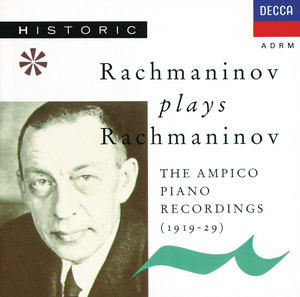 | Prélude in C-Sharp Minor, Op. 3, No. 2 | Sergei Rachmaninoff | F♯ Minor | 1 | 11A | 115 BPM | |
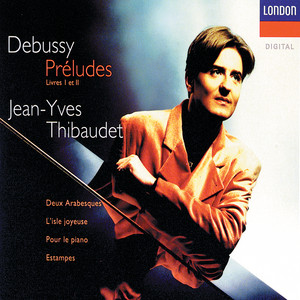 | Rêverie, L. 68: Rêverie | Claude Debussy, Jean-Yves Thibaudet | G Minor | 0 | 6A | 69 BPM | |
 | Rêverie, L. 68 | Claude Debussy, Alain Planès | F Major | 0 | 7B | 63 BPM | |
 | 3 Movements from Petrushka, K12: I. Danse russe | Igor Stravinsky, Maurizio Pollini | C Major | 3 | 8B | 118 BPM | |
 | The Moldau (From Má Vlast), JB 1:112 - Version 1960 | Bedřich Smetana, Berliner Philharmoniker, Ferenc Fricsay | E Minor | 2 | 9A | 85 BPM | |
 | Symphony No. 1 in D Major: 2. Kräftig bewegt - Live | Gustav Mahler, Berliner Philharmoniker, Claudio Abbado | A Major | 1 | 11B | 96 BPM |
- ISRC
- USSM11504519
- Label
- L-M Records/RCA Records