- BPM
- 90
- Key
- D♭ Major
- Camelot
- 3B
Rigoletto, Act I Scene 2: Ah, do not demand of one so sad (Rigoletto, Gilda, Giovanna) by Giuseppe Verdi, Sir Mark Elder, English National Opera Orchestra, John Rawnsley, Helen Field, Shelagh Squires Song Details
"Rigoletto, Act I Scene 2: Ah, do not demand of one so sad (Rigoletto, Gilda, Giovanna)" by Giuseppe Verdi, Sir Mark Elder, English National Opera Orchestra, John Rawnsley, Helen Field, Shelagh Squires had its release date on January 1, 2000. With this song being about 5 minutes long, at This song is fairly a long song compared to the average song length. This song does not have an "Explicit" tag, making it safe for all ages. This song is part of Verdi: Rigoletto by Giuseppe Verdi, Sir Mark Elder, English National Opera Orchestra, John Rawnsley, Helen Field, Arthur Davies, John Tomlinson, Jean Rigby, Norman Bailey. The song's track number on the album is #10 out of 38 tracks. Based on our data, United Kingdom was the country where this track was produced or recorded. In terms of popularity, Rigoletto, Act I Scene 2: Ah, do not demand of one so sad (Rigoletto, Gilda, Giovanna) is currently unknown. In our opinion, the overall tone is not very danceable and projects negative sounds, such as being sad, depressed, or angry.
BPM and Tempo
Since Rigoletto, Act I Scene 2: Ah, do not demand of one so sad (Rigoletto, Gilda, Giovanna) by Giuseppe Verdi, Sir Mark Elder, English National Opera Orchestra, John Rawnsley, Helen Field, Shelagh Squires has a tempo of 90 beats per a minute, the tempo markings of this song would be Andante (at a walking pace). With Rigoletto, Act I Scene 2: Ah, do not demand of one so sad (Rigoletto, Gilda, Giovanna) being at 90 BPM, the half-time would be 45 BPM with a double-time of 180 BPM.In addition, we consider the tempo speed to be pretty slow for this song. This makes this song perfect for activities such as, yoga or pilates. The time signature for this track is 4/4.
Music Key
This song is in the music key of D♭ Major. Or for those who are familiar with the camelot wheel, this song has a camelot key of 3B. So, the perfect camelot match for 3B would be either 3B or 4A. While, 4B can give you a low energy boost. For moderate energy boost, you would use 12B and a high energy boost can either be 5B or 10B. Though, if you want a low energy drop, you should looking for songs with either a camelot key of 3A or 2B will give you a low energy drop, 6B would be a moderate one, and 1B or 8B would be a high energy drop. Lastly, 12A allows you to change the mood.
Want to find the BPM and music key for other songs? Check out our BPM and Key Finder page!
- Popularity
- 0%
- Loudness
- -17.456 dB
- Acousticness
- 98%
- Danceability
- 27%
- Energy
- 15%
- Instrumentalness
- 0%
- Liveness
- 7%
- Loudness
- 71%
- Speechiness
- 5%
- Valence
- 4%
Recommendations
| Track | Artist | Key | Energy | Camelot | BPM | ||
|---|---|---|---|---|---|---|---|
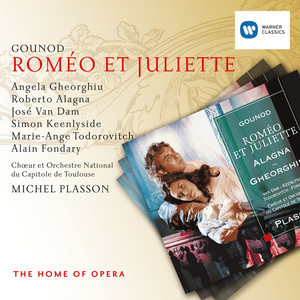 | Gounod: Roméo et Juliette: Ouverture | Charles Gounod, Michel Plasson, Orchestre Du Capitole De Toulouse | D Minor | 3 | 7A | 123 BPM | |
 | L'elisir d'Amor: Una furtiva lagrima | Carlo Bergonzi | F Minor | 3 | 4A | 63 BPM | |
 | Verdi: La traviata, Act 1: "Sempre libera" (Violetta, Alfredo) | Giuseppe Verdi, Philharmonia Orchestra, Riccardo Muti, Alfredo Kraus, Renata Scotto | A♭ Major | 1 | 4B | 85 BPM | |
 | Tuba mirum | Giuseppe Verdi, Cesar Hernandez, Carlo Colombara, Hungarian State Opera Chorus, Hungarian State Opera Orchestra, Pier Giorgio Morandi | D♭ Minor | 3 | 12A | 91 BPM | |
 | Bellini: Norma: "Casta diva" (Norma, Coro) [Live, Paris, 1958] | Vincenzo Bellini, Maria Callas, Chœur du Théâtre national de l'Opéra de Paris, Georges Sebastian, Orchestre du Théâtre National de l'Opéra de Paris | F Major | 3 | 7B | 165 BPM | |
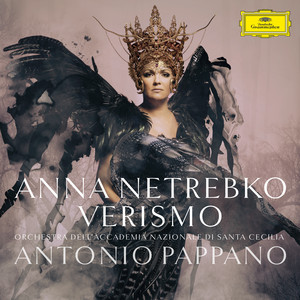 | Adriana Lecouvreur / Act 1: "Ecco: respiro appena ... Io son l'umile ancella" | Francesco Cilea, Anna Netrebko, Orchestra dell'Accademia Nazionale di Santa Cecilia, Antonio Pappano | A♭ Major | 1 | 4B | 82 BPM | |
 | La traviata: Act I: Libiamo ne' lieti calici (Brindisi) | Giuseppe Verdi, Roberto Alagna, Tiziana Fabbricini, Riccardo Muti, Orchestra Del Teatro Alla Scala, Milano, Coro Del Teatro Alla Scala Di Milano, Nicoletta Curiel, Orazio Mori, Enzo Capuano, Francesco Musinu, Enrico Cossutta | B♭ Major | 2 | 6B | 66 BPM | |
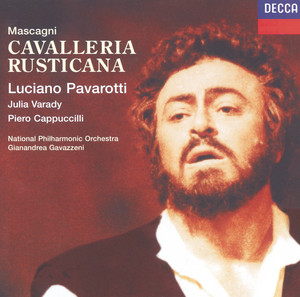 | Cavalleria rusticana: "Beato voi, compar Alfio...Inneggiamo, Il Signor" | Pietro Mascagni, Ida Bormida, Piero Cappuccilli, Julia Varady, The London Opera Chorus, National Philharmonic Orchestra, Gianandrea Gavazzeni | G Major | 2 | 9B | 68 BPM | |
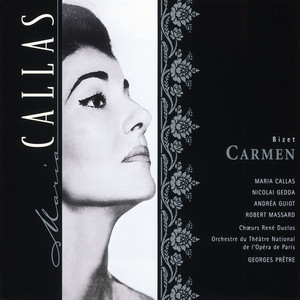 | Bizet: Carmen, Act 1: Séguedille. "Près des remparts de Séville" (Carmen, José) | Georges Bizet, Maria Callas, Nicolai Gedda, Orchestre de l'Opéra National de Paris, Georges Prêtre, Orchestre du Théâtre National de l'Opéra Paris, Paris Opera Orchestra | D Major | 1 | 10B | 83 BPM | |
 | Pagliacci, Act I: "Recitar! Vesti la giubba" (Canio) | Ruggero Leoncavallo, Orchestra dell'Accademia Nazionale di Santa Cecilia, Francesco Molinari-Prandelli, Mario del Monaco | E Major | 2 | 12B | 89 BPM | |
 | Il Trovatore, Act II: Vedi, Le Fosche Notturne, "Anvil Chorus'' | Giuseppe Verdi, Slovak Radio Symphony Orchestra, Slovak Philharmonic Chorus, Salvatore Cammarano | C Major | 2 | 8B | 130 BPM | |
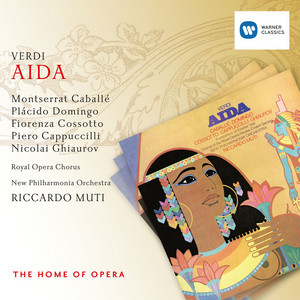 | Verdi: Aida, Act 1: "Sì, corre voce che l'Etiope ardisca" (Ramfis, Radamès) | Giuseppe Verdi, Riccardo Muti, Nicolai Ghiaurov, Plácido Domingo, New Philharmonia Orchestra | G Major | 1 | 9B | 77 BPM | |
 | Così fan tutte, K. 588 / Act I: "Soave sia il vento" | Wolfgang Amadeus Mozart, Miah Persson, Angela Brower, Alessandro Corbelli, Chamber Orchestra of Europe, Yannick Nézet-Séguin | G Minor | 1 | 6A | 88 BPM | |
 | Habanera (From “Carmen”, WD. 31) | Katherine Jenkins, The Arcadian Ensemble | D Major | 1 | 10B | 133 BPM | |
 | Le veau d'or - from Faust | Charles Gounod, Erwin Schrott, Daniele Rustioni | C Minor | 5 | 5A | 121 BPM | |
| Cavalleria rusticana: "Il cavallo scalpita" | Pietro Mascagni, Piero Cappuccilli, The London Opera Chorus, National Philharmonic Orchestra, Gianandrea Gavazzeni | F♯ Major | 3 | 2B | 128 BPM | |
 | Tannhäuser, WWV 70, Act II: Dich, teure Halle, grüß ich wieder | Richard Wagner, Lise Davidsen, Philharmonia Orchestra, Esa-Pekka Salonen | E Minor | 2 | 9A | 169 BPM | |
 | Don Giovanni, ossia Il dissoluto punito, K.527 / Act 2: "Don Giovanni, a cenar teco m'invitasti" | Wolfgang Amadeus Mozart, Paata Burchuladze, Samuel Ramey, Ferruccio Furlanetto, Berliner Philharmoniker, Herbert von Karajan, Chor der Deutschen Oper Berlin | B♭ Major | 3 | 6B | 76 BPM | |
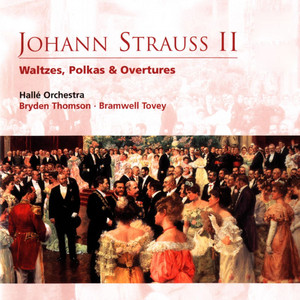 | Tales from the Vienna Woods - Waltz Op. 325 | Johann Strauss II, Hallé, Bryden Thomson | F Major | 0 | 7B | 181 BPM | |
 | Bizet: Carmen, WD 31, Act 3, Scene 1: "Je dis que rien ne m'épouvante" (Micaëla) | Georges Bizet, Giuseppe Sinopoli, Angela Gheorghiu, Bavarian State Orchestra | F Major | 1 | 7B | 190 BPM | |
 | Verdi: La Traviata, Act 3 Scene 4: No. 8, Aria "Addio del passato bei sogni ridenti" | Giuseppe Verdi, Maria Callas, Orquesta Sinfonica del Teatro Nacional de Santa Carlos, Lisboa, Franco Ghione, Orquestra Sinfónica do Teatro Nacional de São Carlos Lisboa | A Major | 1 | 11B | 76 BPM | |
 | La Bohème / Act 1: "O soave fanciulla" | Giacomo Puccini, Luciano Pavarotti, Mirella Freni, Berliner Philharmoniker, Herbert von Karajan | G Major | 2 | 9B | 83 BPM | |
 | Nabucco: Va, pensiero, sull'ali dorate (Chorus of the Hebrew Slaves) | Renato Cellini, Robert Shaw | A♭ Major | 1 | 4B | 168 BPM | |
 | Carmen, Act I, No.2 : Scène et Choeur: Regardez donc cette petite qui semble vouloir nous parler (Moralès/Micaëla/Dragons) | Georges Bizet, Ludovic Tézier/Inva Mula/Choeur 'Les Elements'/Orchestre National du Capitole de Toulouse/Michel Plasson, Michel Plasson, Wolff, Orchestre National Du Capitole De Toulouse | B♭ Major | 1 | 6B | 89 BPM | |
 | Orpheus in the Underworld: Cancan | Jacques Offenbach, Semyon Bychkov, Wiener Philharmoniker | D Major | 6 | 10B | 152 BPM |
- ISRC
- GBLWD0001010
- Label
- L-M Records/RCA Records