- BPM
- 125
- Key
- A Major
- Camelot
- 11B
Die Walküre, WWV 86B - Concert version / Act 3: The Ride Of The Valkyries by Richard Wagner, London Symphony Orchestra, Leopold Stokowski Song Details
Richard Wagner, London Symphony Orchestra, Leopold Stokowski's 'Die Walküre, WWV 86B - Concert version / Act 3: The Ride Of The Valkyries' had a release date set for January 1, 1992. With this song being about 5 minutes long, at This song is fairly a long song compared to the average song length. This song does not have an "Explicit" tag, making it safe for all ages. This song is part of Wagner: Die Walküre by Richard Wagner, London Symphony Orchestra, Leopold Stokowski. The song's track number on the album is #1 out of 6 tracks. Based on our data, United Kingdom was the country where this track was produced or recorded. Based on our statistics, Die Walküre, WWV 86B - Concert version / Act 3: The Ride Of The Valkyries's popularity is not that popular right now. In our opinion, the overall tone is not very danceable and projects negative sounds, such as being sad, depressed, or angry.
BPM and Tempo
Since Die Walküre, WWV 86B - Concert version / Act 3: The Ride Of The Valkyries by Richard Wagner, London Symphony Orchestra, Leopold Stokowski has a tempo of 125 beats per a minute, the tempo markings of this song would be Allegro (fast, quick, and bright). With Die Walküre, WWV 86B - Concert version / Act 3: The Ride Of The Valkyries being at 125 BPM, the half-time would be 62 BPM with a double-time of 250 BPM.In addition, we consider the tempo speed to be pretty fast for this song. This makes this song perfect for activities such as, walking. The time signature for this track is 4/4.
Music Key
This song has a musical key of A Major. Or for those who are familiar with the camelot wheel, this song has a camelot key of 11B. So, the perfect camelot match for 11B would be either 11B or 12A. While, 12B can give you a low energy boost. For moderate energy boost, you would use 8B and a high energy boost can either be 1B or 6B. Though, if you want a low energy drop, you should looking for songs with either a camelot key of 11A or 10B will give you a low energy drop, 2B would be a moderate one, and 9B or 4B would be a high energy drop. Lastly, 8A allows you to change the mood.
Want to find the BPM and music key for other songs? Check out our BPM and Key Finder page!
- Popularity
- 14%
- Loudness
- -15.271 dB
- Acousticness
- 90%
- Danceability
- 32%
- Energy
- 40%
- Instrumentalness
- 69%
- Liveness
- 9%
- Loudness
- 75%
- Speechiness
- 5%
- Valence
- 36%
Recommendations
| Track | Artist | Key | Energy | Camelot | BPM | ||
|---|---|---|---|---|---|---|---|
 | Lohengrin, WWV 75, Act III: Prelude | Richard Wagner, Wiener Philharmoniker, Claudio Abbado | D Major | 1 | 10B | 94 BPM | |
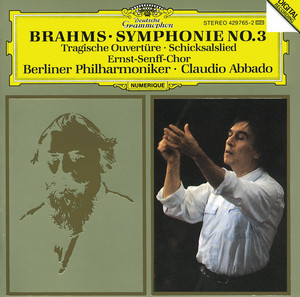 | Tragic Overture, Op. 81 | Johannes Brahms, Berliner Philharmoniker, Claudio Abbado | D Minor | 1 | 7A | 85 BPM | |
 | Delibes: Sylvia, Act 1: No. 3, Fanfare. Les chasseresses | Léo Delibes, André Cluytens, Orchestre du Théâtre National de l'Opéra Paris | A Minor | 0 | 8A | 103 BPM | |
 | Ruslan and Ludmila: Overture | Mikhail Glinka, The USSR Bolshoy Theatre Orchestra, Yevgeny Svetlanov | F Major | 3 | 7B | 81 BPM | |
 | Symphony No. 40 in G Minor, K. 550 (1st Version, No Clarinets): I. Molto allegro | Wolfgang Amadeus Mozart, Wiener Philharmoniker, Karl Böhm | B Major | 0 | 1B | 94 BPM | |
| Lohengrin, WWV 75, Act III: Treulich geführt ziehet dahin "Bridal Chorus" | Richard Wagner, Renate Hasler, Gretchen Eder, Ulrike Erfurt, Marianne Sattmann, Wiener Staatsopernchor, Wiener Philharmoniker, Claudio Abbado | C Major | 1 | 8B | 75 BPM | |
 | Der Freischütz, J. 277, Act I: Viktoria! Viktoria! - Bauern-Marsch - Schau der Herr mich an als König! | Carl Maria von Weber, Hans Jörn Weber, Gunther Leib, Staatskapelle Dresden, Carlos Kleiber, MDR Leipzig Radio Chorus | D Major | 3 | 10B | 108 BPM | |
 | Glinka: Overture from Ruslan and Ludmilla | Mikhail Glinka, Budapest Philharmonic Orchestra, Rico Saccani | D Major | 3 | 10B | 76 BPM | |
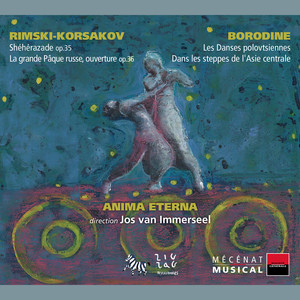 | Les danses polovtsiennes (Extraits de l'opéra Le Prince Igor): IV. Danse des garçons | Alexander Borodin, Anima Eterna, Jos Van Immerseel | D Major | 2 | 10B | 104 BPM | |
 | Die Fledermaus: Overture | Johann Strauss II, Bavarian State Orchestra, Carlos Kleiber | G Major | 1 | 9B | 100 BPM | |
| Der Freischütz, J. 277, Act I: Walzer | Carl Maria von Weber, Staatskapelle Dresden, Carlos Kleiber | A Major | 5 | 11B | 91 BPM | |
 | Fidelio, Op. 72 (Ed. Lühning & Didion): Overture | Ludwig van Beethoven, Lucerne Festival Orchestra, Mahler Chamber Orchestra, Claudio Abbado | E Minor | 7 | 9A | 98 BPM | |
 | Symphony No. 5 in C Minor, Op. 67: IV. Allegro | Ludwig van Beethoven, Wiener Philharmoniker, Carlos Kleiber | C Major | 3 | 8B | 83 BPM | |
 | Wagner: Tristan und Isolde, Act 2: "O sink hernieder, Nacht der Liebe" (Isolde, Tristan) | Richard Wagner, Daniel Barenboim, Berliner Philharmoniker, Siegfried Jerusalem, Waltraud Meier | A Major | 0 | 11B | 133 BPM | |
 | Carmina Burana / III. Cour d'amours: "Amor volat undique" | Carl Orff, Gundula Janowitz, Orchester der Deutschen Oper Berlin, Eugen Jochum, Schöneberger Sängerknaben | G Major | 0 | 9B | 92 BPM | |
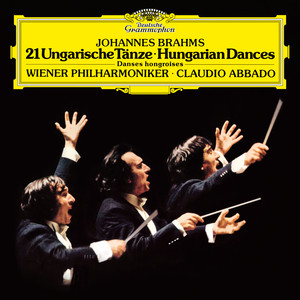 | 21 Hungarian Dances, WoO 1: Hungarian Dance No. 3 in F Major. Allegretto (Orch. Brahms) | Johannes Brahms, Wiener Philharmoniker, Claudio Abbado | F Major | 0 | 7B | 77 BPM | |
 | Lohengrin, WWV 75: Prelude To Act III | Richard Wagner, Wiener Philharmoniker, Karl Böhm | G Major | 3 | 9B | 120 BPM | |
 | La Cenerentola: Overture (Sinfonia) | Gioachino Rossini, Orchestra del Teatro Comunale di Bologna, Riccardo Chailly | A Minor | 1 | 8A | 116 BPM | |
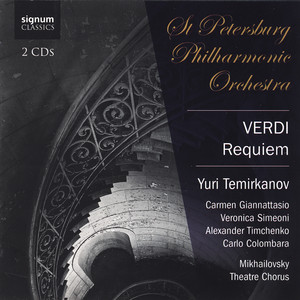 | Rex tremendae | Giuseppe Verdi, Carmen Giannattasio, Veronica Simeoni, Alxander Timchenko, Carlo Colombara, Yuri Temirkanov, St. Petersburg Philharmonic Orchestra | D♭ Major | 2 | 3B | 82 BPM | |
 | Prelude in C Sharp Minor, Op. 3, No. 2 (Arr. Orchestra) - Live | Sergei Rachmaninoff, Czech Philharmonic, Leopold Stokowski | E♭ Major | 4 | 5B | 124 BPM | |
 | Symphony No. 2 in C minor - "Resurrection" / 5th Movement: Pesante | Gustav Mahler, Wiener Philharmoniker, Gilbert Kaplan | E♭ Major | 5 | 5B | 61 BPM | |
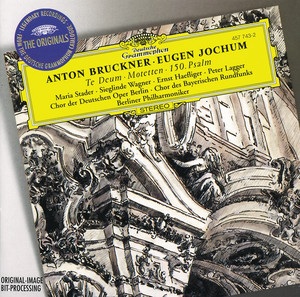 | Te Deum, WAB 45: III. Aeterna fac cum sanctis tuis | Anton Bruckner, Maria Stader, Sieglinde Wagner, Ernst Haefliger, Peter Lagger, Wolfgang Meyer, Berliner Philharmoniker, Eugen Jochum, Chor der Deutschen Oper Berlin, Walter Hagen-Groll | B♭ Major | 4 | 6B | 64 BPM | |
 | Viktoria! Der Meister soll leben! | Berliner Philharmoniker, Chor der Deutschen Oper Berlin | D Major | 4 | 10B | 134 BPM | |
 | Symphony No. 8 in E-Flat Major "Symphony of a Thousand": I. Teil. Hymnus. Veni, creator spiritus! | Gustav Mahler, Lorin Maazel, Wolfram Koloseus, Konzertvereinigung Wiener Staatsopernchor, ORF-Chor, Arnold Schoenberg Chor, Wiener Philharmoniker | D Major | 2 | 10B | 75 BPM | |
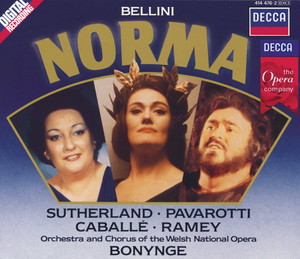 | Norma: Sinfonia | Vincenzo Bellini, Welsh National Opera Orchestra, Richard Bonynge | G Major | 1 | 9B | 140 BPM |
- ISRC
- GBF076610110
- Label
- L-M Records/RCA Records