- BPM
- 118
- Key
- E Minor
- Camelot
- 9A
String Quartet No. 1 in E-Flat Major, Op. 12, MWV R25: I. Adagio non troppo - Allegro non tardante by Felix Mendelssohn, New Zealand String Quartet Song Details
Felix Mendelssohn, New Zealand String Quartet's ' "String Quartet No. 1 in E-Flat Major, Op. 12, MWV R25: I. Adagio non troppo - Allegro non tardante" was released on its scheduled release date, March 25, 2008. Since This song is still less than 10 minute long, it is still considered a pretty long duration song compared to the average song length. This song does not appear to be explicit due to the lack of the "E" tag. The track order of this song in Felix Mendelssohn, New Zealand String Quartet's "Mendelssohn, Felix: String Quartets, Vol. 1 - String Quartets Nos. 1, 4, 6" album is number 5 out of 12. On top of that, Hong Kong appears to be the country where this track was created. In terms of popularity, String Quartet No. 1 in E-Flat Major, Op. 12, MWV R25: I. Adagio non troppo - Allegro non tardante is currently unknown. Based on the vibe, this track doesn't seem to be that danceable, however its valence properties can make this some somewhat danceable.
BPM and Tempo
We consider the tempo marking of String Quartet No. 1 in E-Flat Major, Op. 12, MWV R25: I. Adagio non troppo - Allegro non tardante by Felix Mendelssohn, New Zealand String Quartet to be Moderato (at a moderate speed) because the track has a tempo of 118 BPM, a half-time of 59BPM, and a double-time of 236 BPM. Based on that, the speed of the song's tempo is moderate. Activities such as, walking, can go well with this song. The time signature for this track is 3/4.
Music Key
E Minor is the music key of this track. Because this track belongs in the E Minor key, the camelot key is 9A. So, the perfect camelot match for 9A would be either 9A or 8B. While, a low energy boost can consist of either 9B or 10A. For moderate energy boost, you would use 6A and a high energy boost can either be 11A or 4A. However, if you are looking for a low energy drop, finding a song with a camelot key of 8A would be a great choice. Where 12A would give you a moderate drop, and 7A or 2A would be a high energy drop. Lastly, 12B allows you to change the mood.
Want to find the BPM and music key for other songs? Check out our BPM and Key Finder page!
- Popularity
- 0%
- Loudness
- -18.486 dB
- Acousticness
- 97%
- Danceability
- 36%
- Energy
- 23%
- Instrumentalness
- 92%
- Liveness
- 14%
- Loudness
- 69%
- Speechiness
- 4%
- Valence
- 47%
Recommendations
| Track | Artist | Key | Energy | Camelot | BPM | ||
|---|---|---|---|---|---|---|---|
 | Nocturne No. 14 in G Major, H. 58 | John Field, Alice Sara Ott | F Major | 0 | 7B | 67 BPM | |
 | Piano Concerto No. 20 in D Minor, K. 466: II. Romance | Wolfgang Amadeus Mozart, Seong-Jin Cho, Chamber Orchestra of Europe, Yannick Nézet-Séguin | B♭ Major | 1 | 6B | 85 BPM | |
 | Cello Concerto No. 1 in A Minor, Op. 33: I. Allegro non troppo | Camille Saint-Saëns, Mischa Maisky, Orpheus Chamber Orchestra | F Major | 2 | 7B | 131 BPM | |
 | Notturno in G Minor | Fanny Mendelssohn, Heather Schmidt | G Minor | 1 | 6A | 125 BPM | |
 | Sonata No. 42 in D Minor (Arr. Ólafsson) | Domenico Cimarosa, Víkingur Ólafsson | D Minor | 0 | 7A | 61 BPM | |
 | Suite No. 3, P. 172: I. Italiana: Andantino | Ottorino Respighi, RTÉ National Symphony Orchestra | B♭ Major | 1 | 6B | 94 BPM | |
 | Piano Sonata No. 1 In F Minor, Op. 2, No. 1: 1. Allegro | Ludwig van Beethoven, Daniel Barenboim | A♭ Major | 1 | 4B | 120 BPM | |
 | Nocturnes, Op. 27: No. 2 in D-Flat Major | Frédéric Chopin, Arthur Rubinstein | D♭ Major | 0 | 3B | 77 BPM | |
 | Saint-Saëns: Piano Concerto No. 2 in G Minor, Op. 22: II. Allegro scherzando | Camille Saint-Saëns, Bertrand Chamayou, Emmanuel Krivine, Orchestre National De France | F♯ Minor | 0 | 11A | 84 BPM | |
 | Handel / Orch. Hale: Keyboard Suite No. 4 in D Minor, HWV 437: III. Sarabande | George Frideric Handel, Alexander Briger, Academy of St. Martin in the Fields | D Minor | 0 | 7A | 116 BPM | |
 | Sonata In G Minor For Cello & Piano, Op. 19: 3. Andante | Sergei Rachmaninoff, Alisa Weilerstein, Inon Barnatan | F Major | 2 | 7B | 82 BPM | |
| Saint-Saëns: Piano Concerto No. 5 in F Major, Op. 103 "Egyptian": II. Andante | Camille Saint-Saëns, Bertrand Chamayou, Emmanuel Krivine, Orchestre National De France | D Major | 1 | 10B | 129 BPM | |
 | Chopin - 6 Chants Polonais, S480/R145: No. 2. Fruhling(Wiosna, Spring) | Joseph Banowetz, Franz Liszt | G Major | 1 | 9B | 108 BPM | |
 | Orpheo ed Euridice, Wq. 30, Act II: Dance of the Blessed Spirits | Christoph Willibald Gluck, Eugene Ormandy, Philadelphia Orchestra | D Minor | 1 | 7A | 67 BPM | |
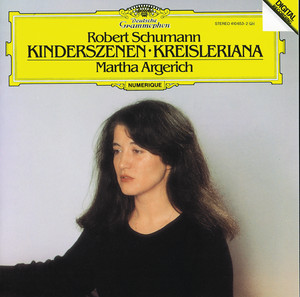 | Kinderszenen, Op. 15: XII. Kind im Einschlummern | Robert Schumann, Martha Argerich | E Minor | 0 | 9A | 123 BPM | |
 | Keyboard Sonata in D Minor, Kk. 1 | Domenico Scarlatti, Ivo Pogorelich | D Minor | 1 | 7A | 107 BPM | |
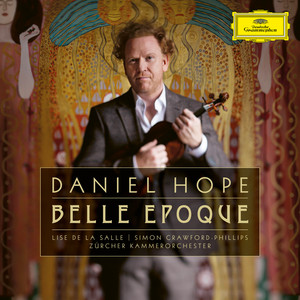 | Notturno for Strings and Harp | Arnold Schoenberg, Daniel Hope, Zürcher Kammerorchester, Jane Berthe | A♭ Major | 1 | 4B | 75 BPM | |
 | Violin Concerto In E Minor, Op. 64, MWV O14: I. Allegro molto appassionato | Felix Mendelssohn, Anne-Sophie Mutter, Gewandhausorchester, Kurt Masur | E Minor | 1 | 9A | 81 BPM | |
 | Rachmaninov: Suite No. 1 in G Minor, Op. 5 "Fantaisie-tableaux": I. Barcarolle | Sergei Rachmaninoff, Martha Argerich, Alexandre Rabinovitch-Barakovsky | G Minor | 1 | 6A | 130 BPM | |
 | Piano Concerto No. 2 in A Minor, Op. 85: II. Larghetto | Johann Nepomuk Hummel, Stephen Hough, English Chamber Orchestra, Bryden Thomson | F Major | 1 | 7B | 127 BPM | |
 | Orfeo ed Euridice, Wq. 30: Dance of the Blessed Spirits "Melody" (Arr. Sgambati for Piano) | Christoph Willibald Gluck, Yuja Wang | D Minor | 0 | 7A | 70 BPM | |
 | Tales "Skazki", Op. 26: III. Narrante a piacere | Nikolai Medtner, Anna Gourari | F Minor | 0 | 4A | 62 BPM | |
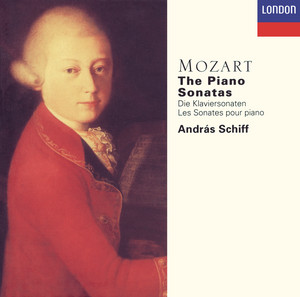 | Piano Sonata No. 12 in F Major, K. 332: II. Adagio | Wolfgang Amadeus Mozart, András Schiff | F Major | 0 | 7B | 145 BPM | |
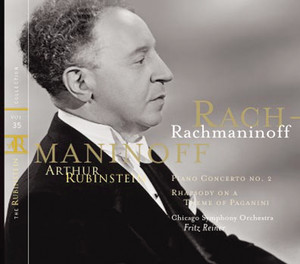 | Piano Concerto No. 2 in C Minor, Op. 18: I. Moderato | Sergei Rachmaninoff, Arthur Rubinstein, Fritz Reiner | C Minor | 1 | 5A | 71 BPM | |
 | The Hebrides, Op. 26 "Fingal's Cave" | Felix Mendelssohn, John Eliot Gardiner, London Symphony Orchestra | D Major | 1 | 10B | 137 BPM |
- ISRC
- HKI190782005
- Label
- L-M Records/RCA Records