- BPM
- 92
- Key
- A♭ Major
- Camelot
- 4B
Piano Sonata No. 8, Op. 13 "Pathétique": II. Adagio cantabile by Ludwig van Beethoven, Luke Faulkner Song Details
"Piano Sonata No. 8, Op. 13 "Pathétique": II. Adagio cantabile" by Ludwig van Beethoven, Luke Faulkner had its release date on June 28, 2019. With this song being about 5 minutes long, at This song is fairly a long song compared to the average song length. This song does not have an "Explicit" tag, making it safe for all ages. Since Piano Sonata No. 8, Op. 13 "Pathétique": II. Adagio cantabile only contains only one song in the album, we like to consider this song as a single. Furthermore, we believe that the track originated from Italy. In terms of popularity, Piano Sonata No. 8, Op. 13 "Pathétique": II. Adagio cantabile is currently not that popular. Although the tone can be danceable to some, this track does projects more of a negative sound rather than a postive one.
BPM and Tempo
With Piano Sonata No. 8, Op. 13 "Pathétique": II. Adagio cantabile by Ludwig van Beethoven, Luke Faulkner having a BPM of 92 with a half-time of 46 BPM and a double-time of 184 BPM, we would consider this track to have a Andante (at a walking pace) tempo marking. Because of this, we believe that the song has an overall slow tempo. Looking at the BPM of this song, this song might go great with yoga or pilates. The time signature for this track is 3/4.
Music Key
This song is in the music key of A♭ Major. Or for those who are familiar with the camelot wheel, this song has a camelot key of 4B. So, the perfect camelot match for 4B would be either 4B or 5A. While, 5B can give you a low energy boost. For moderate energy boost, you would use 1B and a high energy boost can either be 6B or 11B. Though, if you want a low energy drop, you should looking for songs with either a camelot key of 4A or 3B will give you a low energy drop, 7B would be a moderate one, and 2B or 9B would be a high energy drop. Lastly, 1A allows you to change the mood.
Want to find the BPM and music key for other songs? Check out our BPM and Key Finder page!
- Popularity
- 3%
- Loudness
- -21.49 dB
- Acousticness
- 99%
- Danceability
- 42%
- Energy
- 6%
- Instrumentalness
- 91%
- Liveness
- 11%
- Loudness
- 64%
- Speechiness
- 5%
- Valence
- 9%
Recommendations
| Track | Artist | Key | Energy | Camelot | BPM | ||
|---|---|---|---|---|---|---|---|
 | Piano Concerto No. 5 in E-Flat Major, Op. 73 "Emperor": 2. Adagio un poco mosso | Ludwig van Beethoven, Alfred Brendel, Wiener Philharmoniker, Sir Simon Rattle | B Major | 0 | 1B | 85 BPM | |
 | Piano Concerto No. 2 in F Major, Op. 102: II. Andante | Dmitri Shostakovich, Boris Giltburg, Royal Liverpool Philharmonic Orchestra, Vasily Petrenko | C Minor | 0 | 5A | 80 BPM | |
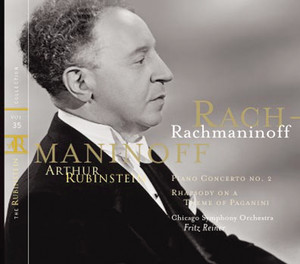 | Piano Concerto No. 2 in C Minor, Op. 18: I. Moderato | Sergei Rachmaninoff, Arthur Rubinstein, Fritz Reiner | C Minor | 1 | 5A | 71 BPM | |
 | Rossini: Il Barbiere di Siviglia: Overture | Gioachino Rossini, Beverly Sills, Nicolai Gedda, Sherrill Milnes, Renato Capecchi, Ruggero Raimondi, Michael Rippon, John Alldis Choir, Joseph Galiano, London Symphony Orchestra, James Levine, Fedora Barbieri | E Major | 2 | 12B | 88 BPM | |
 | Souvenir d'un lieu cher, Op. 42: 3. Mélodie | Pyotr Ilyich Tchaikovsky, Janine Jansen, Mahler Chamber Orchestra, Daniel Harding | E♭ Major | 0 | 5B | 99 BPM | |
 | Messiah, HWV 56, Pt. I: Pastoral Symphony, "Pifa" (Arr. L. Stokowski) | George Frideric Handel, Bournemouth Symphony Orchestra, José Serebrier | C Major | 0 | 8B | 84 BPM | |
 | Piano Sonata No.8 in C minor, Op.13 -"Pathétique": 3. Rondo (Allegro) | Ludwig van Beethoven, YUNDI | A♭ Major | 0 | 4B | 169 BPM | |
 | Le nozze di Figaro, K. 492: Sinfonia | Wolfgang Amadeus Mozart, René Jacobs, Concerto Köln | D Major | 1 | 10B | 142 BPM | |
 | Rachmaninov: 10 Preludes, Op. 23: No. 5 in G Minor | Sergei Rachmaninoff, Nikolai Lugansky | G Minor | 1 | 6A | 113 BPM | |
 | The Marriage Of Figaro KV.592 | Alfred Scholz, London Philharmonic Orchestra | D Major | 1 | 10B | 142 BPM | |
 | Violin Concerto No. 2 in B Minor, Op. 7, "La campanella": III. Rondo | Niccolò Paganini, Netherlands Symphony Orchestra, Rudolf Koelman, Jan Willem de Vriend | B Minor | 2 | 10A | 105 BPM | |
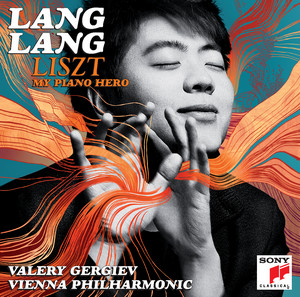 | Ave Maria, S. 558/12 | Franz Schubert, Lang Lang | B♭ Major | 0 | 6B | 64 BPM | |
 | Suite in B-Flat Major, HWV 434: IV. Menuet | George Frideric Handel, Khatia Buniatishvili | G Minor | 0 | 6A | 59 BPM | |
 | Six Pieces, Op. 51, TH 143: VI. Valse sentimentale. Tempo di Valse | Pyotr Ilyich Tchaikovsky, Daniel Lozakovich, Stanislav Soloviev | D♭ Major | 1 | 3B | 108 BPM | |
 | Liebestraum | Franz Liszt, Arthur Rubinstein | A♭ Major | 2 | 4B | 95 BPM | |
 | Wolfgang Amadeus Mozart: Sonata No. 11 in La maggiore, K. V. 331 : Alla turca, Allegretto | Aldo Ciccolini | A Major | 1 | 11B | 133 BPM | |
 | Waltz in C-sharp minor, Op. 64 No. 2 | Frédéric Chopin, Khatia Buniatishvili | D♭ Minor | 0 | 12A | 96 BPM | |
 | Piano Sonata No. 14 in C-Sharp Minor, Op. 27 No. 2 "Moonlight": II. Allegretto | Ludwig van Beethoven, Jenő Jandó | D♭ Major | 0 | 3B | 72 BPM | |
 | Chopin: Piano Sonata No. 2 in B-Flat Minor, Op. 35 "Funeral March": III. Marche funèbre. Lento | Frédéric Chopin, Leif Ove Andsnes | D♭ Major | 0 | 3B | 66 BPM | |
 | Mozart: Fantasia for Piano in D Minor, K. 397 | Wolfgang Amadeus Mozart, Cyprien Katsaris | E Minor | 0 | 9A | 80 BPM | |
 | Lieder ohne Worte, Op.30: No. 6. Allegretto In F Sharp Minor, MWV U 110 - "Venetian Gondola Song" | Felix Mendelssohn, Daniel Barenboim | F♯ Minor | 0 | 11A | 169 BPM | |
 | Rêverie, L. 68: Rêverie | Claude Debussy, Jean-Yves Thibaudet | G Minor | 0 | 6A | 69 BPM | |
 | Piano Quartet No. 1 in G Minor, K. 478: II. Andante | Wolfgang Amadeus Mozart, Emanuel Ax, Isaac Stern, Jaime Laredo, Yo-Yo Ma | B♭ Major | 0 | 6B | 67 BPM | |
 | Le carnaval des animaux, R. 125: VII. Aquarium | Camille Saint-Saëns, Pascal Rogé, Cristina Ortiz, London Sinfonietta, Charles Dutoit | A Minor | 0 | 8A | 136 BPM | |
 | Cello Concerto No. 1 in A Minor, Op. 33: I. Allegro non troppo | Camille Saint-Saëns, Mischa Maisky, Orpheus Chamber Orchestra | F Major | 2 | 7B | 131 BPM |
- ISRC
- ITD541900441
- Label
- L-M Records/RCA Records