- BPM
- 84
- Key
- C Major
- Camelot
- 8B
Rigoletto, Act I Scene 2: I have returned. But why? (Rigoletto, Borsa, Ceprano, Marullo) by Giuseppe Verdi, Sir Mark Elder, English National Opera Orchestra, John Rawnsley, Mark Richardson, Terry Jenkins, Alan Opie Song Details
"Rigoletto, Act I Scene 2: I have returned. But why? (Rigoletto, Borsa, Ceprano, Marullo)" by Giuseppe Verdi, Sir Mark Elder, English National Opera Orchestra, John Rawnsley, Mark Richardson, Terry Jenkins, Alan Opie had its release date on January 1, 2000. The duration of This song is about two minutes long, specifically at 2:19. This song does not appear to have any foul language. Rigoletto, Act I Scene 2: I have returned. But why? (Rigoletto, Borsa, Ceprano, Marullo)'s duration is considered a little bit shorter than the average duration of a typical track. This song is part of Verdi: Rigoletto by Giuseppe Verdi, Sir Mark Elder, English National Opera Orchestra, John Rawnsley, Helen Field, Arthur Davies, John Tomlinson, Jean Rigby, Norman Bailey. The song's track number on the album is #15 out of 38 tracks. Based on our data, United Kingdom was the country where this track was produced or recorded. Rigoletto, Act I Scene 2: I have returned. But why? (Rigoletto, Borsa, Ceprano, Marullo) is unknown right now. In our opinion, the overall tone is not very danceable and projects negative sounds, such as being sad, depressed, or angry.
BPM and Tempo
Since Rigoletto, Act I Scene 2: I have returned. But why? (Rigoletto, Borsa, Ceprano, Marullo) by Giuseppe Verdi, Sir Mark Elder, English National Opera Orchestra, John Rawnsley, Mark Richardson, Terry Jenkins, Alan Opie has a tempo of 84 beats per a minute, the tempo markings of this song would be Andante (at a walking pace). With Rigoletto, Act I Scene 2: I have returned. But why? (Rigoletto, Borsa, Ceprano, Marullo) being at 84 BPM, the half-time would be 42 BPM with a double-time of 168 BPM.In addition, we consider the tempo speed to be pretty slow for this song. The time signature for this track is 4/4.
Music Key
This song is in the music key of C Major. Or for those who are familiar with the camelot wheel, this song has a camelot key of 8B. So, the perfect camelot match for 8B would be either 8B or 9A. While, 9B can give you a low energy boost. For moderate energy boost, you would use 5B and a high energy boost can either be 10B or 3B. Though, if you want a low energy drop, you should looking for songs with either a camelot key of 8A or 7B will give you a low energy drop, 11B would be a moderate one, and 6B or 1B would be a high energy drop. Lastly, 5A allows you to change the mood.
Want to find the BPM and music key for other songs? Check out our BPM and Key Finder page!
- Popularity
- 0%
- Loudness
- -19.206 dB
- Acousticness
- 94%
- Danceability
- 18%
- Energy
- 15%
- Instrumentalness
- 0%
- Liveness
- 7%
- Loudness
- 68%
- Speechiness
- 5%
- Valence
- 9%
Recommendations
| Track | Artist | Key | Energy | Camelot | BPM | ||
|---|---|---|---|---|---|---|---|
 | Carmen, WD 31 / Act 1: "L'amour est un oiseau rebelle" (Havanaise) | Georges Bizet, Elina Garanca, Orchestra Sinfonica Nazionale Della RAI, Karel Mark Chichon, Coro Filarmonico del Regio di Torino | G Major | 1 | 9B | 117 BPM | |
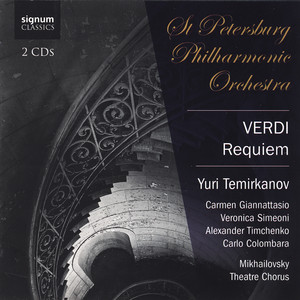 | Recordare | Giuseppe Verdi, Carmen Giannattasio, Veronica Simeoni, Alxander Timchenko, Carlo Colombara, Yuri Temirkanov, St. Petersburg Philharmonic Orchestra | F Major | 1 | 7B | 76 BPM | |
 | La Gioconda, Act IV: Suicido! … | Amilcare Ponchielli, Maria Callas, RAI Symphony Orchestra, Turin, Antonino Votto | D Major | 1 | 10B | 86 BPM | |
 | Carmina Burana: XXV. O fortuna | Carl Orff, Chor der Deutschen Oper Berlin, Orchester der Deutschen Oper Berlin, Eugen Jochum | B♭ Major | 3 | 6B | 142 BPM | |
 | Prokofiev: Suite No. 2 from Romeo and Juliet, Op. 64ter: I. The Montagues and Capulets (Excerpt) | Sergei Prokofiev, Philadelphia Orchestra, Riccardo Muti | A Minor | 3 | 8A | 108 BPM | |
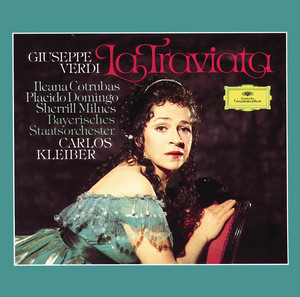 | La traviata / Act III: "Signora" - "Che t'accadde?" - "Parigi, o cara, noi lasceremo" | Giuseppe Verdi, Ileana Cotrubas, Helena Jungwirth, Plácido Domingo, Bavarian State Orchestra, Carlos Kleiber | D♭ Major | 1 | 3B | 102 BPM | |
 | Bizet: Carmen, WD 31, Act 4: "Les voici ! Voici le quadrille !" (Chœur) | Georges Bizet, Michel Plasson, La Lauzeta, Les Éléments, Orchestre National Du Capitole De Toulouse | D♭ Minor | 2 | 12A | 93 BPM | |
 | Orpheus in the Underworld: Cancan | Jacques Offenbach, Semyon Bychkov, Wiener Philharmoniker | D Major | 6 | 10B | 152 BPM | |
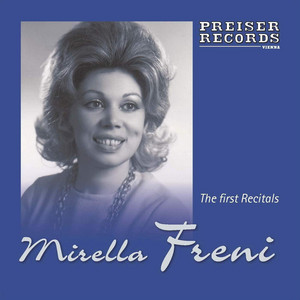 | Turandot: Tu, che di gel sei cinta | Mirella Freni, Vienna Volksoper Orchestra, Argeo Quadri | B Major | 2 | 1B | 87 BPM | |
 | Lohengrin, Act III: Prelude (Concert Ending) | Richard Wagner, Wiener Philharmoniker, Karl Böhm | B♭ Major | 3 | 6B | 134 BPM | |
 | Кармен, Act II: "Votre toast je peux vous le rendre" (Эскамильо, Фраскита, Мерседес, Кармен) | Жорж Бизе, Государственный академический камерный оркестр России, Константин Орбелян, Dmitri Hvorostovsky, Марнье Брекенридж, Виктория Смирнова, Анастасия Чикаева | B♭ Major | 3 | 6B | 175 BPM | |
 | Don Giovanni, ossia Il dissoluto punito, K.527 / Act 2: "Don Giovanni, a cenar teco m'invitasti" | Wolfgang Amadeus Mozart, Vitalij Kowaljow, Ildebrando D'Arcangelo, Luca Pisaroni, Mahler Chamber Orchestra, Yannick Nézet-Séguin, Vocalensemble Rastatt | C Minor | 2 | 5A | 99 BPM | |
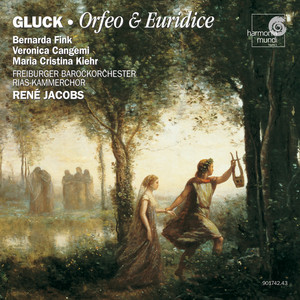 | Orfeo ed Euridice: "Act III, Scene 1, Orfeo: Che farò senza Euridice? " | Christoph Willibald Gluck, René Jacobs, Freiburger Barockorchester, RIAS Kammerchor | G Major | 1 | 9B | 71 BPM | |
 | Don Giovanni, ossia Il dissoluto punito, K.527 / Act 2: "Don Giovanni, a cenar teco m'invitasti" | Wolfgang Amadeus Mozart, Paata Burchuladze, Samuel Ramey, Ferruccio Furlanetto, Berliner Philharmoniker, Herbert von Karajan, Chor der Deutschen Oper Berlin | B♭ Major | 3 | 6B | 76 BPM | |
 | Carmen Votre toast, je peux vous le rendre - Instrumental Version | Arthur Fiedler, Boston Pops Orchestra | F Major | 3 | 7B | 113 BPM | |
 | Mozart: Don Giovanni, K. 527, Act 1: Sinfonia | Wolfgang Amadeus Mozart, Riccardo Muti, Wiener Philharmoniker | B♭ Major | 3 | 6B | 134 BPM | |
 | La traviata / Act 2: "Noi siamo zingarelle" | Giuseppe Verdi, Wendy White, Jeffrey Wells, Julien Robbins, Metropolitan Opera Chorus, John Keenan, Metropolitan Opera Orchestra, James Levine | C Minor | 2 | 5A | 82 BPM | |
 | La forza del destino: Overture (Sinfonia) | Giuseppe Verdi, Berliner Philharmoniker, Claudio Abbado | E Minor | 2 | 9A | 80 BPM | |
 | Requiem, K. 626: IIIa. Dies irae | Wolfgang Amadeus Mozart, Wiener Singverein, Wiener Philharmoniker, Herbert von Karajan | B♭ Major | 6 | 6B | 152 BPM | |
| La traviata / Act 1: "Libiamo ne'lieti calici" (Brindisi) | Giuseppe Verdi, Luciano Pavarotti, Wendy White, Anthony Laciura, Metropolitan Opera Orchestra, James Levine, Metropolitan Opera Chorus | B♭ Major | 1 | 6B | 111 BPM | |
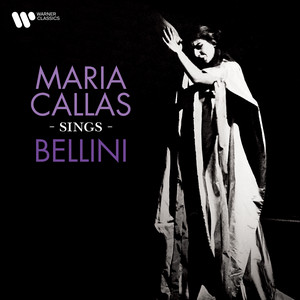 | Bellini: Norma, Act 1: "Casta diva" (Norma, Coro) | Vincenzo Bellini, Maria Callas, Coro Del Teatro Alla Scala Di Milano, Tullio Serafin, Orchestra Del Teatro Alla Scala, Milano | F Major | 2 | 7B | 88 BPM | |
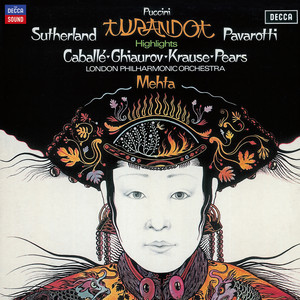 | Turandot, Act III: Nessun dorma! | Giacomo Puccini, Luciano Pavarotti, John Alldis Choir, Wandsworth School Boys Choir, London Philharmonic Orchestra, Zubin Mehta | D Major | 3 | 10B | 84 BPM | |
 | Rinaldo / Act 2: Lascia ch'io pianga | George Frideric Handel, Cecilia Bartoli, Academy of Ancient Music, Christopher Hogwood | E Major | 1 | 12B | 176 BPM | |
 | Barcarolle: Schöne Nacht, du Liebesnacht - Hoffmanns Erzählungen | Jacques Offenbach, Jesús López-Cobos, Hei-Kyung Hong, Jennifer Larmore, Munich Radio Orchestra | D Major | 2 | 10B | 81 BPM | |
 | Mattinata (Orch. Faris) | Ruggero Leoncavallo, Luciano Pavarotti, Philharmonia Orchestra, Piero Gamba | E Major | 3 | 12B | 79 BPM |
- ISRC
- GBLWD0001015
- Label
- L-M Records/RCA Records