- BPM
- 126
- Key
- D Major
- Camelot
- 10B
Britten - On this Island: As it is, plenty by Benjamin Britten, Barbara Bonney, Malcolm Martineau Song Details
Benjamin Britten, Barbara Bonney, Malcolm Martineau's ' "Britten - On this Island: As it is, plenty" was released on its scheduled release date, June 1, 2005. With This song being less than two minutes long, at 1:48, we are fairly confident that this song is not explicit and is safe for all ages. Based on the duration of this song, this song duration is much smaller than the average song duration. The track order of this song in Barbara Bonney's "My Name Is Barbara" album is number 19 out of 28. Based on our statistics, Britten - On this Island: As it is, plenty's popularity is not that popular right now. Since there is more of a neutral sound being played, this makes the track somewhat danceable.
BPM and Tempo
We consider the tempo marking of Britten - On this Island: As it is, plenty by Benjamin Britten, Barbara Bonney, Malcolm Martineau to be Allegro (fast, quick, and bright) because the track has a tempo of 126 BPM, a half-time of 63BPM, and a double-time of 252 BPM. Based on that, the speed of the song's tempo is fast. Activities such as, walking, can go well with this song. The time signature for this track is 4/4.
Music Key
D Major is the music key of this track. This also means that this song has a camelot key of 10B. So, the perfect camelot match for 10B would be either 10B or 11A. While, 11B can give you a low energy boost. For moderate energy boost, you would use 7B and a high energy boost can either be 12B or 5B. Though, if you want a low energy drop, you should looking for songs with either a camelot key of 10A or 9B will give you a low energy drop, 1B would be a moderate one, and 8B or 3B would be a high energy drop. Lastly, 7A allows you to change the mood.
Want to find the BPM and music key for other songs? Check out our BPM and Key Finder page!
- Popularity
- 3%
- Loudness
- -15.485 dB
- Acousticness
- 99%
- Danceability
- 53%
- Energy
- 13%
- Instrumentalness
- 1%
- Liveness
- 9%
- Loudness
- 74%
- Speechiness
- 6%
- Valence
- 40%
Recommendations
| Track | Artist | Key | Energy | Camelot | BPM | ||
|---|---|---|---|---|---|---|---|
 | Fauré: Élégie, Op. 24 (Orchestral Version) | Gabriel Fauré, Paavo Järvi, Eric Picard, Orchestre de Paris | A♭ Major | 0 | 4B | 89 BPM | |
 | Romeo and Juliet, Op. 64, Act II: No. 28, Romeo at Friar Laurence's | Sergei Prokofiev, Los Angeles Philharmonic, Gustavo Dudamel | G Minor | 0 | 6A | 73 BPM | |
 | Le Tombeau de Couperin, M. 68a: I. Prélude. Vif | Maurice Ravel, Les Siècles, François-Xavier Roth | F♯ Major | 0 | 2B | 74 BPM | |
 | The Plough Boy | Traditional, Sir Peter Pears, Benjamin Britten | F Major | 2 | 7B | 110 BPM | |
 | Debussy: La plus que lente, L. 121 | Claude Debussy, San Francisco Symphony, Michael Tilson Thomas | G Major | 0 | 9B | 133 BPM | |
 | Dove: Figures in the Garden: VII. Nocturne. Figaro and Susanna | Jonathan Dove, Antony Pay, Orchestra of the Age of Enlightenment | D♭ Major | 0 | 3B | 81 BPM | |
 | Simple Symphony, Op. 4: III. Sentimental Sarabande | Benjamin Britten, Camerata Nordica, Terje Tonnesen | G Minor | 0 | 6A | 85 BPM | |
 | Háry János Suite: I. Prelude. The Fairy Tale Begins | Zoltán Kodály, Neeme Järvi, Chicago Symphony Orchestra, Laurence Kaptain | F Major | 1 | 7B | 84 BPM | |
 | Quatuor pour la fin du Temps: VIII. Louange à l'immortalité de Jésus | Olivier Messiaen, Lucas Debargue | E Major | 0 | 12B | 76 BPM | |
 | 2 Pieces for Strings from Henry V: No. 1, Passacaglia. Death of Falstaff | William Walton, English Chamber Orchestra, Julian Lloyd Webber | B♭ Major | 1 | 6B | 119 BPM | |
 | Requiem, Op. 48: VIII. In Paradisum | Gabriel Fauré, Laurence Equilbey, Accentus, Orchestre National De France, La Maîtrise de Paris | D Major | 1 | 10B | 74 BPM | |
 | Organ Concerto in G Minor, FP 93: I. Andante | Francis Poulenc, Philippe Lefebvre, Orchestre National de Lille, Jean-Claude Casadesus | F♯ Minor | 1 | 11A | 139 BPM | |
 | Schoenberg: Verklärte Nacht, Op. 4: II. Molto rallentando (1943 Version) | Arnold Schoenberg, Daniel Barenboim, Chicago Symphony Orchestra | E Major | 2 | 12B | 76 BPM | |
 | 5 Stücke im Volkston, Op. 102: 2. Langsam | Robert Schumann, Mstislav Rostropovich, Benjamin Britten | G Major | 0 | 9B | 66 BPM | |
 | Piano Concerto No. 1, Op. 45: II. Andante (ma rubato) | Einojuhani Rautavaara, Laura Mikkola, Royal Scottish National Orchestra, Hannu Lintu | D♭ Major | 0 | 3B | 104 BPM | |
| 5 Stücke im Volkston, Op. 102: 3. Nicht schnell, mit viel Ton zu spielen | Robert Schumann, Mstislav Rostropovich, Benjamin Britten | A Major | 0 | 11B | 71 BPM | |
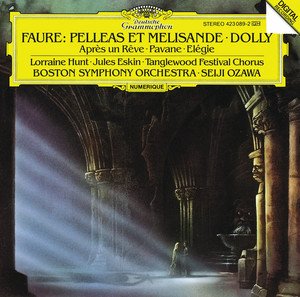 | Pelléas et Mélisande, Op. 80: 1. Prélude. Quasi Adagio | Gabriel Fauré, Boston Symphony Orchestra, Seiji Ozawa | F Major | 2 | 7B | 98 BPM | |
 | Pelléas et Mélisande, CD 93, Suite (Arr. Leinsdorf): IV. Act V. Opening - Conclusion | Claude Debussy, Berliner Philharmoniker, Claudio Abbado | F♯ Major | 0 | 2B | 126 BPM | |
 | Ma mère l'oye, M. 60 (Version for Orchestra): I. Pavane de la belle au bois dormant | Maurice Ravel, The Prague Festival Orchestra, Pavel Urbanek | C Major | 0 | 8B | 72 BPM | |
 | Symphony No. 2 in C Minor, "Resurrection": IV. Urlicht: Sehr feierlich, aber schlicht | Gustav Mahler, Miah Persson, Christianne Stotijn, Chicago Symphony Chorus, Chicago Symphony Orchestra, Bernard Haitink | D♭ Major | 0 | 3B | 103 BPM | |
 | Montgomery Variations: VI. Lament | Margaret Bonds, Kellen Gray, Royal Scottish National Orchestra | D Minor | 0 | 7A | 87 BPM | |
 | Symphony No. 1, Op. 9: I. Allegro ma non troppo | Samuel Barber, Leonard Slatkin, St. Louis Symphony | D♭ Major | 0 | 3B | 106 BPM | |
 | 3 Dance Episodes from On the Town: No. 2, Lonely Town | Leonard Bernstein, Bournemouth Symphony Orchestra, Marin Alsop | D Minor | 2 | 7A | 105 BPM | |
| Pelléas et Mélisande, CD 93, Suite (Arr. Leinsdorf): I. Act I. Opening - Interlude 1 - Interlude 2 | Claude Debussy, Berliner Philharmoniker, Claudio Abbado | D Minor | 0 | 7A | 141 BPM | |
 | Bliss: Suite from Miracle in the Gorbals: IV. The Young Lovers | Arthur Bliss, Paavo Berglund, Bournemouth Symphony Orchestra | A Minor | 3 | 8A | 111 BPM |
- ISRC
- This song does not have an ISRC.
- Label
- L-M Records/RCA Records