- BPM
- 111
- Key
- G Major
- Camelot
- 9B
Lieder ohne Worte II, Op. 30: IV. Agitato e con fuoco, MWV U98 (Arr. Ottensamer for Clarinet & Strings) by Felix Mendelssohn, Andreas Ottensamer, Schumann Quartett, Gunars Upatnieks Song Details
Felix Mendelssohn, Andreas Ottensamer, Schumann Quartett, Gunars Upatnieks's 'Lieder ohne Worte II, Op. 30: IV. Agitato e con fuoco, MWV U98 (Arr. Ottensamer for Clarinet & Strings)' had a release date set for June 18, 2021. The duration of This song is about two minutes long, specifically at 2:19. This song does not appear to have any foul language. Lieder ohne Worte II, Op. 30: IV. Agitato e con fuoco, MWV U98 (Arr. Ottensamer for Clarinet & Strings)'s duration is considered a little bit shorter than the average duration of a typical track. The song is number 8 out of 21 in Blue Hour: Mendelssohn Edition by Felix Mendelssohn, Andreas Ottensamer, Yuja Wang, Julien Quentin, Schumann Quartett, Gunars Upatnieks. Going off of the ISRC code of this track, we detected that the origin of this track is from Germany. In terms of popularity, Lieder ohne Worte II, Op. 30: IV. Agitato e con fuoco, MWV U98 (Arr. Ottensamer for Clarinet & Strings) is currently not that popular. In our opinion, the overall tone is not very danceable and projects negative sounds, such as being sad, depressed, or angry.
BPM and Tempo
The tempo marking of Lieder ohne Worte II, Op. 30: IV. Agitato e con fuoco, MWV U98 (Arr. Ottensamer for Clarinet & Strings) by Felix Mendelssohn, Andreas Ottensamer, Schumann Quartett, Gunars Upatnieks is Moderato (at a moderate speed), since this song has a tempo of 111 BPM. With that information, we can conclude that the song has a moderate tempo. The time signature for this track is 3/4.
Music Key
G Major is the music key of this track. This also means that this song has a camelot key of 9B. So, the perfect camelot match for 9B would be either 9B or 10A. While, 10B can give you a low energy boost. For moderate energy boost, you would use 6B and a high energy boost can either be 11B or 4B. Though, if you want a low energy drop, you should looking for songs with either a camelot key of 9A or 8B will give you a low energy drop, 12B would be a moderate one, and 7B or 2B would be a high energy drop. Lastly, 6A allows you to change the mood.
Want to find the BPM and music key for other songs? Check out our BPM and Key Finder page!
- Popularity
- 13%
- Loudness
- -14.713 dB
- Acousticness
- 95%
- Danceability
- 37%
- Energy
- 32%
- Instrumentalness
- 88%
- Liveness
- 10%
- Loudness
- 75%
- Speechiness
- 4%
- Valence
- 38%
Recommendations
| Track | Artist | Key | Energy | Camelot | BPM | ||
|---|---|---|---|---|---|---|---|
 | Ich ruf zu dir, Herr Jesu Christ, No. 5, BWV 639 | Johann Sebastian Bach, Murray Perahia | F♯ Major | 0 | 2B | 69 BPM | |
 | Souvenir d'un lieu cher, Op. 42: III. Mélodie (Ed. Herrmann) | Pyotr Ilyich Tchaikovsky, Daniel Lozakovich, Stanislav Soloviev | E♭ Major | 1 | 5B | 178 BPM | |
 | 8 Etudes, Op. 42: No. 5 in C-Sharp Minor. Affannato | Alexander Scriabin, Evgeny Kissin | D♭ Minor | 2 | 12A | 132 BPM | |
 | Poulenc: Concerto for Two Pianos in D Minor, FP 61: I. Allegro ma non troppo | Francis Poulenc, James Conlon, Rotterdam Philharmonic Orchestra | E♭ Major | 1 | 5B | 103 BPM | |
 | Glinka/Balakirev: The Lark (L'Alouette) | Glinka/Balakirev, Philip Fowke | B♭ Minor | 0 | 3A | 77 BPM | |
 | 24 Preludes, Op. 11: No. 21 in B-Flat Major - Andante | Alexander Scriabin, Mao Fujita | F Major | 1 | 7B | 149 BPM | |
 | 8 Nocturnes, Op. 368: No. 2, Andantino animato | Carl Czerny, Roberte Mamou | E♭ Major | 0 | 5B | 169 BPM | |
 | Nocturne No. 1 in E-Flat Major, H. 24 | John Field, Elizabeth Joy Roe | E♭ Major | 0 | 5B | 75 BPM | |
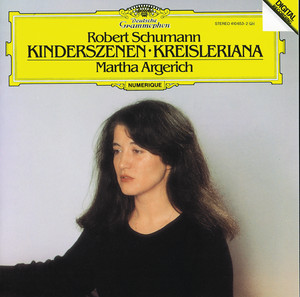 | Kinderszenen, Op. 15: I. Von fremden Ländern und Menschen | Robert Schumann, Martha Argerich | G Major | 0 | 9B | 128 BPM | |
 | 24 Préludes, Op. 28: No. 15 in D-Flat Major: Sostenuto | Frédéric Chopin, Martha Argerich | D♭ Major | 0 | 3B | 131 BPM | |
 | Orfeo ed Euridice, Wq. 30: Dance of the Blessed Spirits "Melody" (Arr. Sgambati for Piano) | Christoph Willibald Gluck, Yuja Wang | D Minor | 0 | 7A | 70 BPM | |
 | Orfeo ed Euridice, Wq. 30, Act II: Danse des champs-elysées "Mélodie" (Arr. for Piano by Ignaz Friedman) | Christoph Willibald Gluck, Joseph Banowetz | A Major | 0 | 11B | 72 BPM | |
 | Lieder ohne Worte, Op.19: No. 4 In A (Moderato), MWV U 73 | Felix Mendelssohn, Daniel Barenboim | A Major | 0 | 11B | 134 BPM | |
 | Bach: Adagio (After Violin Concerto No. 2, BWV 1042) | Johann Sebastian Bach, Gabriela Montero | F♯ Minor | 0 | 11A | 73 BPM | |
 | 6 Consolations, S. 172: No. 3 in D-Flat Major (Lento, placido) | Franz Liszt, Daniel Barenboim | D♭ Major | 0 | 3B | 69 BPM | |
 | String Quartet No. 12 in F major, Op. 96 - "American" B.179: 2. Lento | Antonín Dvořák, Hagen Quartett | D Minor | 1 | 7A | 88 BPM | |
 | Gottes Zeit ist die allerbeste Zeit, BWV 106 "Actus tragicus": I. Sonatina | Johann Sebastian Bach, Márta Kurtág, György Kurtág | F Major | 3 | 7B | 102 BPM | |
 | Piano Concerto No. 2 in B-Flat Major, Op. 19: II. Adagio | Ludwig van Beethoven, Krystian Zimerman, Wiener Philharmoniker | E♭ Major | 0 | 5B | 115 BPM | |
 | The Lark | Mikhail Glinka, Evgeny Kissin | B♭ Minor | 0 | 3A | 96 BPM | |
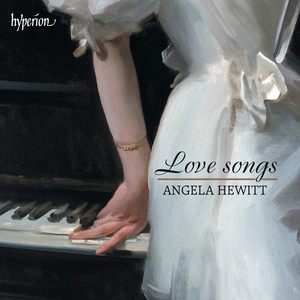 | Morgen, Op. 27 No. 4 (Arr. Reger for Piano) | Richard Strauss, Angela Hewitt | A Major | 2 | 11B | 143 BPM | |
 | Violin Concerto in D Major, Op. 61: III. Rondo. Allegro | Ludwig van Beethoven, Fritz Kreisler, Anne-Sophie Mutter, Berliner Philharmoniker, Herbert von Karajan | D Major | 1 | 10B | 128 BPM | |
 | Fantasia & Fugue in C Minor, Op. 86 (After J.S. Bach's BWV 537): Fantasia | Edward Elgar, Seattle Symphony Orchestra, Gerard Schwarz | F Minor | 1 | 4A | 143 BPM | |
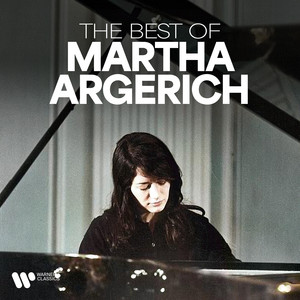 | Scarlatti, D: Keyboard Sonata in D Minor, Kk. 141 | Martha Argerich | F♯ Major | 3 | 2B | 104 BPM | |
 | Serenade for strings in E Minor, Op. 20 | Edward Elgar, Academy of St. Martin in the Fields, Sir Neville Marriner | E Minor | 1 | 9A | 81 BPM | |
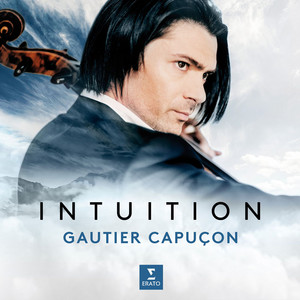 | Elgar / Orch. Walter: Salut d'amour, Op. 12 | Edward Elgar, Gautier Capuçon, Deborah Nemtanu, Douglas Boyd, Orchestre de chambre de Paris | E Major | 1 | 12B | 83 BPM |
- ISRC
- DEN962004690
- Label
- L-M Records/RCA Records