- BPM
- 97
- Key
- B Minor
- Camelot
- 10A
5 Russian Folksongs: No. 3, U vorot, vorot batyshkinikh (At My Father's Gate) by Modest Mussorgsky, Sergei Svoisky, Boris Karandasov, Lege Artis Chamber Choir, Boris Abalyan Song Details
Modest Mussorgsky, Sergei Svoisky, Boris Karandasov, Lege Artis Chamber Choir, Boris Abalyan's ' "5 Russian Folksongs: No. 3, U vorot, vorot batyshkinikh (At My Father's Gate)" was released on its scheduled release date, April 5, 2011. With This song being less than two minutes long, at 1:18, we are fairly confident that this song is not explicit and is safe for all ages. Based on the duration of this song, this song duration is much smaller than the average song duration. There are a total of 28 in the song's album "Russian Folk Songs in Choir Arrangements". In this album, this song's track order is #1. Furthermore, we believe that the track originated from United States. In terms of popularity, 5 Russian Folksongs: No. 3, U vorot, vorot batyshkinikh (At My Father's Gate) is currently not that popular. The overall mood can be danceable to some, especially with it's high amount of postive energy.
BPM and Tempo
With 5 Russian Folksongs: No. 3, U vorot, vorot batyshkinikh (At My Father's Gate) by Modest Mussorgsky, Sergei Svoisky, Boris Karandasov, Lege Artis Chamber Choir, Boris Abalyan having a BPM of 97 with a half-time of 48 BPM and a double-time of 194 BPM, we would consider this track to have a Andante (at a walking pace) tempo marking. Because of this, we believe that the song has an overall slow tempo. The time signature for this track is 5/4.
Music Key
This song is in the music key of B Minor. Or for those who are familiar with the camelot wheel, this song has a camelot key of 10A. So, the perfect camelot match for 10A would be either 10A or 9B. While, a low energy boost can consist of either 10B or 11A. For moderate energy boost, you would use 7A and a high energy boost can either be 12A or 5A. However, if you are looking for a low energy drop, finding a song with a camelot key of 9A would be a great choice. Where 1A would give you a moderate drop, and 8A or 3A would be a high energy drop. Lastly, 1B allows you to change the mood.
Want to find the BPM and music key for other songs? Check out our BPM and Key Finder page!
- Popularity
- 9%
- Loudness
- -25.233 dB
- Acousticness
- 99%
- Danceability
- 51%
- Energy
- 10%
- Instrumentalness
- 0%
- Liveness
- 12%
- Loudness
- 58%
- Speechiness
- 3%
- Valence
- 71%
Recommendations
| Track | Artist | Key | Energy | Camelot | BPM | ||
|---|---|---|---|---|---|---|---|
 | Peer Gynt Suite No. 1, Op. 46: II. Åse's Death | Edvard Grieg, Wiener Philharmoniker, Zubin Mehta | G Major | 0 | 9B | 99 BPM | |
 | Variations On An Original Theme, Op.36 "Enigma": 12. B.G.N. (Andante) | Edward Elgar, BBC Symphony Orchestra, Leonard Bernstein | B♭ Major | 0 | 6B | 82 BPM | |
 | Suite pastorale: II. Danse villageoise | Emmanuel Chabrier, Wiener Philharmoniker, John Eliot Gardiner | A Major | 1 | 11B | 126 BPM | |
 | Peer Gynt Suite No. 1, Op. 46: III. Anitra's Dance | Edvard Grieg, Berliner Philharmoniker, Herbert von Karajan | D Minor | 0 | 7A | 84 BPM | |
 | Violin Concerto No. 1 In D, Op. 19: 1. Andantino | Sergei Prokofiev, Gil Shaham, London Symphony Orchestra, André Previn | G Major | 1 | 9B | 64 BPM | |
 | La forza del destino: Overture (Sinfonia) | Giuseppe Verdi, Berliner Philharmoniker, Claudio Abbado | E Minor | 2 | 9A | 80 BPM | |
 | Symphonie espagnole, Op. 21: I. Allegro non troppo | Édouard Lalo, Itzhak Perlman, Orchestre de Paris, Daniel Barenboim | D Minor | 1 | 7A | 75 BPM | |
 | Suk: Serenade for Strings in E-Flat Major, Op. 6: IV. Allegro giocoso ma non troppo presto | Josef Suk, Christopher Warren-Green, Andrew Shulman, Lyn Fletcher, Roger Chase, Nigel Warren-Green, London Chamber Orchestra | B♭ Major | 2 | 6B | 106 BPM | |
 | Also sprach Zarathustra, Op. 30: V. Das Grablied | Richard Strauss, Berliner Philharmoniker, Herbert von Karajan | A Minor | 5 | 8A | 127 BPM | |
 | Piano Concerto No. 1 in C Minor, Op. 35: I. Allegro moderato | Dmitri Shostakovich, Boris Giltburg, Rhys Owens, Royal Liverpool Philharmonic Orchestra, Vasily Petrenko | A♭ Major | 3 | 4B | 142 BPM | |
 | Sibelius: Symphony No. 5 in E-Flat Major, Op. 82: III. Allegro molto - Un pochettino largamente | Jean Sibelius, Herbert von Karajan, Philharmonia Orchestra | A♭ Major | 1 | 4B | 79 BPM | |
 | Pelléas et Mélisande Suite, Op. 80: III. Sicilienne. Allegretto molto moderato | Gabriel Fauré, Berliner Philharmoniker, Daniel Barenboim | E♭ Major | 0 | 5B | 56 BPM | |
 | Toccata | Aram Khachaturian, Karine Poghosyan | A♭ Minor | 2 | 1A | 104 BPM | |
 | Prince Igor, Act II: Polovtsian Dances, Dance III | Alexander Borodin, Paavo Järvi, Orchestre Philharmonique de Radio France | F Major | 1 | 7B | 74 BPM | |
 | Symphony No. 8 in G Minor, Op. 88, B. 163: III. Allegretto grazioso - Molto vivace | Antonín Dvořák, London Symphony Orchestra, Sir Colin Davis | G Major | 1 | 9B | 130 BPM | |
 | Symphony No. 5 in C Minor, Op. 67: II. Andante con moto | Ludwig van Beethoven, Berliner Philharmoniker, Herbert von Karajan | A♭ Major | 0 | 4B | 81 BPM | |
 | Mahler: Symphony No. 5 in C-Sharp Minor: IV. Adagietto. Sehr langsam | Gustav Mahler, Daniel Barenboim, Chicago Symphony Orchestra | F Major | 1 | 7B | 82 BPM | |
 | Boris Godunov | Modest Mussorgsky, Choir of the Bolshoi Theater, Orchestra of The Bolshoi Theater, Vladimir Atlantov, Mark Ermler, Yevgeny Nesterenko, Yelena Obratsova, Yuri Mazurok, Alexandr Ognivcev | D♭ Major | 2 | 3B | 133 BPM | |
| Boris Godunov | Modest Mussorgsky, Choir of the Bolshoi Theater, Alexandr Ognivcev, Orchestra of The Bolshoi Theater, Vladimir Atlantov, Mark Ermler, Yevgeny Nesterenko, Yelena Obratsova, Yuri Mazurok | C Major | 2 | 8B | 80 BPM | |
 | Oberon, J.306: Ouvertüre | Carl Maria von Weber, Bavarian Radio Symphony Orchestra, Rafael Kubelík | D Major | 1 | 10B | 131 BPM | |
 | Piano Concerto No. 3 in C Major, Op. 26: II. Tema con variazioni | Sergei Prokofiev, Martha Argerich, Berliner Philharmoniker, Claudio Abbado | C Major | 2 | 8B | 116 BPM | |
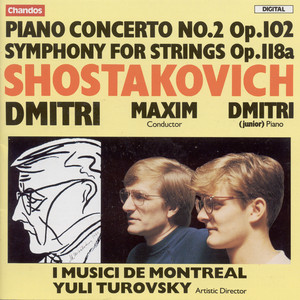 | Piano Concerto No. 2 in F Major, Op. 102: III. Allegro | Dmitri Shostakovich, I Musici de Montréal, Maxim Shostakovich | F Major | 3 | 7B | 164 BPM | |
 | The Firebird (L'oiseau De Feu) - Suite (1919): Berceuse | Igor Stravinsky, Orchestre de l'Opéra Bastille, Myung-Whun Chung | A♭ Minor | 0 | 1A | 135 BPM | |
 | Pictures at an Exhibition (Orch. Ravel): VIIIb. Cum mortuis in lingua mortua | Modest Mussorgsky, Wiener Philharmoniker, Gustavo Dudamel | F♯ Major | 0 | 2B | 69 BPM | |
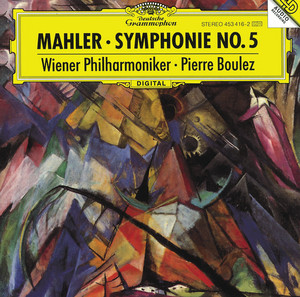 | Symphony No. 5: IV. Adagietto. Sehr langsam | Gustav Mahler, Wiener Philharmoniker, Pierre Boulez | F Major | 0 | 7B | 87 BPM |
- ISRC
- USB8U1018536
- Label
- L-M Records/RCA Records