- BPM
- 107
- Key
- A Major
- Camelot
- 11B
Variations on a Rococo Theme, Op. 33, TH 57: Var. V: Allegro moderato by Pyotr Ilyich Tchaikovsky, Jean-Guihen Queyras, BBC Symphony Orchestra, Jiří Bělohlávek Song Details
"Variations on a Rococo Theme, Op. 33, TH 57: Var. V: Allegro moderato" by Pyotr Ilyich Tchaikovsky, Jean-Guihen Queyras, BBC Symphony Orchestra, Jiří Bělohlávek had its release date on September 23, 2013. With this song being around four minutes long, at 3:30, the duration of this song is pretty average compared to other songs. This track is safe for children and doesn't appear to contain any foul language, since the "Explicit" tag was not present in this track. The song is number 12 out of 14 in Elgar: Cello Concerto / Tchaikovsky: Rococo Variations / Dvořák: Silent Woods; Rondo by Jean-Guihen Queyras, Jiří Bělohlávek, BBC Symphony Orchestra. Going off of the ISRC code of this track, we detected that the origin of this track is from France. In terms of popularity, Variations on a Rococo Theme, Op. 33, TH 57: Var. V: Allegro moderato is currently not that popular. In our opinion, the overall tone is not very danceable and projects negative sounds, such as being sad, depressed, or angry.
BPM and Tempo
The tempo marking of Variations on a Rococo Theme, Op. 33, TH 57: Var. V: Allegro moderato by Pyotr Ilyich Tchaikovsky, Jean-Guihen Queyras, BBC Symphony Orchestra, Jiří Bělohlávek is Andante (at a walking pace), since this song has a tempo of 107 BPM. With that information, we can conclude that the song has a slow tempo. The time signature for this track is 4/4.
Music Key
This song has a musical key of A Major. This also means that this song has a camelot key of 11B. So, the perfect camelot match for 11B would be either 11B or 12A. While, 12B can give you a low energy boost. For moderate energy boost, you would use 8B and a high energy boost can either be 1B or 6B. Though, if you want a low energy drop, you should looking for songs with either a camelot key of 11A or 10B will give you a low energy drop, 2B would be a moderate one, and 9B or 4B would be a high energy drop. Lastly, 8A allows you to change the mood.
Want to find the BPM and music key for other songs? Check out our BPM and Key Finder page!
- Popularity
- 10%
- Loudness
- -25.182 dB
- Acousticness
- 94%
- Danceability
- 28%
- Energy
- 5%
- Instrumentalness
- 82%
- Liveness
- 10%
- Loudness
- 58%
- Speechiness
- 4%
- Valence
- 9%
Recommendations
| Track | Artist | Key | Energy | Camelot | BPM | ||
|---|---|---|---|---|---|---|---|
 | Preghiera (Arr. by Fritz Kreisler from Piano Concerto No. 2 in C Minor, Op. 18, 2nd Movement) | Sergei Rachmaninoff, Gidon Kremer, Daniil Trifonov | C Major | 1 | 8B | 104 BPM | |
 | Stolze & Tchaikovsky: Onegin: Opening Scene - Dance of the Young Girls (After Eugen Onegin, Op. 24) | Kurt-Heinz Stolze, Pyotr Ilyich Tchaikovsky, John Lanchbery, Sydney Symphony Orchestra | E♭ Major | 0 | 5B | 118 BPM | |
 | The Tale of Tsar Saltan: Flight of the Bumblebee | Nikolai Rimsky-Korsakov, Seattle Symphony Orchestra, Gerard Schwarz | G Major | 1 | 9B | 80 BPM | |
 | Giselle, Act I: Variation de Giselle | Adolphe Adam, Academy of St. Martin in the Fields, Sir Neville Marriner | E Major | 0 | 12B | 78 BPM | |
 | Giselle, Act 2: No. 18 Giselle and Albrecht Pas de deux | Adolphe Adam, Tasmanian Symphony Orchestra, Nicolette Fraillon | A♭ Major | 1 | 4B | 129 BPM | |
 | Rachmaninov: Symphony No. 3 in A Minor, Op. 44: II. Adagio ma non troppo - Allegro vivace | Sergei Rachmaninoff, Mariss Jansons, St. Petersburg Philharmonic Orchestra | E♭ Minor | 0 | 2A | 117 BPM | |
 | Khachaturian: Masquerade: I. Waltz | Aram Khachaturian, Alexander Lazarev, The Bolshoi Symphony Orchestra | E Minor | 2 | 9A | 96 BPM | |
 | Mahler: Symphony No. 5 in C-Sharp Minor: IV. Adagietto. Sehr langsam | Gustav Mahler, Daniel Barenboim, Chicago Symphony Orchestra | F Major | 1 | 7B | 82 BPM | |
 | Carnival of the Animals: The Swan - Arranged for Cello and Harp by Miriam Keogh | Camille Saint-Saëns, None, Sebastian Comberti, Miriam Keogh | G Major | 1 | 9B | 123 BPM | |
 | Skater's Waltz | Norddeutsche Philharmonie Symphony | D Major | 2 | 10B | 105 BPM | |
 | 21 Hungarian Dances, WoO 1: Hungarian Dance No. 16 in F Minor | Johannes Brahms, Seattle Symphony Orchestra, Gerard Schwarz | F Major | 1 | 7B | 84 BPM | |
 | Romeo and Juliette, Op. 64 (Arr. for Viola and Piano by Vadim Borisovsky, Orchestration for Viola and String Orchestra by François Vallières): Introduction | Sergei Prokofiev, Elvira Misbakhova, I Musici de Montréal, Jean-François Rivest | D Major | 1 | 10B | 99 BPM | |
 | La Traviata / Act 1: Prelude | Giuseppe Verdi, Bavarian State Orchestra, Carlos Kleiber | B Major | 0 | 1B | 131 BPM | |
![Die Flamme von Paris (Flames of Paris), Act IV: Coda [arr. March] by Boris Vladimirovich Asafiev, Sofia National Opera Orchestra, Boris Spassov](https://i.scdn.co/image/ab67616d00001e020d73d1173789e937d83fa6c9) | Die Flamme von Paris (Flames of Paris), Act IV: Coda [arr. March] | Boris Vladimirovich Asafiev, Sofia National Opera Orchestra, Boris Spassov | C Major | 4 | 8B | 135 BPM | |
 | Peer Gynt, Op. 23: No. 16, Anitra's Dance | Edvard Grieg, San Francisco Symphony, Herbert Blomstedt | A Minor | 0 | 8A | 82 BPM | |
 | Daphnis et Chloe: Part III: Lever du jour | Maurice Ravel, Bordeaux Opera Chorus, Bordeaux Aquitaine National Orchestra, Laurent Petitgirard | E Minor | 2 | 9A | 77 BPM | |
 | Peer Gynt Suite No. 1, Op. 46: II. The Death of Åse - Recorded 1982 | Edvard Grieg, Berliner Philharmoniker, Herbert von Karajan | G Major | 0 | 9B | 45 BPM | |
 | The Red Poppy, Op. 70: V. Valse | Reinhold Glière, Sir Edward Downes, BBC Philharmonic | D Major | 1 | 10B | 163 BPM | |
 | Carmen Suite No. 2 (Arr. E. Guiraud): II. Habanera | Georges Bizet, Orquestra Simfònica de Barcelona i Nacional de Catalunya, Pablo González | D Major | 0 | 10B | 128 BPM | |
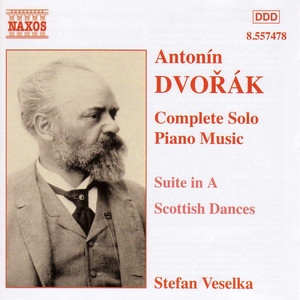 | 2 Pieces, Op. Posth., B. 188: No. 1, Lullaby in G Major | Antonín Dvořák, Stefan Veselka | G Major | 0 | 9B | 66 BPM | |
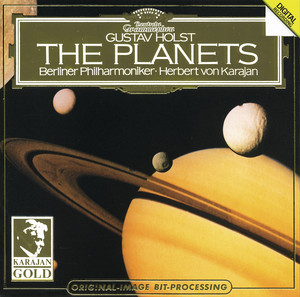 | The Planets, Op. 32: 3. Mercury, the Winged Messenger | Gustav Holst, Berliner Philharmoniker, Herbert von Karajan | A Major | 1 | 11B | 108 BPM | |
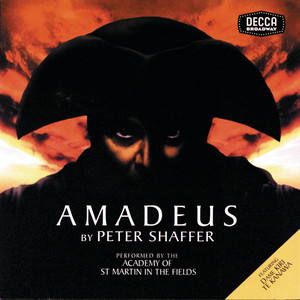 | Symphony No. 25 in G Minor, K. 183: I. Allegro con brio | Wolfgang Amadeus Mozart, Academy of St. Martin in the Fields, Sir Neville Marriner | G Minor | 2 | 6A | 80 BPM | |
 | Valse triste, Op. 44 No. 1 | Jean Sibelius, Berliner Philharmoniker, Herbert von Karajan | G Major | 0 | 9B | 78 BPM | |
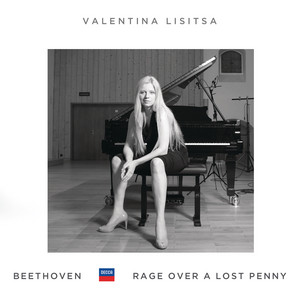 | Rage Over A Lost Penny, Op. 129 | Valentina Lisitsa | G Major | 2 | 9B | 80 BPM | |
 | Prelude in C Sharp Minor, Op. 3, No. 2 (Arr. Orchestra) - Live | Sergei Rachmaninoff, Czech Philharmonic, Leopold Stokowski | E♭ Major | 4 | 5B | 124 BPM |
- ISRC
- FRZ141211120
- Label
- L-M Records/RCA Records