- BPM
- 83
- Key
- E Major
- Camelot
- 12B
Der Rosenkavalier, Op. 59 / Act 2: "In dieser feierlichen Stunde" by Richard Strauss, Diana Damrau, Irmgard Vilsmaier, Munich Philharmonic Orchestra, Christian Thielemann Song Details
"Der Rosenkavalier, Op. 59 / Act 2: "In dieser feierlichen Stunde"" by Richard Strauss, Diana Damrau, Irmgard Vilsmaier, Munich Philharmonic Orchestra, Christian Thielemann had its release date on January 1, 2008. With this song being around four minutes long, at 3:52, the duration of this song is pretty average compared to other songs. This track is safe for children and doesn't appear to contain any foul language, since the "Explicit" tag was not present in this track. There are a total of 43 in the song's album "Strauss, R.: Der Rosenkavalier". In this album, this song's track order is #2. Furthermore, we believe that the track originated from United Kingdom. Der Rosenkavalier, Op. 59 / Act 2: "In dieser feierlichen Stunde" is not that popular right now. In our opinion, the overall tone is not very danceable and projects negative sounds, such as being sad, depressed, or angry.
BPM and Tempo
With Der Rosenkavalier, Op. 59 / Act 2: "In dieser feierlichen Stunde" by Richard Strauss, Diana Damrau, Irmgard Vilsmaier, Munich Philharmonic Orchestra, Christian Thielemann having a BPM of 83 with a half-time of 42 BPM and a double-time of 166 BPM, we would consider this track to have a Andante (at a walking pace) tempo marking. Because of this, we believe that the song has an overall slow tempo. The time signature for this track is 3/4.
Music Key
This song has a musical key of E Major. Or for those who are familiar with the camelot wheel, this song has a camelot key of 12B. So, the perfect camelot match for 12B would be either 12B or 1A. While, 1B can give you a low energy boost. For moderate energy boost, you would use 9B and a high energy boost can either be 2B or 7B. Though, if you want a low energy drop, you should looking for songs with either a camelot key of 12A or 11B will give you a low energy drop, 3B would be a moderate one, and 10B or 5B would be a high energy drop. Lastly, 9A allows you to change the mood.
Want to find the BPM and music key for other songs? Check out our BPM and Key Finder page!
- Popularity
- 2%
- Loudness
- -16.711 dB
- Acousticness
- 95%
- Danceability
- 28%
- Energy
- 20%
- Instrumentalness
- 0%
- Liveness
- 26%
- Loudness
- 72%
- Speechiness
- 6%
- Valence
- 17%
Recommendations
| Track | Artist | Key | Energy | Camelot | BPM | ||
|---|---|---|---|---|---|---|---|
 | Taras Bulba: 1. The Death Of Andri | Leoš Janáček, Bavarian Radio Symphony Orchestra, Rafael Kubelik | B Major | 1 | 1B | 84 BPM | |
 | Symphony No. 1 in D Major: 2. Kräftig bewegt - Live | Gustav Mahler, Berliner Philharmoniker, Claudio Abbado | A Major | 1 | 11B | 96 BPM | |
 | Elektra: Iv. Ich kann nicht sitzen… | Richard Strauss, Hugo von Hofmannsthal, Anita Soldh, Laila Andersson-palme, Royal Swedish Opera Orchestra, Siegfried Köhler | F♯ Major | 1 | 2B | 88 BPM | |
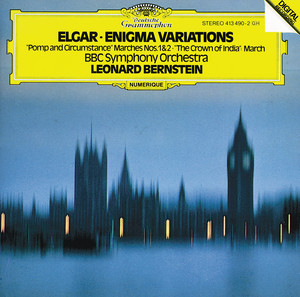 | Enigma Variations, Op. 36: Theme. Andante | Edward Elgar, BBC Symphony Orchestra, Leonard Bernstein | G Minor | 0 | 6A | 113 BPM | |
 | Wagner: Tristan und Isolde: Prelude to Act 1 | Richard Wagner, Daniel Barenboim, Berliner Philharmoniker | C Major | 2 | 8B | 177 BPM | |
 | Delius: Irmelin Prelude | Frederick Delius, Sir John Barbirolli, London Symphony Orchestra | D Major | 1 | 10B | 87 BPM | |
 | Lohengrin, Act I: Prelude | Richard Wagner, Berliner Philharmoniker, Rafael Kubelík | B Major | 1 | 1B | 81 BPM | |
 | Violin Concerto No. 1 in G Minor, Op. 26: I. Prelude. Allegro moderato – | Max Bruch, Kyung Wha Chung, Royal Philharmonic Orchestra, Rudolf Kempe | E♭ Major | 1 | 5B | 101 BPM | |
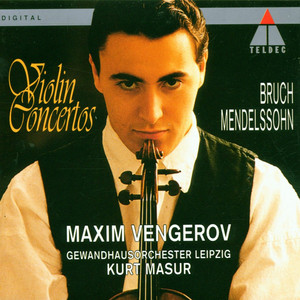 | Bruch : Violin Concerto No.1 in G minor Op.26 : III Finale - Allegro energico | Max Bruch, Maxim Vengerov, Kurt Masur, Gewandhausorchester Leipzig | G Major | 2 | 9B | 90 BPM | |
 | Symphony No.8 In G, Op.88, B. 163: 4. Allegro ma non troppo | Antonín Dvořák, Berliner Philharmoniker, Rafael Kubelík | G Major | 2 | 9B | 141 BPM | |
 | Symphony No. 5 in E-Flat Major, Op. 82: III. Allegro molto - Misterioso - Largamente assai - Un pochettino stretto | Jean Sibelius, Berliner Philharmoniker, Sir Simon Rattle | A♭ Major | 1 | 4B | 77 BPM | |
 | Othello Overture, Op. 93, B. 174 | Antonín Dvořák, Berliner Philharmoniker, Claudio Abbado | D Major | 0 | 10B | 87 BPM | |
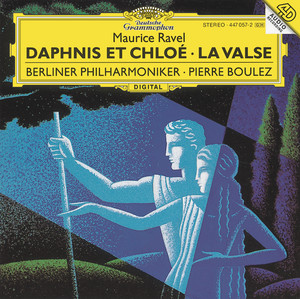 | Daphnis et Chloé, M. 57 / Première partie: Danse religieuse - Modéré | Maurice Ravel, Berliner Philharmoniker, Pierre Boulez, Rundfunkchor Berlin | A Major | 1 | 11B | 174 BPM | |
 | Symphony No. 2: II. Allegro molto | Sergei Rachmaninoff, Valery Gergiev, London Symphony Orchestra | F Major | 1 | 7B | 146 BPM | |
 | Simple Symphony, Op. 4: III. Sentimental Sarabande | Benjamin Britten, Camerata Nordica, Terje Tonnesen | G Minor | 0 | 6A | 85 BPM | |
 | Violin Concerto No. 1 in G Minor, Op. 26: III. Allegro energico | Max Bruch, Itzhak Perlman, Bernard Haitink, Royal Concertgebouw Orchestra | G Major | 3 | 9B | 97 BPM | |
 | Glazunov: Suite from Raymonda, Op. 57a: XI. Grand pas d'action. Grand adagio | Alexander Glazunov, José Serebrier, Royal Scottish National Orchestra | A Major | 2 | 11B | 90 BPM | |
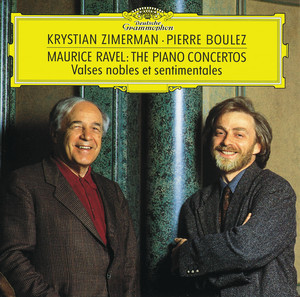 | Piano Concerto in G Major, M. 83: I. Allegramente | Maurice Ravel, Krystian Zimerman, The Cleveland Orchestra, Pierre Boulez | D Major | 1 | 10B | 129 BPM | |
 | Mathis der Maler Symphony: I. Engelkonzert | Paul Hindemith, Berliner Philharmoniker, Claudio Abbado | D Major | 1 | 10B | 106 BPM | |
 | Ariadne auf Naxos / Prologue: "Ein Augenblick ist wenig" | Richard Strauss, Edita Gruberova, Julia Varady, Gewandhausorchester, Kurt Masur | E Major | 1 | 12B | 95 BPM | |
 | Wieniawski: Violin Concerto No. 2 in D Minor, Op. 22: II. Romance | Henryk Wieniawski, Itzhak Perlman, London Philharmonic Orchestra, Seiji Ozawa | B♭ Major | 1 | 6B | 97 BPM | |
 | Symphony No. 2 in E Minor, Op. 27: Ia. Largo | Sergei Rachmaninoff, Philadelphia Orchestra, Yannick Nézet-Séguin | E Minor | 1 | 9A | 104 BPM | |
 | Haydn: Cello Concerto No. 1 in C Major, Hob. VIIb, 1: I. Moderato (Cadenza by Britten) | Franz Joseph Haydn, Mstislav Rostropovich, Academy of St. Martin in the Fields | C Major | 1 | 8B | 68 BPM | |
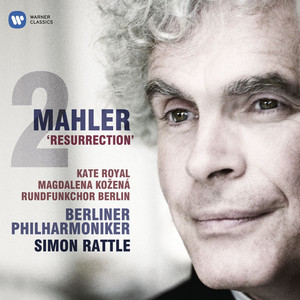 | Mahler: Symphony No. 2, "Resurrection": V. (e) Langsam, Misterioso (Chorus, Soprano) - | Gustav Mahler, Sir Simon Rattle, Berliner Philharmoniker | F♯ Major | 0 | 2B | 122 BPM | |
 | Symphony No. 9 in D Minor, Op. 125: IVa. Presto | Ludwig van Beethoven, Berliner Philharmoniker, Kirill Petrenko | D Major | 0 | 10B | 82 BPM |
- ISRC
- GBBBA0942917
- Label
- L-M Records/RCA Records