- BPM
- 142
- Key
- E♭ Major
- Camelot
- 5B
Ronds de Jambe en L’air (Mattinata by R. Leoncavallo) by Ruggero Leoncavallo, 신나래 Song Details
On June 24, 2020, the song "Ronds de Jambe en L’air (Mattinata by R. Leoncavallo)" was released by Ruggero Leoncavallo, 신나래. With This song being less than a minute long, we are pretty confident that this song does not contain any foul language. That being said, this song is pretty short compared to other songs. The song is number 12 out of 37 in Ballet Class Music vol.1 by Nare Shin by 신나래. Going off of the ISRC code of this track, we detected that the origin of this track is from South Korea. Based on our statistics, Ronds de Jambe en L’air (Mattinata by R. Leoncavallo)'s popularity is not that popular right now. The overall tone is very danceable, especially with its high energy, which produces more of a euphoric, cheerful, or happy vibe.
BPM and Tempo
The tempo marking of Ronds de Jambe en L’air (Mattinata by R. Leoncavallo) by Ruggero Leoncavallo, 신나래 is Allegro (fast, quick, and bright), since this song has a tempo of 142 BPM. With that information, we can conclude that the song has a fast tempo. This song can go great with jogging or cycling. The time signature for this track is 3/4.
Music Key
This song has a musical key of E♭ Major. This also means that this song has a camelot key of 5B. So, the perfect camelot match for 5B would be either 5B or 6A. While, 6B can give you a low energy boost. For moderate energy boost, you would use 2B and a high energy boost can either be 7B or 12B. Though, if you want a low energy drop, you should looking for songs with either a camelot key of 5A or 4B will give you a low energy drop, 8B would be a moderate one, and 3B or 10B would be a high energy drop. Lastly, 2A allows you to change the mood.
Want to find the BPM and music key for other songs? Check out our BPM and Key Finder page!
- Popularity
- 7%
- Loudness
- -12.352 dB
- Acousticness
- 97%
- Danceability
- 69%
- Energy
- 22%
- Instrumentalness
- 87%
- Liveness
- 8%
- Loudness
- 79%
- Speechiness
- 10%
- Valence
- 93%
Recommendations
| Track | Artist | Key | Energy | Camelot | BPM | ||
|---|---|---|---|---|---|---|---|
 | Torna a Surriento | Ernesto de Curtis, Juan Diego Flórez, Filarmonica Gioachino Rossini, Carlo Tenan | E Major | 2 | 12B | 91 BPM | |
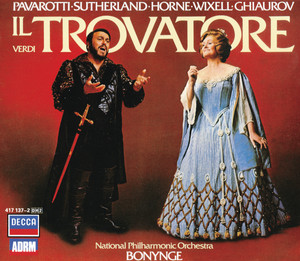 | Il Trovatore / Act 2: "Vedi! le fosche notturne spoglie" (Anvil Chorus) | Giuseppe Verdi, The London Opera Chorus, National Philharmonic Orchestra, Richard Bonynge | G Major | 3 | 9B | 130 BPM | |
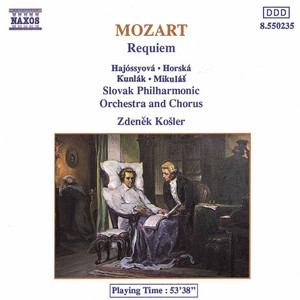 | Requiem In D Minor, K. 626: Sequence: II. Tuba Mirum | Slovak Philharmonic, Jozef Kundlák, Slovak Philharmonic Chorus, Vladimir Ruso, Jaroslava Horska, Magdaléna Hajóssyová, Stefan Klimo, Peter Mikulas, Wolfgang Amadeus Mozart | F Major | 0 | 7B | 94 BPM | |
 | O del mio dolce ardor | Christoph Willibald Gluck, Ramón Vargas | G Minor | 1 | 6A | 184 BPM | |
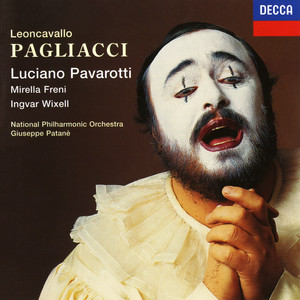 | Pagliacci / Act 1: Intermezzo | Ruggero Leoncavallo, National Philharmonic Orchestra, Giuseppe Patanè | E Major | 1 | 12B | 93 BPM | |
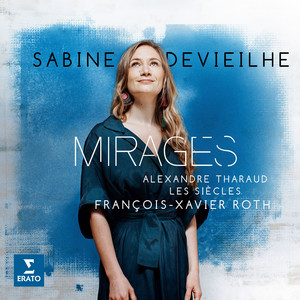 | Delibes: Lakmé, Act 1: Duo des fleurs. "Viens, Mallika" (Lakmé, Mallika) | Léo Delibes, Sabine Devieilhe, Marianne Crebassa, Les Siècles, François-Xavier Roth | B Major | 1 | 1B | 125 BPM | |
 | Mozart: Le nozze di Figaro, K. 492, Act 2: "Voi, che sapete che cosa è amor" (Cherubino) | Wolfgang Amadeus Mozart, Daniel Barenboim, Cecilia Bartoli, Berliner Philharmoniker | B♭ Major | 2 | 6B | 110 BPM | |
 | Nessun dorma! from Turandot | Plácido Domingo | D Major | 4 | 10B | 80 BPM | |
 | Requiem, K. 626 (Ed. Beyer/Levin): IIIc. Rex tremendae - Live | Wolfgang Amadeus Mozart, Berliner Philharmoniker, Claudio Abbado, Swedish Radio Choir, Kay Johannsen | G Minor | 3 | 6A | 108 BPM | |
 | L´Amico Fritz: Son pochi fiori | Mirella Freni, Munchener Rundfunkorchester, Ino Savini | B♭ Major | 2 | 6B | 63 BPM | |
 | La traviata, Act I: Follie! Follie! – Sempre libera "Cabaletta" | Giuseppe Verdi, Ileana Cotrubas, Plácido Domingo, Bavarian State Orchestra, Carlos Kleiber | A♭ Major | 1 | 4B | 117 BPM | |
 | Le nozze di Figaro, K. 492, Act I: No. 10, Non più andrai | Wolfgang Amadeus Mozart, Bryn Terfel, Scottish Chamber Orchestra, Sir Charles Mackerras | G Major | 2 | 9B | 134 BPM | |
 | La Wally, Act I: Ebben?... Ne andrò lontana (Wally) | Alfredo Catalani, Orchestra di Roma della RAI, Arturo Basile, Renata Tebaldi | E Minor | 1 | 9A | 81 BPM | |
| Turandot: Tu, che di gel sei cinta | Mirella Freni, Vienna Volksoper Orchestra, Argeo Quadri | B Major | 2 | 1B | 87 BPM | |
 | Pagliaci - Vesti La Giubba | Plácido Domingo | B♭ Major | 2 | 6B | 96 BPM | |
 | Les Pêcheurs de perles, Act I: Je crois entendre encore (Nadir) | Georges Bizet, Alain Vanzo, Georges Prêtre, Orchestre de l'Opéra National de Paris, Paris Opera Orchestra | A Minor | 1 | 8A | 86 BPM | |
 | Santa Lucia | Teodoro Cottrau, Enrico Caruso, La Scala | E♭ Major | 1 | 5B | 101 BPM | |
 | Rossini: Il barbiere di Siviglia, Act 1: "Largo al factotum" (Figaro) | Gioachino Rossini, Alceo Galliera, Tito Gobbi, Philharmonia Orchestra | G Major | 2 | 9B | 67 BPM | |
 | Violettes imperiales | Francis Lopez, Ana Maria Martinez, Prague Philharmonia, Steven Mercurio | D♭ Major | 1 | 3B | 85 BPM | |
 | Gypsy Melodies, Op. 55: 4. Songs My Mother Taught Me (Orchestral Version) | Antonín Dvořák, Greta Bradman, Adelaide Symphony Orchestra, Luke Dollman | C Major | 2 | 8B | 189 BPM | |
 | Werther: "Pourquoi me réveiller, ô souffle du printemps?" | Jules Massenet, Benjamin Bernheim, PKF – Prague Philharmonia, Emmanuel Villaume | F♯ Minor | 1 | 11A | 79 BPM | |
 | Madama Butterfly - Act II | Renata Tebaldi, Orchestra of the Accademia di Santa Cecilia & Roma, Tullio Serafin | F♯ Major | 1 | 2B | 81 BPM | |
| O cessate di piagarmi | Alessandro Scarlatti, Ramón Vargas | A Minor | 2 | 8A | 84 BPM | |
 | La Gioconda / Act 1: Feste! Pane! Feste! | Amilcare Ponchielli, Sherrill Milnes, The London Opera Chorus, National Philharmonic Orchestra, Bruno Bartoletti | B♭ Major | 4 | 6B | 67 BPM | |
 | Offenbach: Les Contes d'Hoffmann, Act 4: "Belle nuit, ô nuit d'amour" (Barcarolle) [Nicklausse, Giulietta, Chorus] | Jacques Offenbach, Sylvain Cambreling, Ann Murray, Jessye Norman, Orchestre De L'Opéra National Du Théatre Royal De La Monnaie, Bruxelles | D Major | 0 | 10B | 79 BPM |
- ISRC
- KRRAR2020189
- Label
- L-M Records/RCA Records