- BPM
- 71
- Key
- D♭ Major
- Camelot
- 3B
Strauss, R: Der Rosenkavalier, Op. 59, Act I: "Di rigori armato il seno" (Singer) by Richard Strauss, Herbert von Karajan, Nicolai Gedda, Philharmonia Orchestra Song Details
"Strauss, R: Der Rosenkavalier, Op. 59, Act I: "Di rigori armato il seno" (Singer)" by Richard Strauss, Herbert von Karajan, Nicolai Gedda, Philharmonia Orchestra had its release date on 1957. With This song being less than two minutes long, at 1:54, we are fairly confident that this song is not explicit and is safe for all ages. Based on the duration of this song, this song duration is much smaller than the average song duration. There are a total of 62 in the song's album "Strauss: Der Rosenkavalier". In this album, this song's track order is #12. Furthermore, we believe that the track originated from United Kingdom. Strauss, R: Der Rosenkavalier, Op. 59, Act I: "Di rigori armato il seno" (Singer) is not that popular right now. In our opinion, the overall tone is not very danceable and projects negative sounds, such as being sad, depressed, or angry.
BPM and Tempo
With Strauss, R: Der Rosenkavalier, Op. 59, Act I: "Di rigori armato il seno" (Singer) by Richard Strauss, Herbert von Karajan, Nicolai Gedda, Philharmonia Orchestra having a BPM of 71 with a half-time of 36 BPM and a double-time of 142 BPM, we would consider this track to have a Adagio (slowly with great expression) tempo marking. Because of this, we believe that the song has an overall slow tempo. The time signature for this track is 3/4.
Music Key
This song has a musical key of D♭ Major. Or for those who are familiar with the camelot wheel, this song has a camelot key of 3B. So, the perfect camelot match for 3B would be either 3B or 4A. While, 4B can give you a low energy boost. For moderate energy boost, you would use 12B and a high energy boost can either be 5B or 10B. Though, if you want a low energy drop, you should looking for songs with either a camelot key of 3A or 2B will give you a low energy drop, 6B would be a moderate one, and 1B or 8B would be a high energy drop. Lastly, 12A allows you to change the mood.
Want to find the BPM and music key for other songs? Check out our BPM and Key Finder page!
- Popularity
- 15%
- Loudness
- -24.589 dB
- Acousticness
- 99%
- Danceability
- 23%
- Energy
- 8%
- Instrumentalness
- 0%
- Liveness
- 16%
- Loudness
- 59%
- Speechiness
- 4%
- Valence
- 8%
Recommendations
| Track | Artist | Key | Energy | Camelot | BPM | ||
|---|---|---|---|---|---|---|---|
 | Il Trovatore / Act 2: "Tutto è deserto" | Giuseppe Verdi, Ingvar Wixell, Nicolai Ghiaurov, National Philharmonic Orchestra, Richard Bonynge | F Major | 1 | 7B | 82 BPM | |
 | Rossini: Petite messe solennelle: XII. Et vitam ventur saeculi | Gioachino Rossini, Antonio Pappano, Coro dell'Accademia Nazionale Di Santa Cecilia, Daniele Rossi, Orchestra dell'Accademia Nazionale di Santa Cecilia | D♭ Major | 4 | 3B | 93 BPM | |
 | La Sonnambula / Act 1: D'un pensiero e d'un accento | Vincenzo Bellini, Dame Joan Sutherland, Sylvia Stahlman, Margreta Elkins, Nicola Monti, Coro del Maggio Musicale Fiorentino, Orchestra del Maggio Musicale Fiorentino, Richard Bonynge | E♭ Major | 3 | 5B | 82 BPM | |
 | Das Rheingold, Scene 2: Wotan, Gemahl, unsel'ger Mann! | Richard Wagner, Josephine Veasey, Gerhard Stolze, Donald Grobe, Dietrich Fischer-Dieskau, Robert Kerns, Berliner Philharmoniker, Herbert von Karajan | A Minor | 2 | 8A | 173 BPM | |
 | Don Pasquale, Act II Quinta Scena: Siete marito e moglie (Malatesta/Notaro/Norina/Pasquale/Ernesto) | Gaetano Donizetti, Leo Nucci/Guido Fabbris/Mirella Freni/Sesto Bruscantini/Gösta Winbergh/Philharmonia Orchestra/Riccardo Muti, Riccardo Muti, Philharmonia Orchestra | C Major | 2 | 8B | 63 BPM | |
| Il Trovatore / Act 4: "Prima che d'altri vivere" | Giuseppe Verdi, Joan Sutherland, Luciano Pavarotti, Ingvar Wixell, Marilyn Horne, National Philharmonic Orchestra, Richard Bonynge | B♭ Minor | 4 | 3A | 90 BPM | |
| Donizetti: Don Pasquale, Act 2: "Io? Io?" (Pasquale, Ernesto, Malatesta, Norina) | Gaetano Donizetti, Riccardo Muti, Gösta Winbergh, Leo Nucci, Mirella Freni, Sesto Bruscantini, Philharmonia Orchestra | D Major | 4 | 10B | 139 BPM | |
 | I Puritani (1988 - Remaster), Act I, Scena terza: A te, o cara, amor talora (Arturo/Elvira/Giorgio/Gualtiero/Coro) | Vincenzo Bellini, Riccardo Muti, Philharmonia Orchestra | B♭ Major | 7 | 6B | 140 BPM | |
 | La Cenerentola / Act 2: Della Fortuna instabile...Sposa - Signor perdona... | Gioachino Rossini, William Matteuzzi, Cecilia Bartoli, Alessandro Corbelli, Enzo Dara, Michele Pertusi, Fernanda Costa, Gloria Banditelli, Coro del Teatro Comunale di Bologna, Orchestra del Teatro Comunale di Bologna, Riccardo Chailly | E Major | 1 | 12B | 92 BPM | |
 | Samson et Dalila, Op. 47, R. 288 / Act II: "Mon coeur s'ouvre à ta voix" | Camille Saint-Saëns, Marilyn Horne, Wiener Opernorchester, Henry Lewis | D♭ Major | 3 | 3B | 174 BPM | |
 | Les Contes d'Hoffmann / Act 1: "Drig, drig, drig, maître Luther" | Jacques Offenbach, Robin Leggate, Urban Malmberg, Kurt Rydl, Choeurs de Radio France, Jacques Jouineau, Orchestre National De France, Seiji Ozawa | C Major | 4 | 8B | 138 BPM | |
 | Wagner: Tristan und Isolde, Act 1: "Frisch weht der Wind der Heimat zu" - "Mir erkoren, mir verloren" (Der junge Seemann, Isolde, Brangäne) | Richard Wagner, Herbert von Karajan, Christa Ludwig, Helga Dernesch, Peter Schreier, Berliner Philharmoniker | C Major | 1 | 8B | 131 BPM | |
 | Bizet: Les pêcheurs de perles, WD 13, Act 1: "Je crois entendre encore" (Nadir) | Georges Bizet, Pierre Dervaux, Nicolai Gedda, Orchestre du Theatre National de IOpera-Comique | A Minor | 1 | 8A | 88 BPM | |
 | Don Giovanni, ossia Il dissoluto punito, K.527 / Act 1: Ma qual mai s'offre, o Dei - Fuggi crudele | Wolfgang Amadeus Mozart, Diana Damrau, Rolando Villazón, Mahler Chamber Orchestra, Yannick Nézet-Séguin | F Major | 0 | 7B | 171 BPM | |
 | Bellini: I puritani, Act 1 Scene 5: Cavatina, "A te, o cara, amor talora" (Arturo) | Vincenzo Bellini, Franco Corelli, Philharmonia Orchestra, Franco Ferraris | D♭ Major | 2 | 3B | 69 BPM | |
 | Lucia di Lammermoor / Act 2: "Ebben? - Di tua speranza" | Gaetano Donizetti, Dame Joan Sutherland, Nicolai Ghiaurov, Orchestra of the Royal Opera House, Covent Garden, Richard Bonynge | A Minor | 1 | 8A | 174 BPM | |
 | Tosca / Act 2: Orsù, Tosca, parlate | Giacomo Puccini, Katia Ricciarelli, José Carreras, Heinz Zednik, Ruggero Raimondi, Berliner Philharmoniker, Herbert von Karajan | B♭ Major | 3 | 6B | 126 BPM | |
 | Beethoven: Symphony No. 9 in D Minor, Op. 125 "Choral": IV. (b) Recitativo. "O Freunde, nicht diese Töne!" (Ode to Joy) - | Ludwig van Beethoven, Herbert von Karajan, Otto Edelmann, Philharmonia Orchestra | C Minor | 1 | 5A | 111 BPM | |
 | Turandot / Act 1: Fermo! Che fai? (Ping, Pong, Pang, Calaf) | Giacomo Puccini, Heinz Zednik, Francisco Araiza, Plácido Domingo, Gottfried Hornik, Wiener Philharmoniker, Herbert von Karajan | D♭ Major | 2 | 3B | 122 BPM | |
| Donizetti: Don Pasquale, Act 3: "Bravo, bravo, Don Pasquale" (Malatesta, Norina, Ernesto, Pasquale, Coro) | Gaetano Donizetti, Riccardo Muti, Ambrosian Opera Chorus, Gösta Winbergh, Leo Nucci, Mirella Freni, Sesto Bruscantini, Philharmonia Orchestra | B♭ Major | 2 | 6B | 101 BPM | |
| Il Trovatore / Act 4: "Vivrà!...contende il giubilo" | Giuseppe Verdi, Joan Sutherland, Ingvar Wixell, National Philharmonic Orchestra, Richard Bonynge | F Major | 3 | 7B | 76 BPM | |
 | Simon Boccanegra, Prologue: Che dicesti? | Giuseppe Verdi, José van Dam, Giovanni Foiani, Piero Cappuccilli, Orchestra Del Teatro Alla Scala, Milano, Claudio Abbado, Coro Del Teatro Alla Scala Di Milano, Romano Gandolfi | D Major | 1 | 10B | 93 BPM | |
 | Eugene Onegin, Op. 24, TH.5 / Act 1: Scene and Quartet. "Mesdames! Ya na sebya vzyal smyelost" | Pyotr Ilyich Tchaikovsky, Dmitri Hvorostovsky, Neil Shicoff, Sarah Walker, Orchestre de Paris, Semyon Bychkov | E Major | 1 | 12B | 87 BPM | |
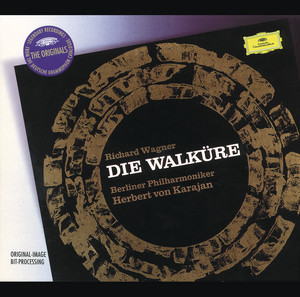 | Die Walküre, Act II Scene 1: Hojotoho! Hojotoho! | Richard Wagner, Régine Crespin, Berliner Philharmoniker, Herbert von Karajan | C Major | 2 | 8B | 95 BPM | |
 | Rigoletto / Act 1: "Già da tre lune son qui venuta" - "Olà?" / "Signor?" (Gilda, Rigoletto / Rigoletto, Giovanna) | Giuseppe Verdi, Cheryl Studer, Vladimir Chernov, Jane Shaulis, Metropolitan Opera Chorus, Metropolitan Opera Orchestra, James Levine | E Major | 1 | 12B | 77 BPM |
- ISRC
- GBAYC0101321
- Label
- L-M Records/RCA Records