- BPM
- 114
- Key
- E♭ Major
- Camelot
- 5B
Beethoven: Serenade for String Trio in D Major, Op. 8: IV. Allegretto alla polacca by Ludwig van Beethoven, Itzhak Perlman, Lynn Harrell, Pinchas Zukerman Song Details
Ludwig van Beethoven, Itzhak Perlman, Lynn Harrell, Pinchas Zukerman's 'Beethoven: Serenade for String Trio in D Major, Op. 8: IV. Allegretto alla polacca' had a release date set for October 3, 2005. The duration of This song is about 3 minutes long, at 3:10. Based on our data, This song appears to be safe for all ages and is not considered explicit. This track is about the average length of a typical track. The song is number 15 out of 39 in Beethoven: Complete String Trios by Itzhak Perlman, Pinchas Zukerman, Lynn Harrell. Going off of the ISRC code of this track, we detected that the origin of this track is from United Kingdom. In terms of popularity, Beethoven: Serenade for String Trio in D Major, Op. 8: IV. Allegretto alla polacca is currently not that popular. Although the tone can be danceable to some, this track does projects more of a negative sound rather than a postive one.
BPM and Tempo
The tempo marking of Beethoven: Serenade for String Trio in D Major, Op. 8: IV. Allegretto alla polacca by Ludwig van Beethoven, Itzhak Perlman, Lynn Harrell, Pinchas Zukerman is Moderato (at a moderate speed), since this song has a tempo of 114 BPM. With that information, we can conclude that the song has a moderate tempo. The time signature for this track is 4/4.
Music Key
This song is in the music key of E♭ Major. This also means that this song has a camelot key of 5B. So, the perfect camelot match for 5B would be either 5B or 6A. While, 6B can give you a low energy boost. For moderate energy boost, you would use 2B and a high energy boost can either be 7B or 12B. Though, if you want a low energy drop, you should looking for songs with either a camelot key of 5A or 4B will give you a low energy drop, 8B would be a moderate one, and 3B or 10B would be a high energy drop. Lastly, 2A allows you to change the mood.
Want to find the BPM and music key for other songs? Check out our BPM and Key Finder page!
- Popularity
- 3%
- Loudness
- -18.58 dB
- Acousticness
- 94%
- Danceability
- 42%
- Energy
- 15%
- Instrumentalness
- 41%
- Liveness
- 78%
- Loudness
- 69%
- Speechiness
- 6%
- Valence
- 34%
Recommendations
| Track | Artist | Key | Energy | Camelot | BPM | ||
|---|---|---|---|---|---|---|---|
 | Deux Arabesques, L66: No. 1: Andantino con moto | Claude Debussy, Kathryn Stott | E Major | 0 | 12B | 73 BPM | |
 | The Firebird (L'oiseau De Feu) - Suite (1919): Finale | Igor Stravinsky, Orchestre de l'Opéra National de Paris, Myung-Whun Chung | E Major | 2 | 12B | 78 BPM | |
 | The Four Seasons (Concerti Op.8 Nos.1-4) Spring (La Primavera) Op.8 No.1 E Major: Allegro | Baroque Festival Orchestra, Alberto Lizzio | E Major | 0 | 12B | 87 BPM | |
 | Piano Sonata No. 16 in C Major, K. 545 "Sonata facile": II. Andante | Wolfgang Amadeus Mozart, András Schiff | G Major | 0 | 9B | 67 BPM | |
 | Rage Over A Lost Penny, Op. 129 | Valentina Lisitsa | G Major | 2 | 9B | 80 BPM | |
 | Etude Op. 10 no. 1 in C Major | Valentina Lisitsa | C Major | 2 | 8B | 88 BPM | |
 | Waltz in C-sharp minor, Op. 64 No. 2 | Frédéric Chopin, Khatia Buniatishvili | D♭ Minor | 0 | 12A | 96 BPM | |
 | Sonata for Violin and Guitar in A Minor, Op. 2, No. 6, MS 26: Tempo di Walzer | Niccolò Paganini, Scott St. John, Simon Wynberg | A Minor | 2 | 8A | 147 BPM | |
 | Ascanio in Alba, K. 111: Overture | Wolfgang Amadeus Mozart, Raphaël Boulay, Michael Chance, Jill Feldman, Rosa Mannion, Howard Milner, Lorna Windsor, Paris Sorbonne University Choir, Concerto Armonico Budapest, Jacques Grimbert | A♭ Major | 1 | 4B | 150 BPM | |
 | Le carnaval des animaux, R. 125: Le cygne | Camille Saint-Saëns, Mischa Maisky, Orpheus Chamber Orchestra | C Major | 0 | 8B | 83 BPM | |
 | Kinderszenen | Robert Schumann, Ivan Moravec | F Major | 0 | 7B | 131 BPM | |
 | Piano Concerto No. 2 in B Flat Major, Op. 19: II. Adagio | Ludwig van Beethoven, Krystian Zimerman, London Symphony Orchestra, Sir Simon Rattle | E♭ Major | 0 | 5B | 71 BPM | |
 | Fantasia And Fugue In C Minor (Extracts), Bwv 906: Fantasia In C Minor, BWV 906 | Janos Sebestyen, Johann Sebastian Bach | C Minor | 3 | 5A | 107 BPM | |
 | Morgen, Op. 27 No. 4 (Arr. Reger for Piano) | Richard Strauss, Angela Hewitt | A Major | 2 | 11B | 143 BPM | |
 | Zdes' khorosho ('How Fair This Spot'), Op. 21, No. 7 | Sergei Rachmaninoff, Pablo Ferrandez, Denis Kozhukhin | A Major | 0 | 11B | 87 BPM | |
 | Haydn: String Quartet in C Major, Op. 76 No. 3, Hob. III:77 "Emperor": II. (a) Poco adagio, cantabile | Joseph Haydn, Alban Berg Quartett | B♭ Major | 1 | 6B | 101 BPM | |
 | Serenade No. 13 in G Major, K. 525, "Eine kleine Nachtmusik": II. Romance | Wolfgang Amadeus Mozart, Capella Istropolitana, Wolfgang Sobotka | C Major | 0 | 8B | 143 BPM | |
 | Mendelssohn: Violin Concerto in E Minor Op. 64: I. Allegro molto appassionato | Felix Mendelssohn, Maxim Vengerov, Kurt Masur, Gewandhausorchester Leipzig | E Minor | 2 | 9A | 101 BPM | |
 | Après un rêve, Op. 7, No. 1 | Gabriel Fauré, Yo-Yo Ma | F Minor | 0 | 4A | 115 BPM | |
 | Symphony No. 3 in F Major, Op. 90: III. Poco allegretto | Johannes Brahms, David Zinman | C Minor | 0 | 5A | 173 BPM | |
 | 21 Hungarian Dances for Orchestra, WoO 1: No. 5, Allegro (Arr. A. Parlow) | Johannes Brahms, Magyar Szimfonikus Zenekarok, Istvan Bogar | G Minor | 2 | 6A | 144 BPM | |
 | Bach, JS : Well-Tempered Clavier Book 1 : Prelude No.2 in C minor BWV847 | Daniel Barenboim | C Minor | 1 | 5A | 68 BPM | |
 | Csardas: Csardas | Vittorio Monti, Robert Koenig, Si-Qing Lu | D Major | 1 | 10B | 170 BPM | |
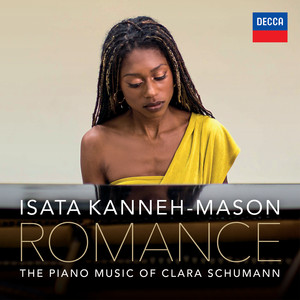 | 3 Romances, Op. 11: No. 1, Andante | Clara Schumann, Isata Kanneh-Mason | E♭ Minor | 0 | 2A | 127 BPM | |
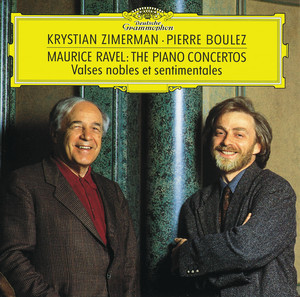 | Piano Concerto in G Major, M. 83: II. Adagio assai | Maurice Ravel, Krystian Zimerman, Cleveland Orchestra, Pierre Boulez | E Major | 0 | 12B | 74 BPM |
- ISRC
- GBAYC1501927
- Label
- L-M Records/RCA Records