- BPM
- 84
- Key
- D♭ Major
- Camelot
- 3B
Rachmaninov: Rhapsody on a Theme of Paganini, Op. 43: Variation XVIII. Andante cantabile by Sergei Rachmaninoff, Gautier Capuçon, Gabriela Montero Song Details
"Rachmaninov: Rhapsody on a Theme of Paganini, Op. 43: Variation XVIII. Andante cantabile" by Sergei Rachmaninoff, Gautier Capuçon, Gabriela Montero had its release date on January 7, 2008. With this song being around four minutes long, at 3:39, the duration of this song is pretty average compared to other songs. This track is safe for children and doesn't appear to contain any foul language, since the "Explicit" tag was not present in this track. There are a total of 9 in the song's album "Rhapsody. Cello Sonatas by Rachmaninov & Prokofiev". In this album, this song's track order is #6. Furthermore, we believe that the track originated from United Kingdom. Rachmaninov: Rhapsody on a Theme of Paganini, Op. 43: Variation XVIII. Andante cantabile is below average in popularity right now. In our opinion, the overall tone is not very danceable and projects negative sounds, such as being sad, depressed, or angry.
BPM and Tempo
With Rachmaninov: Rhapsody on a Theme of Paganini, Op. 43: Variation XVIII. Andante cantabile by Sergei Rachmaninoff, Gautier Capuçon, Gabriela Montero having a BPM of 84 with a half-time of 42 BPM and a double-time of 168 BPM, we would consider this track to have a Andante (at a walking pace) tempo marking. Because of this, we believe that the song has an overall slow tempo. The time signature for this track is 4/4.
Music Key
This song has a musical key of D♭ Major. Or for those who are familiar with the camelot wheel, this song has a camelot key of 3B. So, the perfect camelot match for 3B would be either 3B or 4A. While, 4B can give you a low energy boost. For moderate energy boost, you would use 12B and a high energy boost can either be 5B or 10B. Though, if you want a low energy drop, you should looking for songs with either a camelot key of 3A or 2B will give you a low energy drop, 6B would be a moderate one, and 1B or 8B would be a high energy drop. Lastly, 12A allows you to change the mood.
Want to find the BPM and music key for other songs? Check out our BPM and Key Finder page!
- Popularity
- 35%
- Loudness
- -26.298 dB
- Acousticness
- 99%
- Danceability
- 12%
- Energy
- 3%
- Instrumentalness
- 68%
- Liveness
- 16%
- Loudness
- 56%
- Speechiness
- 5%
- Valence
- 4%
Recommendations
| Track | Artist | Key | Energy | Camelot | BPM | ||
|---|---|---|---|---|---|---|---|
 | Chant du menestrel for Cello and Orchestra, Op. 71 | Alexander Glazunov, Alexander Rudin, Moscow Symphony Orchestra, Igor Golovschin | F♯ Minor | 0 | 11A | 87 BPM | |
 | Sous le ciel de Paris (Arr. for Viola & Piano by Dana Dörken and Adrien La Marca) | Hubert Giraud, Adrien La Marca, Danae Dörken | G Major | 0 | 9B | 138 BPM | |
 | Norma, Act I, Scene 1: Air de Norma "Casta Diva" (Arr. for Piano & Viola) | Vincenzo Bellini, Antoine Tamestit, Cédric Tiberghien | F Major | 0 | 7B | 141 BPM | |
 | Capriol Suite: 5. Pied-en- l'air | Peter Warlock, Academy of St. Martin in the Fields, Nicholas Kraemer, Sir Neville Marriner | G Major | 1 | 9B | 113 BPM | |
 | Improvisation No. 3 | Gabriela Montero | D Major | 2 | 10B | 113 BPM | |
 | 5 Pieces for Violin and Piano: I. Elegia. Andante larghetto | Valentin Silvestrov, Duo Gazzana | E♭ Major | 0 | 5B | 74 BPM | |
 | II. Adagio cantabile from Piano Sonata No. 8 in C minor, Op. 13 "Pathetique" - Instrumental | Ludwig van Beethoven, Murray Perahia | A♭ Major | 0 | 4B | 62 BPM | |
 | Rhapsody on a Theme of Paganini, Op. 43: Variation 18. Andante cantabile | Sergei Rachmaninoff, Boris Giltburg, Brussels Philharmonic, Vassily Sinaisky | D♭ Major | 0 | 3B | 91 BPM | |
 | Thaïs: Méditation | Jules Massenet, Bomsori, NFM Wrocław Philharmonic, Giancarlo Guerrero | D Major | 0 | 10B | 84 BPM | |
 | Christophe / Transcr. Capuçon, G & Ducros: Les Mots bleus | Christophe, Gautier Capuçon, Jerome Ducros | G Major | 0 | 9B | 73 BPM | |
 | Satie Variation (Arr. for Violin & Piano after Gymnopédie No. 1 by Svetoslav Karparov) | Erik Satie, Esther Abrami, Iyad Sughayer | G Major | 1 | 9B | 85 BPM | |
 | The Arts and the Hours | Víkingur Ólafsson, Jean-Philippe Rameau | D♭ Major | 0 | 3B | 136 BPM | |
 | Deep River (Arr. The Kanneh-Masons for Ensemble) | Samuel Coleridge-Taylor, The Kanneh-Masons | E Major | 1 | 12B | 82 BPM | |
 | Goin' Home | Antonín Dvořák, Alisa Weilerstein, Anna Polonsky | G Major | 1 | 9B | 135 BPM | |
 | Rusalka, Op. 114, Act I: Song to the Moon | Antonín Dvořák, Pablo Ferrandez, Martin Fröst, Swedish Chamber Orchestra | D Minor | 1 | 7A | 109 BPM | |
 | Vaughan Williams: 6 Studies in English Folk-Song: No. 1, Adagio | David Parkhouse, Eileen Croxford | A Minor | 1 | 8A | 92 BPM | |
 | España, Op. 165: II. Tango | Isaac Albéniz, Daniel Barenboim | D Major | 0 | 10B | 66 BPM | |
 | Richter: The Leftovers: She Remembers | Max Richter, Gautier Capuçon, Jerome Ducros, Adrien Perruchon, Orchestre de chambre de Paris | F♯ Minor | 0 | 11A | 172 BPM | |
 | Salut d'amour, Op. 12 (Arr. for Cello & Piano by Anonymous) | Edward Elgar, Gerald Peregrine, Antony Ingham | E♭ Major | 0 | 5B | 130 BPM | |
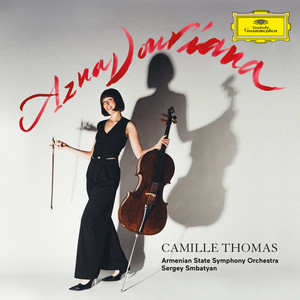 | Hier encore (Arr. for Cello and Orchestra by Mathieu Herzog) | Camille Thomas, Sergey Smbatyan, Armenian State Symphony Orchestra | D Minor | 1 | 7A | 100 BPM | |
 | Williams: Main Theme (From "Schindler's List") | John Williams, Gautier Capuçon, Johanna Malangré, Orchestre national de Bretagne | D Minor | 1 | 7A | 83 BPM | |
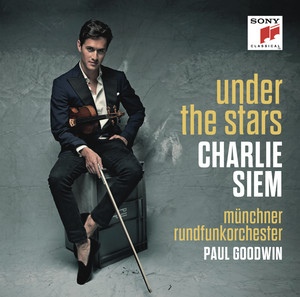 | Salut d'amour, Op. 12 | Edward Elgar, Charlie Siem, Paul Goodwin | E Major | 1 | 12B | 95 BPM | |
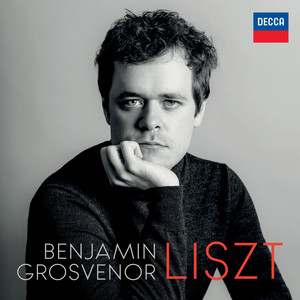 | Ave Maria, S. 558 (after Schubert, D. 839) | Franz Liszt, Benjamin Grosvenor | B♭ Major | 0 | 6B | 69 BPM | |
 | Night (Arr. for Cello & Piano by Tom Poster) | Florence Beatrice Price, Laura van der Heijden, Jâms Coleman | G Major | 0 | 9B | 86 BPM | |
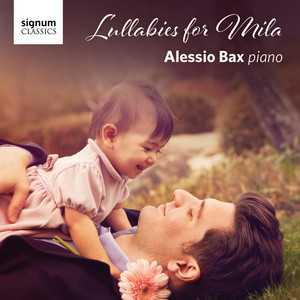 | Lyric Pieces, Book 5, Op. 54: Nocturne | Edvard Grieg, Alessio Bax | C Major | 0 | 8B | 72 BPM |
- ISRC
- GBAYC0703139
- Label
- L-M Records/RCA Records