- BPM
- 91
- Key
- D♭ Minor
- Camelot
- 12A
Angin be dinging_Corelli-Forrest by Corelli, Forrest, Grupo de música barroca La Folia (Pedro Bonet) Song Details
"Angin be dinging_Corelli-Forrest" by Corelli, Forrest, Grupo de música barroca La Folia (Pedro Bonet) had its release date on February 22, 2023. The duration of This song is about two minutes long, specifically at 2:55. This song does not appear to have any foul language. Angin be dinging_Corelli-Forrest's duration is considered a little bit shorter than the average duration of a typical track. The track order of this song in Grupo de música barroca La Folia (Pedro Bonet)'s "La vuelta de Magallanes y Elcano (CD2)" album is number 25 out of 27. On top of that, Spain appears to be the country where this track was created. In terms of popularity, Angin be dinging_Corelli-Forrest is currently unknown. In our opinion, the overall tone is not very danceable and projects negative sounds, such as being sad, depressed, or angry.
BPM and Tempo
We consider the tempo marking of Angin be dinging_Corelli-Forrest by Corelli, Forrest, Grupo de música barroca La Folia (Pedro Bonet) to be Andante (at a walking pace) because the track has a tempo of 91 BPM, a half-time of 46BPM, and a double-time of 182 BPM. Based on that, the speed of the song's tempo is slow. Activities such as, yoga or pilates, can go well with this song. The time signature for this track is 3/4.
Music Key
D♭ Minor is the music key of this track. This also means that this song has a camelot key of 12A. So, the perfect camelot match for 12A would be either 12A or 11B. While, a low energy boost can consist of either 12B or 1A. For moderate energy boost, you would use 9A and a high energy boost can either be 2A or 7A. However, if you are looking for a low energy drop, finding a song with a camelot key of 11A would be a great choice. Where 3A would give you a moderate drop, and 10A or 5A would be a high energy drop. Lastly, 3B allows you to change the mood.
Want to find the BPM and music key for other songs? Check out our BPM and Key Finder page!
- Popularity
- 0%
- Loudness
- -17.995 dB
- Acousticness
- 93%
- Danceability
- 19%
- Energy
- 12%
- Instrumentalness
- 0%
- Liveness
- 8%
- Loudness
- 70%
- Speechiness
- 4%
- Valence
- 10%
Recommendations
| Track | Artist | Key | Energy | Camelot | BPM | ||
|---|---|---|---|---|---|---|---|
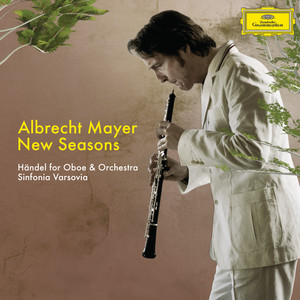 | Concerto for Oboe, Bassoon, Harpsichord and B.c. "Piagge serene": Adagio (from Organconcerto Op. 7,4, HWV 309) | George Frideric Handel, Albrecht Mayer, Sinfonia Varsovia, Guilhaume Santana, Jakub Haufa, Monika Razynska | A♭ Major | 4 | 4B | 114 BPM | |
 | Concerto in A Minor, RV 356: II. Largo | Antonio Vivaldi, Avi Avital, Venice Baroque Orchestra | G Minor | 0 | 6A | 68 BPM | |
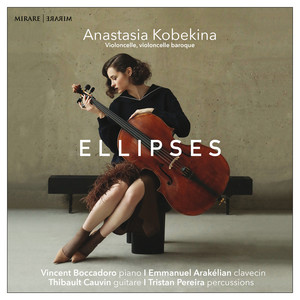 | Bachianas Brasileiras: No. 5, Aria for Cello and Guitar | Heitor Villa-Lobos, Anastasia Kobekina, Thibault Cauvin | B♭ Major | 2 | 6B | 112 BPM | |
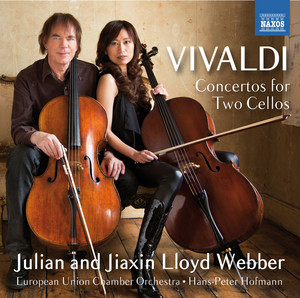 | Concerto for 2 Mandolins in G Major, RV 532: I. Allegro | Julian Lloyd Webber, Jiaxin Lloyd Webber, European Union Chamber Orchestra, Hanspeter Hofmann | G Minor | 1 | 6A | 108 BPM | |
 | Sonata Concertata In A Major For Guitar & Violin, Op.61, M.S. 2: Adagio, assai espressivo | Niccolò Paganini, Gil Shaham, Göran Söllscher | A Minor | 0 | 8A | 77 BPM | |
 | Concert pour 4 parties de violes, H. 545 (Arr. for String Orchestra by Anonymous): I. Prélude | Marc-Antoine Charpentier, Richard Kapp, Philharmonia Virtuosi | D Minor | 3 | 7A | 62 BPM | |
 | Concerto In F Major | Dr. Jeffrey Thompson | C Major | 1 | 8B | 81 BPM | |
 | Concerto No. 1 in E Major, Op. 8 RV 269, "La primavera" (Spring): III. Allegro Pastorale | Emmy Verhey | E Major | 1 | 12B | 91 BPM | |
 | Ouran Concerto ・ Moderato marciale for oboe, 2 horns, violin and string quartet | Yoshihisa Hirano | F Major | 3 | 7B | 134 BPM | |
 | Chiquilín de Bachín | Astor Piazzolla, Maria Lindsay, Josephine Allan | E Minor | 2 | 9A | 109 BPM | |
 | Gaitas | Rolf Lislevand, Santiago De Murcia | B Major | 1 | 1B | 113 BPM | |
 | Haydn, M: Divertimento in E-Flat Major, MH 9: I. Adagio con variazioni | Michael Haydn, Rodney Slatford, Kenneth Heath, Stephen Shingles | D Major | 1 | 10B | 108 BPM | |
 | Concerto Grosso in G Minor, Op. 3, No. 2: III. Adagio | Francesco Geminiani, Capella Istropolitana, Jaroslav Krcek | E♭ Major | 1 | 5B | 130 BPM | |
 | II. Adagio | Luigi Boccherini, Zoltan Tokos, Danubius Quartet | G Major | 0 | 9B | 105 BPM | |
 | Vagues d'Aurore | Ambiorix | E Minor | 2 | 9A | 85 BPM | |
 | Symphony No. 16 in B-Flat Major, Hob. I:16: II. Andante | Joseph Haydn, Austro-Hungarian Haydn Orchestra, Ádám Fischer | E♭ Major | 0 | 5B | 82 BPM | |
 | Kesäilta | Toivo Kuula, SRK Musiikki | A Major | 1 | 11B | 102 BPM | |
 | 5 Fugues (After Bach's Well-Tempered Clavier), K. 405: No. 2 in E Flat Major (After BWV 876) | Wolfgang Amadeus Mozart, Hagen Quartett | C Minor | 0 | 5A | 77 BPM | |
 | Couperin: Les Baricades mistérieuses | François Couperin, Aurora Orchestra, Nicholas Collon | B♭ Major | 0 | 6B | 65 BPM | |
 | Trio Sonata in G Minor: II. Allegro un poco | Johann Friedrich Fasch, Danubius Ensemble | C Minor | 2 | 5A | 122 BPM | |
 | Canon & Gigue in D Major, P. 37: Canon | Johann Pachelbel, Musica Antiqua, Mary Jane Newman | D Major | 0 | 10B | 97 BPM | |
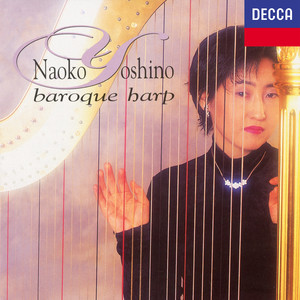 | Ground (Arr. Watkins for Harp) | William Croft, Naoko Yoshino | C Minor | 0 | 5A | 98 BPM | |
 | “Imitazione delle Campane” | Johann Paul Von Westhoff, Lina Tur Bonet, Jadran Duncumb | A Major | 1 | 11B | 163 BPM | |
 | Canon and Gigue for 3 Violins and Basso Continuo in D major: Canon | Johann Pachelbel, Vladimir Fedoseyev, Moscow RTV Symphony Orchestra | D Major | 1 | 10B | 87 BPM | |
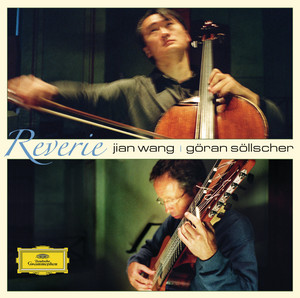 | Kinderszenen, Op. 15: VII. Träumerei (Arr. by Sandquist) | Robert Schumann, Jian Wang, Göran Söllscher | F Major | 0 | 7B | 86 BPM |
- ISRC
- ES18B2300403
- Label
- L-M Records/RCA Records