- BPM
- 132
- Key
- G Minor
- Camelot
- 6A
String Quartet in E-Flat Major, Op. 12: II. Canzonetta. Allegretto by Felix Mendelssohn, Leipziger Streichquartett Song Details
Felix Mendelssohn, Leipziger Streichquartett's ' "String Quartet in E-Flat Major, Op. 12: II. Canzonetta. Allegretto" was released on its scheduled release date, August 1, 2001. With this song being around four minutes long, at 4:19, the duration of this song is pretty average compared to other songs. This track is safe for children and doesn't appear to contain any foul language, since the "Explicit" tag was not present in this track. The track order of this song in Felix Mendelssohn, Leipziger Streichquartett's "Mendelssohn: Complete String Quartets Vol. 1" album is number 6 out of 8. On top of that, Germany appears to be the country where this track was created. Based on our statistics, String Quartet in E-Flat Major, Op. 12: II. Canzonetta. Allegretto's popularity is not that popular right now. Since there is more of a neutral sound being played, this makes the track somewhat danceable.
BPM and Tempo
We consider the tempo marking of String Quartet in E-Flat Major, Op. 12: II. Canzonetta. Allegretto by Felix Mendelssohn, Leipziger Streichquartett to be Allegro (fast, quick, and bright) because the track has a tempo of 132 BPM, a half-time of 66BPM, and a double-time of 264 BPM. Based on that, the speed of the song's tempo is fast. Activities such as, walking, can go well with this song. The time signature for this track is 4/4.
Music Key
G Minor is the music key of this track. Because this track belongs in the G Minor key, the camelot key is 6A. So, the perfect camelot match for 6A would be either 6A or 5B. While, a low energy boost can consist of either 6B or 7A. For moderate energy boost, you would use 3A and a high energy boost can either be 8A or 1A. However, if you are looking for a low energy drop, finding a song with a camelot key of 5A would be a great choice. Where 9A would give you a moderate drop, and 4A or 11A would be a high energy drop. Lastly, 9B allows you to change the mood.
Want to find the BPM and music key for other songs? Check out our BPM and Key Finder page!
- Popularity
- 10%
- Loudness
- -30.91 dB
- Acousticness
- 94%
- Danceability
- 43%
- Energy
- 6%
- Instrumentalness
- 81%
- Liveness
- 6%
- Loudness
- 48%
- Speechiness
- 5%
- Valence
- 49%
Recommendations
| Track | Artist | Key | Energy | Camelot | BPM | ||
|---|---|---|---|---|---|---|---|
 | Lieder ohne Worte, Op. 19: No. 6 in G Minor (Andante sostenuto) "Venetian Gondola Song", MWV U78 | Felix Mendelssohn, Jan Lisiecki | G Minor | 0 | 6A | 168 BPM | |
 | Lieder ohne Worte VI, Op. 67: II. Allegro leggiero, MWV U145 "Lost Illusions" | Felix Mendelssohn, Daniel Barenboim | F♯ Minor | 1 | 11A | 180 BPM | |
 | Zdes' khorosho ('How Fair This Spot'), Op. 21, No. 7 | Sergei Rachmaninoff, Pablo Ferrandez, Denis Kozhukhin | A Major | 0 | 11B | 87 BPM | |
 | Lied opus 34 no.2, transcription Franz Liszt: Auf Flügeln Des Gesanges | Felix Mendelssohn, Bertrand Chamayou | A♭ Major | 0 | 4B | 71 BPM | |
 | Symphony No. 5 in E Minor, Op. 64: III. Valse. Allegro moderato | Pyotr Ilyich Tchaikovsky, Berliner Philharmoniker, Kirill Petrenko | A Major | 0 | 11B | 139 BPM | |
 | I. Prélude. Andantino | César Franck, Jean-Pierre Armengaud | D Major | 0 | 10B | 66 BPM | |
 | Piano Concerto No. 23 in A Major, K. 488: II. Adagio | Wolfgang Amadeus Mozart, Vladimir Horowitz, Orchestra Del Teatro Alla Scala, Milano, Carlo Maria Giulini | F♯ Minor | 0 | 11A | 108 BPM | |
 | Sechs Klavierstücke, Op. 118: II. Intermezzo in A Major | Johannes Brahms, Arcadi Volodos | A Major | 0 | 11B | 69 BPM | |
 | 24 Preludes and Fugues, Op. 87: Fugue No. 7 in A Major | Dmitri Shostakovich, Igor Levit | A Major | 0 | 11B | 97 BPM | |
 | Sarabande und Chaconne aus dem Singspiel Almira von Händel, S. 181: Sarabande | George Frideric Handel, Roberto Cominati | C Minor | 0 | 5A | 66 BPM | |
 | Sonata in D Minor, K. 9 | Domenico Scarlatti, Ivo Pogorelich | D Minor | 0 | 7A | 94 BPM | |
 | Sonata for Piano and Violin in E Minor, K. 304: II. Tempo di minuetto | Wolfgang Amadeus Mozart, Hilary Hahn, Natalie Zhu | E Minor | 1 | 9A | 124 BPM | |
 | Etude Op. 10 no. 1 in C Major | Valentina Lisitsa | C Major | 2 | 8B | 88 BPM | |
 | Serenade for String Orchestra in C Major, Op. 48, TH 48: II. Valse | Pyotr Ilyich Tchaikovsky, The Russian Virtuosi of Europe, Yuri Zhislin | G Major | 2 | 9B | 98 BPM | |
 | La separation, Nocturne in F Minor | Mikhail Glinka, Victor Ryabchikov | F Minor | 1 | 4A | 73 BPM | |
 | Nocturne No. 4 in A Major, H. 36 | John Field, Benjamin Frith | A Major | 1 | 11B | 183 BPM | |
 | Kinderszenen | Robert Schumann, Ivan Moravec | F Major | 0 | 7B | 131 BPM | |
 | No. 1, Allegretto scherzando | Antonín Dvořák, Scharoun Ensemble | G Minor | 1 | 6A | 93 BPM | |
 | Valse triste, Op. 44 No. 1 | Jean Sibelius, Berliner Philharmoniker, Herbert von Karajan | G Major | 0 | 9B | 78 BPM | |
 | Sonata in E Major, K. 380 | Domenico Scarlatti, Khatia Buniatishvili | B Major | 0 | 1B | 84 BPM | |
 | Saint-Saëns: Piano Concerto No. 5 in F Major, Op. 103 "Egyptian": II. Andante | Camille Saint-Saëns, Bertrand Chamayou, Emmanuel Krivine, Orchestre National De France | D Major | 1 | 10B | 129 BPM | |
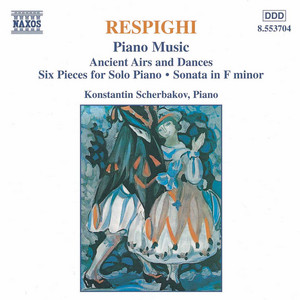 | 3 Preludi Sopra Melodie Gregoriane, P. 131: I. Molto Lento | Ottorino Respighi, Konstantin Scherbakov | A♭ Minor | 0 | 1A | 70 BPM | |
 | Sonata In G Minor For Cello & Piano, Op. 19: 3. Andante | Sergei Rachmaninoff, Alisa Weilerstein, Inon Barnatan | F Major | 2 | 7B | 82 BPM | |
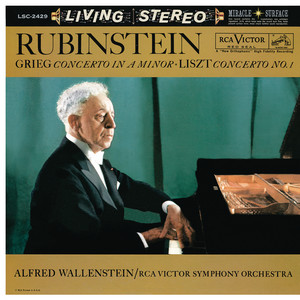 | Piano Concerto in A Minor, Op. 16: I. Allegro molto moderato - Remastered | Edvard Grieg, Arthur Rubinstein, RCA Victor Symphony Orchestra, Alfred Wallenstein | A Minor | 1 | 8A | 82 BPM | |
 | Romance In B Flat Major, Op. 28 : Romance | Gabriel Fauré, Pascal Devoyon, Dong-Suk Kang | A Major | 2 | 11B | 89 BPM |
- ISRC
- DEA140105506
- Label
- L-M Records/RCA Records