- BPM
- 72
- Key
- B♭ Major
- Camelot
- 6B
Prokofiev: Romeo and Juliet, Op. 64, Act 3, Scene 1: Romeo and Juliet by Sergei Prokofiev, André Previn, London Symphony Orchestra Song Details
"Prokofiev: Romeo and Juliet, Op. 64, Act 3, Scene 1: Romeo and Juliet" by Sergei Prokofiev, André Previn, London Symphony Orchestra had its release date on 1973. With This song being less than two minutes long, at 1:27, we are fairly confident that this song is not explicit and is safe for all ages. Based on the duration of this song, this song duration is much smaller than the average song duration. There are a total of 52 in the song's album "Prokofiev: Romeo and Juliet". In this album, this song's track order is #12. Furthermore, we believe that the track originated from United Kingdom. Prokofiev: Romeo and Juliet, Op. 64, Act 3, Scene 1: Romeo and Juliet is not that popular right now. In our opinion, the overall tone is not very danceable and projects negative sounds, such as being sad, depressed, or angry.
BPM and Tempo
With Prokofiev: Romeo and Juliet, Op. 64, Act 3, Scene 1: Romeo and Juliet by Sergei Prokofiev, André Previn, London Symphony Orchestra having a BPM of 72 with a half-time of 36 BPM and a double-time of 144 BPM, we would consider this track to have a Adagio (slowly with great expression) tempo marking. Because of this, we believe that the song has an overall slow tempo. The time signature for this track is 5/4.
Music Key
This song has a musical key of B♭ Major. Or for those who are familiar with the camelot wheel, this song has a camelot key of 6B. So, the perfect camelot match for 6B would be either 6B or 7A. While, 7B can give you a low energy boost. For moderate energy boost, you would use 3B and a high energy boost can either be 8B or 1B. Though, if you want a low energy drop, you should looking for songs with either a camelot key of 6A or 5B will give you a low energy drop, 9B would be a moderate one, and 4B or 11B would be a high energy drop. Lastly, 3A allows you to change the mood.
Want to find the BPM and music key for other songs? Check out our BPM and Key Finder page!
- Popularity
- 11%
- Loudness
- -34.979 dB
- Acousticness
- 93%
- Danceability
- 21%
- Energy
- 2%
- Instrumentalness
- 95%
- Liveness
- 9%
- Loudness
- 42%
- Speechiness
- 4%
- Valence
- 10%
Recommendations
| Track | Artist | Key | Energy | Camelot | BPM | ||
|---|---|---|---|---|---|---|---|
 | Piano Concerto No. 2 in C Minor, Op. 18: I. Moderato | Sergei Rachmaninoff, Anna Fedorova, Nordwestdeutsche Philharmonie, Laércio Diniz | C Minor | 2 | 5A | 56 BPM | |
 | Poulenc: Concerto for Two Pianos in D Minor, FP 61: I. Allegro ma non troppo | Francis Poulenc, James Conlon, Rotterdam Philharmonic Orchestra | E♭ Major | 1 | 5B | 103 BPM | |
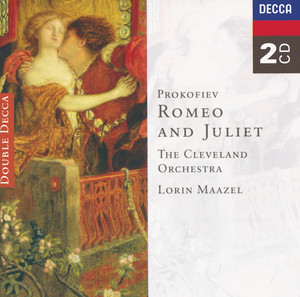 | Romeo and Juliet, Op. 64 - Act 1: The Quarrel | Sergei Prokofiev, Cleveland Orchestra, Lorin Maazel | B Minor | 4 | 10A | 91 BPM | |
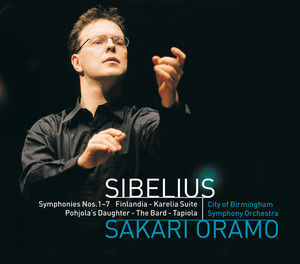 | Sibelius: Finlandia, Op. 26 | Jean Sibelius, Sakari Oramo, City Of Birmingham Symphony Orchestra | A♭ Major | 1 | 4B | 150 BPM | |
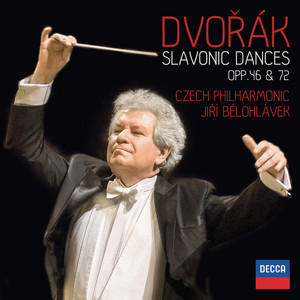 | 8 Slavonic Dances, Op. 46, B.83: No. 3 in A Flat Major (Poco allegro) | Antonín Dvořák, Czech Philharmonic, Jiří Bělohlávek | A♭ Major | 1 | 4B | 98 BPM | |
 | Symphony No. 1, Op. 25 in D "Classical": Allegro con brio | Sergei Prokofiev, Yuri Temirkanov | E Minor | 0 | 9A | 99 BPM | |
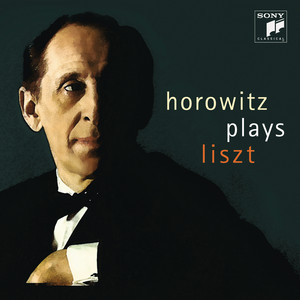 | Hungarian Rhapsody No. 2 in C-Sharp Minor, S. 244/2 | Franz Liszt, Vladimir Horowitz | D♭ Major | 3 | 3B | 80 BPM | |
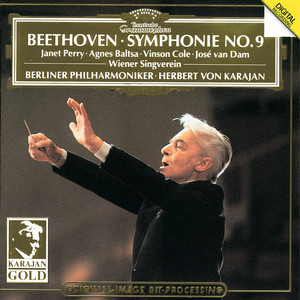 | Symphony No. 9 in D Minor, Op. 125 "Choral": II. Scherzo. Molto vivace – Presto | Ludwig van Beethoven, Berliner Philharmoniker, Herbert von Karajan | G Major | 2 | 9B | 119 BPM | |
 | Ruslan and Ludmila: Overture | Mikhail Glinka, The USSR Bolshoy Theatre Orchestra, Yevgeny Svetlanov | F Major | 3 | 7B | 81 BPM | |
 | Symphony No. 10 in E Minor, Op. 93: II. Allegro | Dmitri Shostakovich, Royal Liverpool Philharmonic Orchestra, Vasily Petrenko | B♭ Minor | 6 | 3A | 89 BPM | |
 | Eugene Onegin - Waltz | Symphony Orchestra of the Russian State TV & Radio Centre | A♭ Major | 1 | 4B | 118 BPM | |
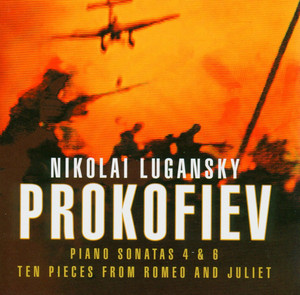 | Prokofiev: 10 Pieces from Romeo & Juliet, Op. 75: VI. Montagues and Capulets | Sergei Prokofiev, Nikolai Lugansky | F Major | 0 | 7B | 90 BPM | |
 | The Rite of Spring: Part One: Adoration of the Earth: The Augurs of Spring - Dance of the Young Girls | Igor Stravinsky, Teodor Currentzis, musicAeterna | B♭ Major | 3 | 6B | 120 BPM | |
 | Sarasate: Zigeunerweisen, Op. 20 | Pablo de Sarasate, Itzhak Perlman, Abbey Road Ensemble | C Minor | 1 | 5A | 83 BPM | |
 | L'Apprenti sorcier | Paul Dukas, Berliner Philharmoniker, James Levine | F Minor | 4 | 4A | 125 BPM | |
 | Chamber Symphony (Quartet No. 8), Op. 110a: Chamber Symphony (Quartet No. 8), Op. 110a: II. Allegro molto | Dmitri Shostakovich, Dmitri Ensemble, Graham Ross | G Major | 6 | 9B | 115 BPM | |
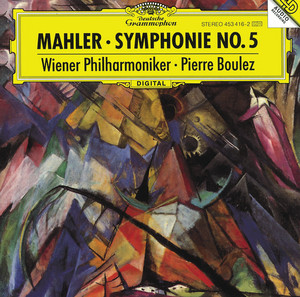 | Symphony No. 5: IV. Adagietto. Sehr langsam | Gustav Mahler, Wiener Philharmoniker, Pierre Boulez | F Major | 0 | 7B | 87 BPM | |
 | Violin Concerto in E Minor, Op. 64, MWV O14: II. Andante | Felix Mendelssohn, Hilary Hahn, Hugh Wolff, Oslo Philharmonic Orchestra, Oslo-Filharmonien | G Major | 1 | 9B | 174 BPM | |
 | Violin Concerto No. 2 in B Minor, Op. 7, "La campanella": III. Rondo | Niccolò Paganini, Netherlands Symphony Orchestra, Rudolf Koelman, Jan Willem de Vriend | B Minor | 2 | 10A | 105 BPM | |
 | El sombrero de tres picos, Pt. 1: III. Danza de la molinera | Manuel de Falla, Carlos Miguel Prieto, The Orchestra of the Americas | D Major | 1 | 10B | 121 BPM | |
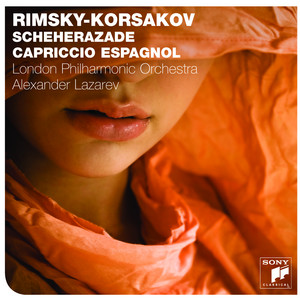 | Scheherazade: Sinbad's mighty bird, the Roc | Nikolai Rimsky-Korsakov, Lars Hjalmar Joakim | G Major | 3 | 9B | 143 BPM | |
 | The Thieving Magpie - From “A Clockwork Orange" | Gioachino Rossini, National Philharmonic Orchestra, Riccardo Chailly | E Major | 2 | 12B | 89 BPM | |
 | Aladdin Suite, Op. 34, FS 89: I. The Festival March | Carl Nielsen, South Jutland Symphony Orchestra, Niklas Willen | A♭ Major | 0 | 4B | 132 BPM | |
 | Pictures at an Exhibition (Orch. Ravel): III. Tuileries Gardens | Modest Mussorgsky, Wiener Philharmoniker, Gustavo Dudamel | E♭ Minor | 0 | 2A | 97 BPM | |
 | Chopin - 6 Chants Polonais, S480/R145: No. 2. Fruhling(Wiosna, Spring) | Joseph Banowetz, Franz Liszt | G Major | 1 | 9B | 108 BPM |
- ISRC
- GBAYC8700415
- Label
- L-M Records/RCA Records