- BPM
- 116
- Key
- F Major
- Camelot
- 7B
String Quartet No. 1 in D Major, Op. 11, TH 111: I. Moderato e semplice by Pyotr Ilyich Tchaikovsky, Heath Quartet Song Details
Pyotr Ilyich Tchaikovsky, Heath Quartet's 'String Quartet No. 1 in D Major, Op. 11, TH 111: I. Moderato e semplice' had a release date set for November 18, 2016. This song appears to be safe for all ages as it is not explicit. There are a total of 8 in the song's album "Tchaikovsky: String Quartets No. 1 & No. 3". In this album, this song's track order is #1. Furthermore, we believe that the track originated from United States. In terms of popularity, String Quartet No. 1 in D Major, Op. 11, TH 111: I. Moderato e semplice is currently not that popular. Although the tone can be danceable to some, this track does projects more of a negative sound rather than a postive one.
BPM and Tempo
With String Quartet No. 1 in D Major, Op. 11, TH 111: I. Moderato e semplice by Pyotr Ilyich Tchaikovsky, Heath Quartet having a BPM of 116 with a half-time of 58 BPM and a double-time of 232 BPM, we would consider this track to have a Moderato (at a moderate speed) tempo marking. Because of this, we believe that the song has an overall moderate tempo. Looking at the BPM of this song, this song might go great with walking. The time signature for this track is 3/4.
Music Key
This song has a musical key of F Major. Or for those who are familiar with the camelot wheel, this song has a camelot key of 7B. So, the perfect camelot match for 7B would be either 7B or 8A. While, 8B can give you a low energy boost. For moderate energy boost, you would use 4B and a high energy boost can either be 9B or 2B. Though, if you want a low energy drop, you should looking for songs with either a camelot key of 7A or 6B will give you a low energy drop, 10B would be a moderate one, and 5B or 12B would be a high energy drop. Lastly, 4A allows you to change the mood.
Want to find the BPM and music key for other songs? Check out our BPM and Key Finder page!
- Popularity
- 9%
- Loudness
- -19.065 dB
- Acousticness
- 97%
- Danceability
- 41%
- Energy
- 17%
- Instrumentalness
- 73%
- Liveness
- 25%
- Loudness
- 68%
- Speechiness
- 4%
- Valence
- 36%
Recommendations
| Track | Artist | Key | Energy | Camelot | BPM | ||
|---|---|---|---|---|---|---|---|
 | Giselle, Act 2: No. 12 Ensemble Dance of the Wilis, Lead Wilis’ Variations, Myrtha’s Second, Variation, Lead Wilis and ensemble | Adolphe Adam, Tasmanian Symphony Orchestra, Nicolette Fraillon | A♭ Major | 1 | 4B | 129 BPM | |
 | The Planets, Op. 32: 4. Jupiter, the Bringer of Jollity | Gustav Holst, Berliner Philharmoniker, Herbert von Karajan | G Minor | 3 | 6A | 140 BPM | |
 | Orfeo ed Euridice, Wq. 30: Dance of the Blessed Spirits "Melody" (Arr. Sgambati for Piano) | Christoph Willibald Gluck, Yuja Wang | D Minor | 0 | 7A | 70 BPM | |
 | The Sleeping Beauty, Op. 66/66a: Act 1, No. 8, Adagio – Pas d’Action - Arr. for Orchestra by Santtu-Matias Rouvali | Pyotr Ilyich Tchaikovsky, Philharmonia Orchestra, Santtu-Matias Rouvali | E♭ Major | 1 | 5B | 109 BPM | |
 | Lyric Pieces, Book 9, Op. 68: Badnlat (Cradle Song) | Edvard Grieg, Einar Steen-Nøkleberg | B♭ Major | 0 | 6B | 72 BPM | |
 | Consolation No. 3 in D-Flat Major, S. 172/3 | Franz Liszt, Vladimir Horowitz | D♭ Major | 0 | 3B | 70 BPM | |
 | 12 Songs, Op. 21: V. Lilacs (Transcr. Rachmaninoff for Solo Piano) | Sergei Rachmaninoff, Sergei Babayan | A♭ Major | 0 | 4B | 78 BPM | |
 | Zapateado Op. 23 | Pablo de Sarasate, Sarah Chang, Charles Abramovic | A Major | 3 | 11B | 113 BPM | |
 | Thaïs, Act II: Méditation | Jules Massenet, Joshua Bell, Royal Philharmonic Orchestra, Andrew Litton | E Minor | 1 | 9A | 172 BPM | |
 | Mendelssohn: Violin Concerto in E Minor Op. 64: I. Allegro molto appassionato | Felix Mendelssohn, Maxim Vengerov, Kurt Masur, Gewandhausorchester Leipzig | E Minor | 2 | 9A | 101 BPM | |
 | Lieder ohne Worte, Op. 19b: Lieder ohne Worte (Song without Words) No. 6 in G Minor, Op. 19, No. 6, "Venezianisches Gondellied" [Venetian Gondola Song] | Felix Mendelssohn, Péter Nagy | G Major | 0 | 9B | 101 BPM | |
 | La forza del destino: Overture (Sinfonia) | Giuseppe Verdi, Berliner Philharmoniker, Claudio Abbado | E Minor | 2 | 9A | 80 BPM | |
 | 2 Pieces, Op. Posth., B. 188: No. 1, Lullaby in G Major | Antonín Dvořák, Stefan Veselka | G Major | 0 | 9B | 66 BPM | |
 | Symphony No. 40 in G Minor, K. 550: I. Allegro molto | Wolfgang Amadeus Mozart, Capella Istropolitana, Barry Wordsworth | D Minor | 2 | 7A | 122 BPM | |
 | Tales from the Vienna Woods - Waltz Op. 325 | Johann Strauss II, Hallé, Bryden Thomson | F Major | 0 | 7B | 181 BPM | |
 | The Girl with Flaxen Hair | Claude Debussy, Joshua Bell, Michael Stern, Academy of St. Martin in the Fields | G Major | 1 | 9B | 84 BPM | |
 | La campanella in G-Sharp Minor (From "Grandes études de Paganini", S. 141/3) | Franz Liszt, Lang Lang | A♭ Minor | 3 | 1A | 88 BPM | |
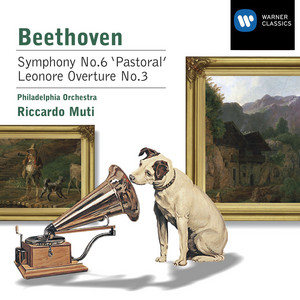 | Beethoven: Symphony No. 6 in F Major, Op. 68 "Pastoral": I. Erwachen heiterer Empfindungen bei der Ankunft auf dem Lande. Allegro ma non troppo | Ludwig van Beethoven, Philadelphia Orchestra, Riccardo Muti | F♯ Major | 0 | 2B | 88 BPM | |
 | Cello Suite No. 1 in G Major, BWV 1007: I. Prélude | Johann Sebastian Bach, Yo-Yo Ma | G Major | 2 | 9B | 73 BPM | |
 | Romeo and Juliet Suite No. 1, Op. 64bis: VI. Romeo and Juliet (Balcony Scene) | Sergei Prokofiev, Bergen Philharmonic Orchestra, Andrew Litton | F Major | 0 | 7B | 79 BPM | |
 | Chaminade: Flute Concertino, Op. 107 | Cécile Chaminade, Emmanuel Pahud, François Leleux, Orchestre de chambre de Paris | D Major | 1 | 10B | 83 BPM | |
 | Symphony No. 5 in E Minor, Op. 64, TH 29: III. Waltz. Allegro moderato | Pyotr Ilyich Tchaikovsky, Antoni Wit, Polish National Radio Symphony Orchestra | A Major | 2 | 11B | 147 BPM | |
 | Scheherazade: Calm at Sea | Nikolai Rimsky-Korsakov, Lars Hjalmar Joakim | E Major | 2 | 12B | 84 BPM | |
 | Swan Lake, Op. 20, Pt. 2: IV. Danses des petits cygnes | Pyotr Ilyich Tchaikovsky, Royal Philharmonic Orchestra, Nicolae Moldoveanu | F♯ Minor | 0 | 11A | 109 BPM | |
 | Má vlast, JB 1:112: II. Vltava "The Moldau" | Bedřich Smetana, Chicago Symphony Orchestra, Daniel Barenboim | G Major | 1 | 9B | 142 BPM |
- ISRC
- USHM11566501
- Label
- L-M Records/RCA Records