- BPM
- 62
- Key
- B♭ Major
- Camelot
- 6B
「椿姫」 第1幕への前奏曲 by Giuseppe Verdi, 岩城宏之, NHK交響楽団 Song Details
"「椿姫」 第1幕への前奏曲" by Giuseppe Verdi, 岩城宏之, NHK交響楽団 had its release date on November 20, 1999. The duration of This song is about 3 minutes long, at 3:15. Based on our data, This song appears to be safe for all ages and is not considered explicit. This track is about the average length of a typical track. There is only one song in 日本ステレオ初期名盤選-5, so we believe that "「椿姫」 第1幕への前奏曲" is a single. 「椿姫」 第1幕への前奏曲 is unknown right now. In our opinion, the overall tone is not very danceable and projects negative sounds, such as being sad, depressed, or angry.
BPM and Tempo
The tempo marking of 「椿姫」 第1幕への前奏曲 by Giuseppe Verdi, 岩城宏之, NHK交響楽団 is Larghetto (rather broadly), since this song has a tempo of 62 BPM. With that information, we can conclude that the song has a slow tempo. The time signature for this track is 4/4.
Music Key
This song is in the music key of B♭ Major. This also means that this song has a camelot key of 6B. So, the perfect camelot match for 6B would be either 6B or 7A. While, 7B can give you a low energy boost. For moderate energy boost, you would use 3B and a high energy boost can either be 8B or 1B. Though, if you want a low energy drop, you should looking for songs with either a camelot key of 6A or 5B will give you a low energy drop, 9B would be a moderate one, and 4B or 11B would be a high energy drop. Lastly, 3A allows you to change the mood.
Want to find the BPM and music key for other songs? Check out our BPM and Key Finder page!
- Popularity
- 0%
- Loudness
- -20.757 dB
- Acousticness
- 98%
- Danceability
- 11%
- Energy
- 10%
- Instrumentalness
- 91%
- Liveness
- 28%
- Loudness
- 65%
- Speechiness
- 4%
- Valence
- 5%
Recommendations
| Track | Artist | Key | Energy | Camelot | BPM | ||
|---|---|---|---|---|---|---|---|
 | Il Trovatore / Act 1: "Tacea la notte" - "Quanto narrasti di turbamento" | Giuseppe Verdi, Joan Sutherland, Norma Burrowes, National Philharmonic Orchestra, Richard Bonynge | A♭ Major | 1 | 4B | 165 BPM | |
 | Il barbiere di Siviglia (the Barber of Seville), Act I: Cavatina. Largo al factotum della citta | Gioachino Rossini, Peter Mattei, Royal Stockholm Philharmonic Orchestra, Lawrence Renes | C Major | 3 | 8B | 100 BPM | |
 | Norma (1997 Digital Remaster): Casta Diva | Maria Callas, Tullio Serafin, Orchestra Del Teatro Alla Scala, Milano | F Major | 1 | 7B | 169 BPM | |
 | Requiem: IIf. Rex tremendae | Giuseppe Verdi, Mirella Freni, Christa Ludwig, Carlo Cossutta, Nicolai Ghiaurov, Wiener Singverein, Berliner Philharmoniker, Herbert von Karajan | C Major | 4 | 8B | 86 BPM | |
 | Don Pasquale / Act 3: "Com'è gentil...tornami a dir" | Gaetano Donizetti, Juan Diego Flórez, Andrea Menafra, Rossella Perrone, Giulio Patara, Coro Sinfonico di Milano Giuseppe Verdi, Orchestra Sinfonica di Milano Giuseppe Verdi, Riccardo Frizza | A Major | 1 | 11B | 67 BPM | |
 | L'elisir d'amore: Overture (Preludio) | Gaetano Donizetti, English Chamber Orchestra, Richard Bonynge | D Major | 0 | 10B | 169 BPM | |
 | Una voce poco fa from Il Barbiere di Siviglia, '(The) Barber of Seville' | Maria Callas, Philharmonia Orchestra, Tullio Serafin | E Major | 1 | 12B | 136 BPM | |
 | Tosca / Act I: "Tre sbirri... Una carozza... Presto" - Te Deum | Giacomo Puccini, Heinz Zednik, Ruggero Raimondi, Berliner Philharmoniker, Herbert von Karajan, Schoeneberger Saengerknaben, Chor der Deutschen Oper Berlin | E♭ Major | 3 | 5B | 132 BPM | |
 | Cavalleria rusticana: Preludio | Pietro Mascagni, National Philharmonic Orchestra, Gianandrea Gavazzeni | F Major | 2 | 7B | 88 BPM | |
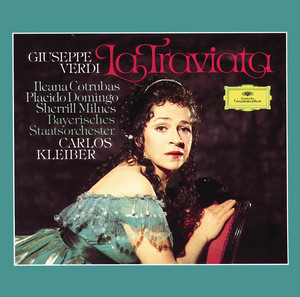 | La traviata, Act II: Avrem lieta di maschere la notte | Giuseppe Verdi, Stefania Malagu, Alfredo Giacomotti, Giovanni Foiani, Bavarian State Orchestra, Carlos Kleiber | G Major | 2 | 9B | 84 BPM | |
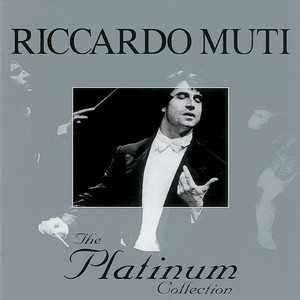 | Radetzky March Op. 228 | Riccardo Muti, Wiener Philharmoniker | A Major | 5 | 11B | 106 BPM | |
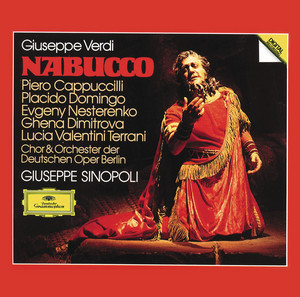 | Nabucco / Act 3: Oh, chi piange? / Del futuro nel buoio discerno | Giuseppe Verdi, Yevgeny Nesterenko, Orchester der Deutschen Oper Berlin, Giuseppe Sinopoli, Chor der Deutschen Oper Berlin | B Major | 2 | 1B | 98 BPM | |
 | Mozart: Le nozze di Figaro, K. 492, Act 2: "Voi, che sapete che cosa è amor" (Cherubino) | Wolfgang Amadeus Mozart, Daniel Barenboim, Cecilia Bartoli, Berliner Philharmoniker | B♭ Major | 2 | 6B | 110 BPM | |
 | Puccini: Tosca, Act 2: "Vissi d'arte, vissi d'amore" (Tosca) | Giacomo Puccini, Maria Callas, Georges Prêtre, Orchestre De La Société Des Concerts Du Conservatoire | E♭ Major | 1 | 5B | 90 BPM | |
| Il trovatore, Act III: Or co' dadi | Giuseppe Verdi, Nicolai Ghiaurov, The London Opera Chorus, National Philharmonic Orchestra, Richard Bonynge | C Major | 2 | 8B | 158 BPM | |
 | Les Contes d'Hoffmann (1989 Digital Remaster), Act III: Entr'acte et Barcarolle: Belle nuit, ô nuit d'amour (Une voix/Giulietta/Choeurs) | Jacques Offenbach, Nicolai Gedda, Elisabeth Schwarzkopf, Victoria de los Ángeles, Gianna D'Angelo, Christiane Gayraud, Jacques Pruvost, Robert Geay, George London, Michel Sénéchal, Jean Christophe Benoit, Jean-Pierre Laffage, Nicola Ghiuselev, André Malla | D Major | 1 | 10B | 90 BPM | |
 | Così fan tutte, K. 588 / Act I: "Come scoglio" | Wolfgang Amadeus Mozart, Miah Persson, Chamber Orchestra of Europe, Yannick Nézet-Séguin | F Major | 1 | 7B | 125 BPM | |
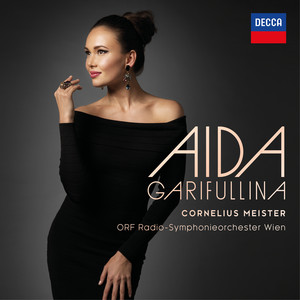 | Roméo et Juliette, CG 9 / Act 1: "Ah, je veux vivre dans ce rève" | Charles Gounod, Aida Garifullina, Vienna Radio Symphony Orchestra, Cornelius Meister | C Major | 3 | 8B | 77 BPM | |
| Tosca, Act II: Vissi d'arte | Giacomo Puccini, Katia Ricciarelli, Ruggero Raimondi, Berliner Philharmoniker, Herbert von Karajan | E♭ Major | 0 | 5B | 92 BPM | |
 | Orphée et Eurydice: J'ai perdu mon Eurydice | Maria Callas, Georges Prêtre, The Orchestra National De La Radiodiffusion Francaise | C Major | 2 | 8B | 71 BPM | |
 | Don Giovanni, ossia Il dissoluto punito, K.527 / Act 1: "Là ci darem la mano" | Wolfgang Amadeus Mozart, Ildebrando D'Arcangelo, Mojca Erdmann, Mahler Chamber Orchestra, Yannick Nézet-Séguin | B Minor | 9 | 10A | 180 BPM | |
 | Le nozze di Figaro, K. 492, Act I: No. 10, Non più andrai | Wolfgang Amadeus Mozart, Bryn Terfel, Scottish Chamber Orchestra, Sir Charles Mackerras | G Major | 2 | 9B | 134 BPM | |
| Adriana Lecouvreur (1986 Digital Remaster): Ecco: respiro appena...Io son l'umile ancella | Maria Callas, Tullio Serafin | A♭ Major | 1 | 4B | 92 BPM | |
 | Tannhäuser (Paris/Vienna Version), Act III: Beglückt darf nun dich, o Heimat "Pilgrims' Chorus" | Richard Wagner, Helga Dernesch, Victor Braun, Wiener Staatsopernchor, Wiener Philharmoniker, Sir Georg Solti | E♭ Major | 1 | 5B | 80 BPM | |
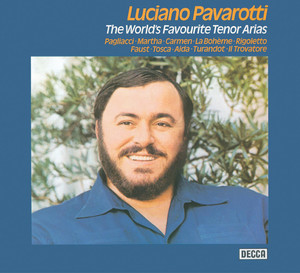 | Faust, CG 4, Act III: Quel trouble inconnu – Salut, demeure chaste et pure | Charles Gounod, Luciano Pavarotti, Vienna Volksoper Orchestra, Leone Magiera | A♭ Major | 2 | 4B | 174 BPM |
- ISRC
- JPCO06914370
- Label
- L-M Records/RCA Records